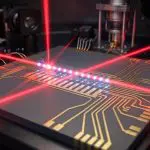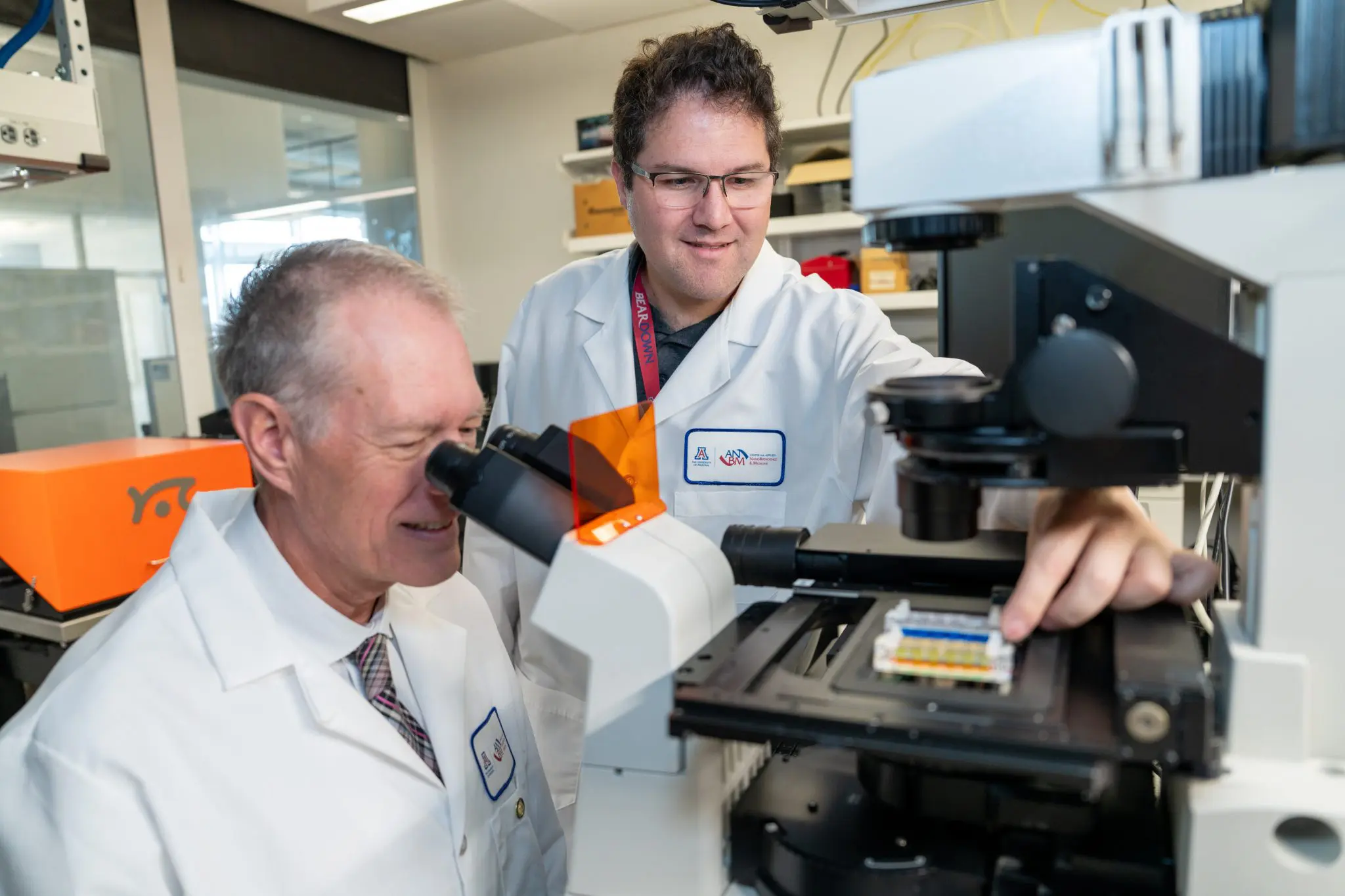
A groundbreaking 3D chip platform, dubbed ASTEROIDS, is poised to revolutionize cancer research, developed by an international team led by HonorHealth Research Institute and the University of Arizona. This innovative technology allows for laboratory testing of new drugs and personalized medicine models, crucially without relying on animal testing and with significantly improved accuracy for predicting human responses. The platform, integrating three-dimensional cell culture with organ-on-chip technology, faithfully reproduces the complex tumor microenvironment – a feat detailed in a new paper published in iScience. “We can be more precise and accurate than we’ve been. And eventually, better understand some of the mechanisms that drive the complex human tumor microenvironment (TME) interactions and how to guide treatment,” says Frederic Zenhausern, Ph.D., MBA, senior scientist at HonorHealth. Expected to be commercially available in 2026, ASTEROIDS aligns with new FDA policies promoting human-relevant research methods and promises to dramatically improve the translation of preclinical findings to successful clinical outcomes.
ASTEROIDS Platform Integrates 3D Culture and Organ-on-Chip Technology
A novel platform dubbed ASTEROIDS, an acronym for Apparatus to Simulate Tumor Environment and Reproduce Organs in an Interactive and Dynamic System, is poised to revolutionize cancer research by offering a highly predictive, animal-free testing ground for new therapies. Published January 27, 2026 in iScience (10.1016/j.isci.2025.114236), the findings detail successful simulations of radiation treatment for lung cancer, demonstrating the platform’s capacity to accurately reproduce tumor microenvironment responses. The ASTEROIDS platform isn’t limited to lung cancer; according to Frederic Zenhausern, Ph.D., MBA, “This platform will play a significant role moving forward,” with potential applications extending to any solid tumor type.
The system’s 3D design is critical, allowing for spatial organization that mirrors the complex interactions within a living organism, recapitulating “key tissue hallmarks commonly described with in vivo observations,” as stated in the published research. This innovation aligns with the FDA Modernization Act 2.0, promoting the use of “New Approach Methodologies or NAMs” like organ-on-chip to reduce reliance on animal testing. Joint product development is underway with Mitsubishi Gas Chemical Company Inc., signaling intent for commercialization and improved translation of pre-clinical results to human trials.
Tumor Microenvironment (TME) Modeling with ASTEROIDS Recapitulates In Vivo Responses
The platform integrates three-dimensional cell culture with organ-on-chip technology, supporting long-term cell viability and crucial cell-to-cell communication. The ASTEROIDS system’s ability to recreate the tumor microenvironment’s intricate biological landscape, including its three-dimensional cellular morphology and biochemical signaling, is a significant advancement. This spatial organization closely mimics the actions and reactions of a living organism, offering greater predictive accuracy for human patient responses, initially demonstrated through a simulated radiation treatment for lung cancer.
The research team demonstrated that ASTEROIDS “faithfully reproduces TME-level organization and responses, establishing its feasibility as a pre-clinical human model.” This technology isn’t limited to lung cancer; Dr.
We can be more precise and accurate than we’ve been. And eventually, better understand some of the mechanisms that drive the complex human tumor microenvironment (TME) interactions and how to guide treatment.
Frederic Zenhausern, Ph.D., MBA



See today’s quantum computing news on Quantum Zeitgeist for the latest breakthroughs in qubits, hardware, algorithms, and industry deals.