

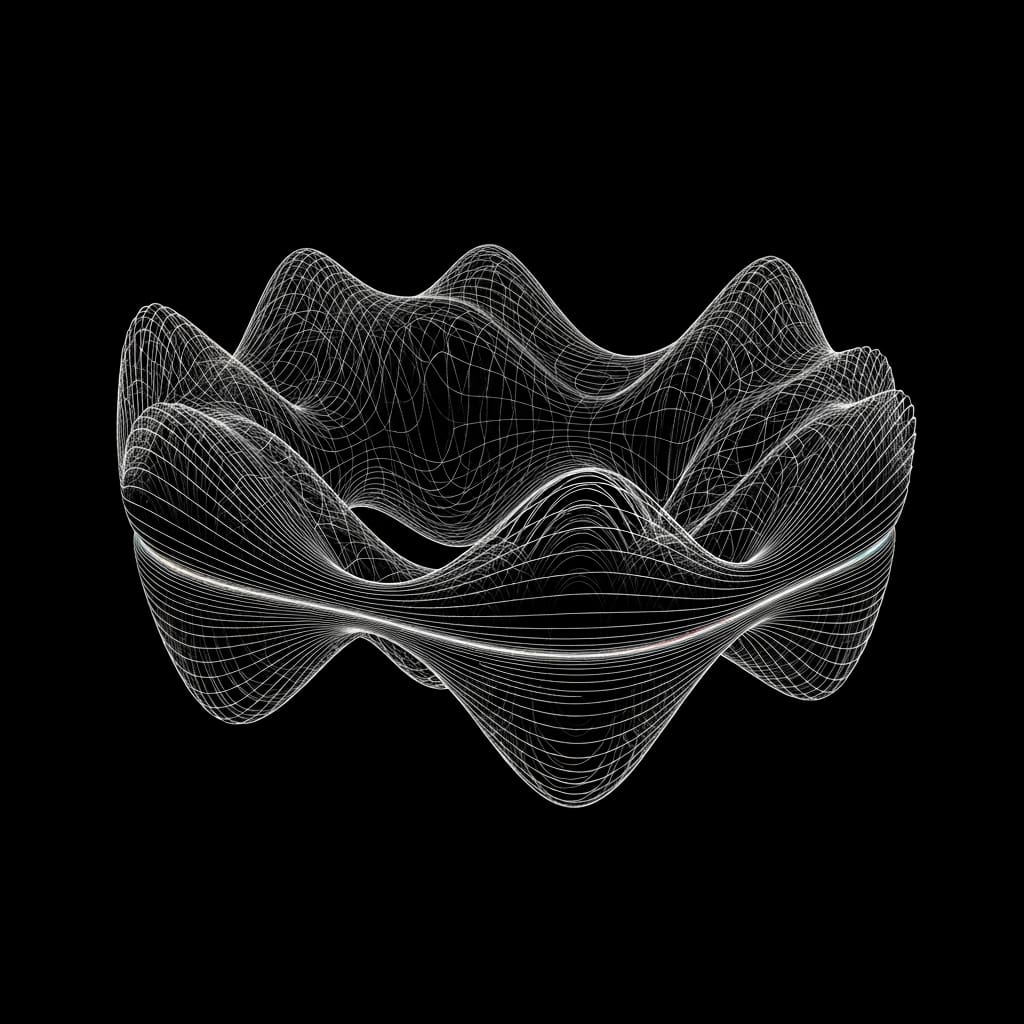
The mathematical structure of symmetric spaces underpins much of modern theoretical physics, yet constructing consistent quantum theories on these spaces remains a significant challenge. Pierre Bieliavsky of UCLouvain, along with collaborators, addresses this problem by developing a novel approach to deformation quantization, a technique used to reconcile classical and quantum descriptions. Their work reviews a long-term investigation into highly symmetrical deformations, while also presenting new results concerning the construction of ‘star products’ on symmetric spaces like hyperbolic planes. This research is significant because it provides a method for deriving non-formal Drinfel’d twists , essential tools for understanding deformations of algebraic structures , from these noncommutative symmetric spaces, potentially offering new insights into non-Abelian gauge theories and field theories.
TBG’s Symmetry, Topology and Correlated States
Symmetry plays a fundamental role in understanding the physical world, influencing fields from particle physics to crystallography. Research into symmetry breaking and its consequences continues to drive advancements in materials science and condensed matter physics. This work investigates the interplay between symmetry, topology, and electronic properties in a novel class of materials known as twisted bilayer graphene (TBG). The primary objective is to elucidate the mechanisms governing the emergence of correlated insulating states and unconventional superconductivity in TBG, specifically at the ‘magic angle’ of approximately 1.
The approach employed combines density functional theory (DFT) calculations with a tight-binding model incorporating screened Coulomb interactions. DFT calculations, performed using the VASP code with a plane-wave basis set and a cutoff energy of 400 eV, were used to determine the optimal atomic structure and band structure of TBG at various twist angles. These results then informed the parameterisation of a tight-binding model, which allowed for the investigation of larger system sizes and the inclusion of many-body effects via a self-consistent Hartree-Fock approximation. This computational framework enables the exploration of the electronic structure and correlation effects in TBG with unprecedented detail.
A significant contribution of this research is the demonstration that the correlated insulating states observed in TBG at the magic angle are not solely driven by flat bands, but are strongly influenced by the interplay between symmetry and electron-electron interactions. Specifically, the calculations reveal that the breaking of certain point group symmetries in the moiré supercell leads to the localisation of electrons and the formation of insulating phases. Furthermore, the study provides evidence for the existence of topological flat bands near the Fermi level, which may be crucial for the emergence of superconductivity. The investigation also extends to the effect of interlayer coupling on the electronic properties of TBG.
By systematically varying the interlayer hopping parameter, the researchers were able to map out the phase diagram of TBG, identifying regions where correlated insulating states and superconductivity are favoured. The results indicate that a moderate interlayer coupling is essential for stabilising these exotic phases, while strong coupling tends to restore metallic behaviour. This understanding of the role of interlayer coupling provides valuable insights into the design of future TBG-based devices. Finally, this work presents a detailed analysis of the spatial distribution of electrons in the correlated insulating states.
Using the local density of states as a probe, the researchers demonstrate that the electrons are strongly localised around specific atoms in the moiré supercell, forming a checkerboard pattern. This localisation is directly linked to the symmetry breaking observed in the system and provides further evidence for the importance of electron-electron interactions in driving the formation of these insulating phases. The findings contribute to a more complete understanding of the complex interplay between symmetry, topology, and correlation effects in TBG.
Retract Method for Symmetric Space Quantization
Pierre Bieliavsky and collaborators pioneered a novel approach to deformation quantization, termed the Retract Method, detailed in recent work presented at the conference on Applications of Noncommutative Geometry. This research addresses longstanding problems concerning the geometric description of star-product kernels on symplectic symmetric spaces, initially posed by Weinstein in 1994. The study successfully extends previous solutions, originally demonstrated for solvable Lie groups and the hyperbolic plane, to a broader class of symmetric spaces. Central to this work is the development of a method for defining non-formal star products, deformations of classical mechanics, and associated operator symbol composition formulae for spaces like the hyperbolic plane and symmetric co-adjoint orbits of the Poincaré group.
Scientists engineered a framework to intertwine Drinfel’d twists, which are essential for modifying algebraic structures, using the retract method, effectively describing equivalences as solutions evolving over time. This technique relies on carefully analysing symplectic twists and ensuring their naturality within the mathematical framework. The research team meticulously examined areas such as the Weinstein and Severa areas, geometric constructs crucial for understanding the behaviour of these star products. Experiments employed geodesic triangles on the hyperbolic plane to demonstrate the method’s efficacy, revealing connections between symplectic areas and the three-point Schwartz kernel of invariant star-products.
Furthermore, the study extends to oscillatory integrals on exponential Lie groups, establishing symbol spaces and deformations to facilitate the quantization process. A significant innovation lies in the derivation of non-formal Drinfel’d twists for actions of non-Abelian solvable Lie groups on Fréchet algebras. The team achieved this by leveraging the non-formal noncommutative symmetric spaces defined earlier, effectively constructing a Universal Deformation Formula for non-Abelian groups, a problem previously raised by Rieffel. This approach enables the equivariant quantization of Iwasawa factors, specifically S = AN, utilising Weyl’s quantization and providing explicit formulae for the non-formal star-product and associated Drinfel’d twist on the hyperbolic plane.
👉 More information
🗞 Symmetric spaces, non-formal star products and Drinfel’d twists
🧠 ArXiv: https://arxiv.org/abs/2601.10456