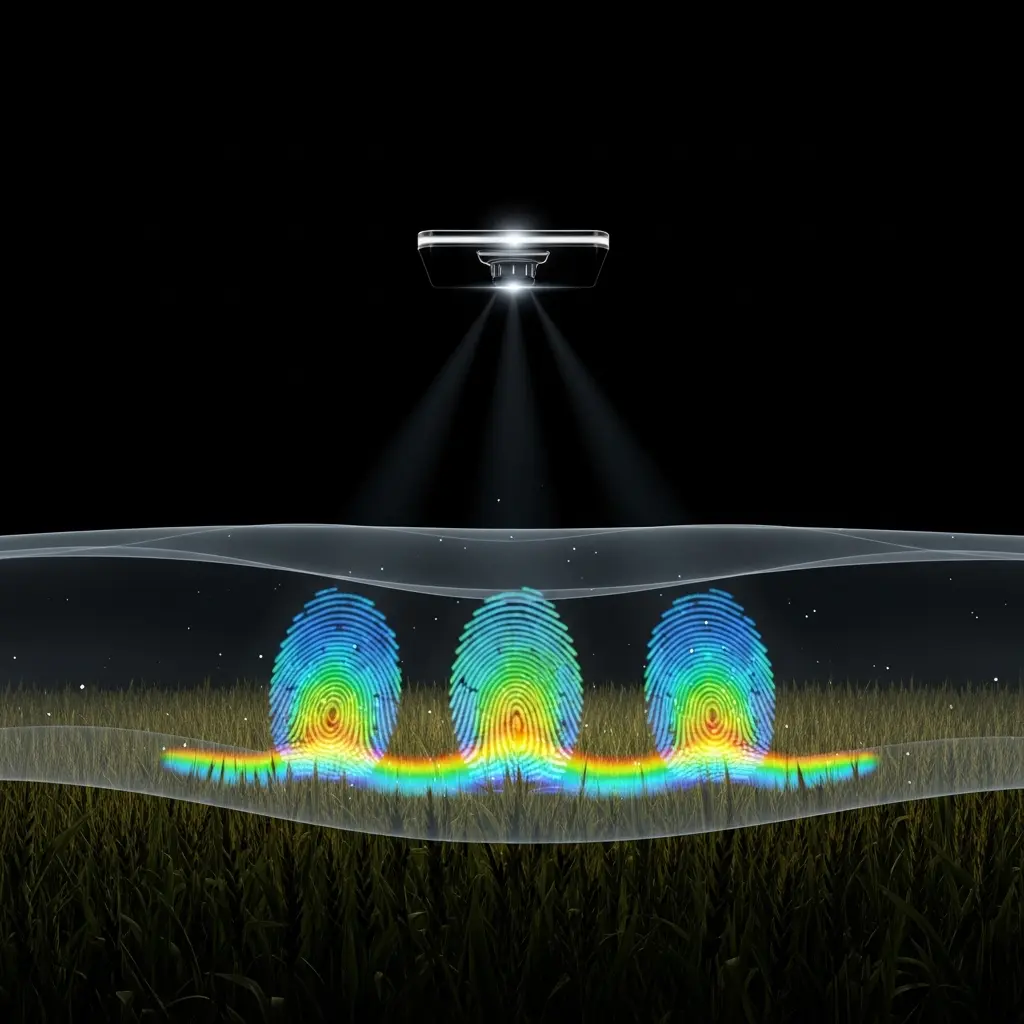
Ruminal acidosis represents a major challenge for dairy farmers, inflicting substantial economic losses and raising serious animal welfare issues. Taminul Islam, Toqi Tahamid Sarker, and Mohamed Embaby, from Southern Illinois University and the University of California, Davis, alongside Khaled R Ahmed and Amer AbuGhazaleh, have addressed this problem by developing FUME , a novel deep learning approach for detecting acidosis from gas emissions. This research marks the first use of dual-gas imaging and deep learning to non-invasively assess rumen health under laboratory conditions, moving beyond reliance on direct pH measurements. By analysing patterns of carbon dioxide and methane, FUME accurately classifies rumen state with a remarkably low computational cost, offering a pathway towards continuous and scalable livestock health monitoring. The team’s creation of a new, annotated dataset of gas emissions further supports the potential for practical, in vitro acidosis detection systems and advances the field of precision agriculture.
This research marks the first use of dual-gas imaging and deep learning to non-invasively assess rumen health under laboratory conditions, moving beyond reliance on direct pH measurements.
The team pioneered a novel deep learning approach, FUME (Fused Unified Multi-gas Emission Network), to detect rumen acidosis in dairy cattle using infrared optical gas imaging. Scientists engineered a system to capture complementary carbon dioxide (CO2) and methane (CH4) emission patterns, leveraging the principle that shifts in these gases correlate directly with rumen pH and microbial activity. To facilitate this research, the team constructed the first dual-gas optical gas imaging (OGI) dataset, comprising 8,967 annotated frames representing six distinct pH levels and incorporating pixel-level segmentation masks.
Experiments were conducted using an in vitro fermentation system, specifically the ANKOM RF Gas Production System, to meticulously control conditions and isolate gas emission signatures. The FUME architecture itself is a lightweight dual-stream network, employing weight-shared encoders to reduce computational demands and modality-specific self-attention mechanisms to enhance feature extraction from each gas plume. A key innovation lies in the channel attention fusion technique, which jointly optimizes both gas plume segmentation and classification of rumen health into Healthy, Transitional, and Acidotic states.
The resulting system achieves 80.99% mean Intersection over Union (mIoU) for segmentation and 98.82% classification accuracy, while maintaining a remarkably low parameter count of 1.28 million and requiring only 1.97 Giga MACs. Comparative analysis demonstrates that FUME outperforms state-of-the-art methods in segmentation quality, achieving a ten-fold reduction in computational cost. Ablation studies confirmed that CO2 provides the primary discriminative signal for acidosis detection, while the dual-task learning approach, simultaneously optimizing segmentation and classification, is crucial for achieving optimal performance.
Dual-Gas Imaging Detects Rumen Acidosis in Cattle
Scientists have developed FUME (Fused Unified Multi-gas Emission Network), a pioneering deep learning system capable of detecting rumen acidosis in dairy cattle using dual-gas imaging. This research addresses a critical need for scalable, non-invasive monitoring of rumen health, currently limited by invasive pH measurement techniques. Experiments utilising in vitro conditions demonstrate FUME’s ability to classify rumen health into Healthy, Transitional, and Acidotic states by analysing patterns of carbon dioxide (CO2) and methane (CH4) emissions captured via infrared cameras.
The team meticulously constructed the first dual-gas Optical Gas Imaging (OGI) dataset, comprising 8,967 annotated frames spanning six distinct pH levels, each with corresponding pixel-level segmentation masks. Results demonstrate that FUME achieves an impressive 80.99% mean Intersection over Union (mIoU) in gas plume segmentation and 98.82% classification accuracy in identifying rumen health status. Notably, the system operates with a remarkably lightweight architecture, utilising only 1.28 million parameters and 1.97 Giga MACs, representing a ten-fold reduction in computational cost compared to state-of-the-art segmentation methods.
Further investigation through ablation studies revealed that CO2 emissions provide the primary signal for discerning rumen health, while the integrated dual-task learning approach, simultaneously optimising gas plume segmentation and health classification, is crucial for achieving peak performance. Measurements confirm that the system’s lightweight dual-stream architecture, incorporating weight-shared encoders, modality-specific self-attention, and channel attention fusion, effectively captures and processes the complex gas emission data.
FUME Detects Rumen Acidosis via Gas Analysis
This research introduces FUME, a novel deep learning approach for detecting rumen acidosis in cattle using dual-gas optical imaging. By analysing carbon dioxide and methane emissions, the system classifies rumen health as healthy, transitional, or acidotic, offering a potentially scalable alternative to current invasive diagnostic methods. The work demonstrates high accuracy in both gas plume segmentation and health classification, achieving state-of-the-art performance with a remarkably efficient computational cost.
Key findings indicate that carbon dioxide is the primary indicator of acidosis, while methane contributes to refining the precision of spatial detection. The researchers successfully implemented a dual-task learning framework, demonstrating the benefits of jointly optimising gas plume segmentation and health classification. Although the study was conducted under controlled in vitro conditions, the authors acknowledge the need to address challenges such as animal movement and environmental factors when translating the system to real-world farm environments. Future research will focus on incorporating temporal modelling and validating the system with live animals, building upon this proof-of-concept for non-invasive livestock health monitoring. This research establishes the feasibility of gas emission-based livestock health monitoring, offering a promising foundation for the development of practical, in vitro acidosis detection systems and ultimately improving animal welfare and economic efficiency in dairy farming.
👉 More information
🗞 FUME: Fused Unified Multi-Gas Emission Network for Livestock Rumen Acidosis Detection
🧠 ArXiv: https://arxiv.org/abs/2601.08205