Controlling quantum bits, or qubits, remains a significant challenge due to the disruptive effects of environmental noise, which limits the reliability of quantum computations. Riccardo Cantone, Shreyasi Mukherjee, Luigi Giannelli, et al. from the University of Catania and the National Institute of Physics Nuclear Research, address this problem by developing a new control strategy that intelligently combines established physics-based modelling with the power of machine learning. Their innovative approach, which uses a neural network trained on simulated data, effectively accounts for complex, non-standard noise patterns and achieves remarkably high gate fidelities exceeding 90% even under challenging noise conditions. This advancement represents a crucial step towards building more robust and practical quantum technologies, paving the way for more complex and reliable quantum algorithms.
Researchers apply a machine-learning-enhanced greybox framework to a quantum optimal control protocol designed for open quantum systems. The approach combines a whitebox physical model with a neural-network blackbox, which receives training using synthetic data. This method effectively captures non-Markovian noise effects and achieves gate fidelities exceeding 90% when subjected to Random Telegraph and Ornstein-Uhlenbeck noise. The work addresses critical issues in maintaining quantum information processing performance.
Machine Learning Enhances Quantum Control Strategies
Neural Networks Enhance Quantum Control of Qubits
Introduction This work presents an attention-based machine-learning-enhanced greybox framework for quantum optimal control, designed to improve the manipulation of open quantum systems subject to complex noise. Quantum control is essential for technologies such as computation, communication, and sensing, but achieving robust control is challenging when systems interact with non-Markovian environments that are difficult to characterise. The proposed greybox model combines a whitebox component, which captures analytically tractable system dynamics using known physical principles, and a blackbox component implemented via neural networks, trained to learn unmodelled environmental effects from data. The model was tested using synthetic data applied to a qubit undergoing pure dephasing, considering both Random Telegraph Noise (RTN) and Ornstein-Uhlenbeck (OU) noise., System and Model The research considers a single qubit subject to classical dephasing noise along the z-axis, driven by external control fields.
In the interaction picture, the dynamics are described by the time-dependent Hamiltonian H(t) = Hctrl(t) + gβ(t) σz, where g is the coupling strength between the qubit and the noise, and β(t) is a classical stochastic process modelling dephasing noise. The control Hamiltonian Hctrl(t) implements a drive along the x and y-axes, Hctrl(t) = fx(t)σx + fy(t)σy, with each control field fα(t), where α ∈{x, y}, consisting of Gaussian-shaped pulses. The two stochastic processes, RTN and OU, are characterised by their power spectrum S(ω), which is the Fourier transform of the two-point correlation function ⟨β(t)β(t)⟩, and in both cases has a Lorentzian shape, S(ω) ≈ 4γ / (4γ2 + ω2). The switching rate for the RTN process is γ, and the correlation time of the OU process is 1/γ.
The Greybox Model: Combining Physics and Transformers
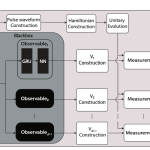
The stochastic processes differ because the latter is Gaussian, while the former is not, impacting dynamic protocols for protection against noise, such as spin-echo., The Machine Learning Model The proposed greybox model integrates analytical knowledge of the quantum system with a transformer-based neural network. This hybrid architecture includes a whitebox part, enforcing the known unitary dynamics of the driven qubit and the associated measurement process, and a blackbox neural network, trained to model the influence of the environment on the system’s evolution. The model takes as input the amplitudes of five Gaussian control pulses applied along each of the x and y axes, for a total of ten real parameters, while pulse widths and positions are fixed. The output consists of six gate fidelities, each associated with a different target from a universal set of single-qubit gates., The blackbox core is a lightweight transformer encoder, processing the input pulse parameters and predicting a set of noise-related parameters that are fed into whitebox layers implementing Hamiltonian construction, time evolution based on discretized control fields, expectation value calculation over a tomographically complete set of initial states, and process matrix reconstruction and fidelity estimation.
Only the blackbox layers contain trainable parameters, and the network is trained using the Adam optimizer to minimize the mean squared error across the six predicted fidelities. Training is supervised and based on synthetic data generated by simulating noisy quantum dynamics, with whitebox constraints ensuring physically consistent predictions., Results and Open Problems Separate models were trained across varying values of the coupling strength g, providing insight into the effectiveness of the greybox approach as a function of the Markovianity of the quantum map describing time evolution under the effect of noise, which is parametrized by the ratio g/γ. For the RTN case, the model showed low training and test mean squared error across all gates, with prediction errors increasing with g but remaining in the 10−2, 10−3 range, indicating robust generalisation. As an emulator in the optimal control pipeline, it enabled the design of control pulses achieving fidelities above 99% for the lowest g and above 90% for the highest, with minor gate-dependent variations.
The OU case exhibited similar performance, with low and stable mean squared error values across all g, confirming robustness to different noise types. Optimal control results mirrored those of the RTN case, with fidelities exceeding 99% at low g and remaining above 90% even at stronger coupling., While fidelity declines under higher noise, the model continues to support effective pulse design, and future improvements may benefit from larger datasets or more advanced strategies. The results validate the greybox approach, showing that the optimization framework is effective in suppressing effects of low-frequency noise (g/γ 1), but less effective for noise yielding Markovian maps (g/γ.
Overcoming Noise Limitations in Quantum Systems
Greybox Control Surpasses Noise Limitations
Scientists have developed a greybox framework, combining physical modeling with neural networks, to achieve high-fidelity control of open quantum systems, even in the presence of challenging noise conditions. This innovative approach effectively captures non-Markovian noise effects, a significant hurdle in quantum computing, and delivers substantial improvements in gate fidelity. The team trained a neural network using synthetic data, constrained by a whitebox physical model to ensure physically plausible predictions, and then employed this model within an optimal control protocol., Experiments revealed that the trained model exhibits low mean squared error across all tested gates, with prediction errors consistently remaining within the 10⁻² to 10⁻³ range, demonstrating robust generalization capabilities. Utilizing this model as an emulator, scientists achieved gate fidelities exceeding 99% for the lowest coupling strengths, and maintained fidelities above 90% even at the highest coupling strengths tested.
These results demonstrate the framework’s ability to design control pulses that effectively mitigate the impact of noise on quantum operations., Further investigation into different noise types, specifically Random Telegraph Noise and Ornstein-Uhlenbeck noise, confirmed the model’s robustness and consistent performance. Measurements confirm that the optimization framework is particularly effective at suppressing the effects of low-frequency noise, where the ratio of coupling strength to noise strength (g/γ) is greater than 1. However, the study indicates reduced effectiveness for noise yielding Markovian maps, where g/γ is less than 1, suggesting a nuanced relationship between noise characteristics and control performance. The breakthrough delivers a powerful tool for enhancing the reliability and precision of quantum computations, paving the way for more complex and robust quantum systems.
🗞 Machine Learning-Aided Optimal Control of a Qubit Subjected to External Noise
🧠 ArXiv: https://arxiv.org/abs/2512.24393


See today’s quantum computing news on Quantum Zeitgeist for the latest breakthroughs in qubits, hardware, algorithms, and industry deals.