

The search for exotic quantum phenomena in atomically thin materials has taken a significant step forward with new research into the unusual electronic properties of graphene combined with hexagonal boron nitride. Wenqing Song, Yicheng Mou, and Qing Lan, along with colleagues, demonstrate a novel method for probing these materials, revealing intricate details of their energy spectra. The team utilises acoustic waves to generate electrical signals, a technique that dramatically increases sensitivity to subtle changes in conductivity, allowing them to observe previously hidden features within the material’s electronic structure. This approach successfully maps out the ‘Hofstadter butterfly’, a complex pattern representing the energy levels of electrons in a strong magnetic field, and identifies high-order fractal states, establishing acoustoelectric transport as a powerful tool for exploring emergent quantum behaviour in these engineered two-dimensional systems.
This work investigates Moiré superlattices with long-range periodicity, which exhibit Hofstadter energy spectra under accessible magnetic fields, enabling the exploration of emergent quantum phenomena through a hierarchy of fractal states. The research utilizes acoustoelectric (AE) transport to probe these high-order features, offering enhanced sensitivity to subtle energy level structures and furthering understanding of emergent quantum phenomena.
Acousto-electric Transport Reveals Moiré Superlattice Physics
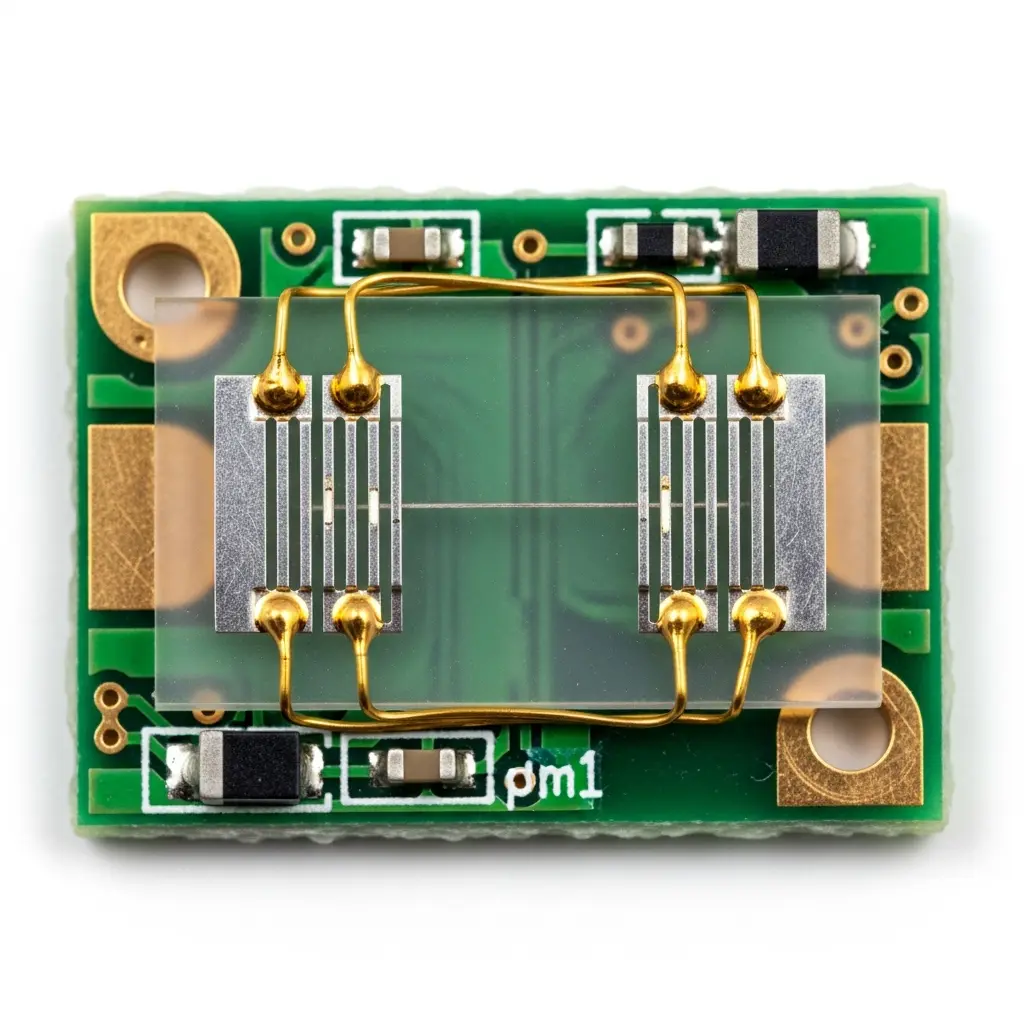
This research details experimental results on graphene/hexagonal boron nitride (Gr/hBN) moiré superlattices, using both electrical transport and acoustoelectric (AE) transport measurements to unveil quantum phenomena, including Brown-Zak oscillations, the Hofstadter butterfly, and symmetry breaking in electronic behaviour. The experiments involved fabricating devices on lithium niobate substrates with interdigital transducers for generating surface acoustic waves, which create an acousto-electric voltage used in AE transport. Measurements revealed oscillations in both electrical resistance and the AE voltage as a function of magnetic field, identifying Brown-Zak oscillations, and crucially, the AE signal proved more sensitive to higher-order fractal oscillations. The team mapped the Hofstadter butterfly, observing broken symmetries in the Landau levels, indicative of complex electronic interactions. The use of AE transport represents a key innovation, as the signal is much more sensitive to subtle changes in the electronic structure, particularly to higher-order fractal oscillations and intersections of Landau levels, stemming from the direct relationship between the AE signal and the electronic structure. This research demonstrates the power of combining graphene moiré superlattices with acousto-electric transport to reveal exotic quantum phenomena and map the Hofstadter butterfly with unprecedented detail.
Fractal Quantum States Revealed by Acoustoelectric Transport
This work demonstrates a breakthrough in probing the intricate fractal energy spectra within moiré superlattices, utilizing acoustoelectric (AE) transport to reveal previously obscured quantum states and resolve fractal Brown-Zak (BZ) oscillations up to the fifth order. Researchers fabricated aligned graphene/hexagonal boron nitride (hBN) devices on lithium niobate (LiNbO3) substrates, leveraging the piezoelectric properties of LiNbO3 to enhance sensitivity to weak spectral features. The core of the technique lies in AE transport, which measures the variation in conductivity, effectively detecting subtle changes in carrier density. This derivative sensitivity dramatically amplifies weak oscillatory features, enabling the observation of high-order fractal states. Furthermore, this work delivers the first AE transport observation of the Hofstadter butterfly spectrum, resolving high-order magnetic Bloch states and symmetry-broken Landau levels. These findings establish AE transport as a uniquely powerful probe for exploring emergent quantum states and fractal energy spectra in moiré-engineered two-dimensional systems, opening new avenues for investigating complex quantum phenomena.
Acoustic Waves Reveal Graphene’s Quantum Spectrum
This research demonstrates the effectiveness of acoustoelectric transport in probing subtle features within the fractal energy spectrum of graphene/hexagonal boron nitride moiré superlattices. By utilizing surface acoustic waves to measure changes in electrical conductivity, scientists resolved high-order fractal oscillations and directly observed the Hofstadter butterfly, overcoming limitations inherent in conventional electrical transport measurements. The combination of lithium niobate substrates, which induce high electron doping, with the sensitivity of acoustoelectric techniques allows for detailed examination of complex quantum states. This research represents a significant step forward in understanding the behaviour of electrons in these complex systems and paves the way for further exploration of novel quantum phenomena.
🗞 Acoustoelectric Probing of Fractal Energy Spectra in Graphene/hBN Moiré Superlattices
🧠 ArXiv: https://arxiv.org/abs/2512.06313




See today’s quantum computing news on Quantum Zeitgeist for the latest breakthroughs in qubits, hardware, algorithms, and industry deals.



