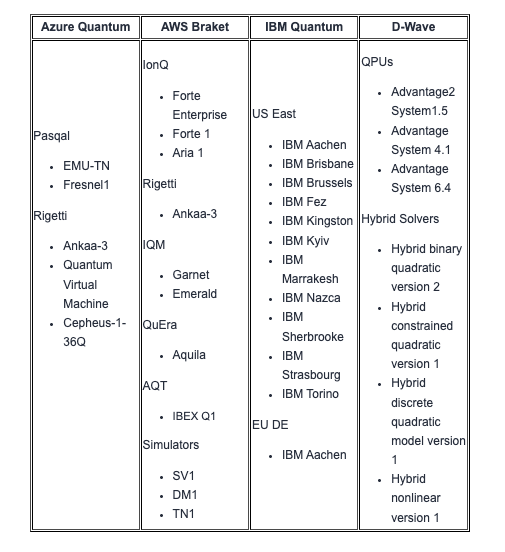
The National Quantum Computing Centre’s (NQCC) SparQ Access programme is providing the UK’s quantum computing user community with cloud access to quantum computing resources for research, skill development, and application development. Initial access will be granted on a three-month basis, utilizing Quantum Processing Units (QPUs) and hybrid solvers from providers including Pasqal, Rigetti, IonQ, IQM, QuEra, and AQT Simulators, located in US East and EU DE regions. This programme, part of the broader SparQ initiative, supports UK quantum readiness by specifically enabling access for full-time, in-person registered students and staff at UK academic institutions.
Programme Access and Resource Availability
The SparQ Access programme is designed to provide the UK’s quantum computing community with cloud access to resources from providers including Pasqal, Rigetti, IonQ, IQM, QuEra and AQT Simulators. Initial access will be granted for three-month periods with a defined allocation to successful applicants. This programme supports both research, skill development, and the creation of new applications, all contributing to UK quantum readiness as part of the broader NQCC’s SparQ initiative.
Access to these quantum computing resources is specifically limited to academic proposals originating from UK institutions. Furthermore, all users – including the principal investigator – must be domiciled in the UK and be registered as a full-time, in-person student or staff member at a UK institution. The programme acknowledges potential restrictions, noting that some nationalities may require providing additional information due to export controls and service provider limitations.
Responsible and ethical considerations are integrated into the programme. The NQCC references its Quantum STATES principles and EPSRC’s AREA framework, guiding both its own work and user approaches to responsible innovation. Users are subject to UKRI Privacy terms and conditions as well as UKRI Trust Research and Innovation Principles, highlighting a commitment to ethical practices alongside access to quantum computing technology.
Eligibility and User Requirements
The SparQ Access programme offers cloud access to quantum computing resources for the UK’s research, skill development, and application development communities. Initial access is granted for three months to successful applicants, with a defined allocation of resources. Several quantum computing providers are involved, including Pasqal, Rigetti, IonQ, IQM, QuEra, and AQT, offering both QPUs and simulators across US East and EU/DE locations. Hybrid solvers are also available through the programme.
Eligibility for the SparQ Access programme is restricted to individuals domiciled in the UK who are full-time, in-person registered students or staff at a UK institution. Only academic proposals originating from UK institutions will be considered for access. Due to restrictions related to export control and quantum computing service providers, some nationalities may be required to provide additional information as part of the application process.
Users of quantum computing resources, including the principal investigator, must adhere to specific requirements. The NQCC’s Quantum STATES principles guide responsible and ethical quantum computing practices. Additionally, applicants should consult the EPSRC’s AREA framework for responsible innovation guidance. All access is also subject to UKRI Privacy terms and conditions, and UKRI Trust Research and Innovation Principles.
Dedicated streams will be available for specific user groups, facilitating cloud access to quantum computing resources from a range of quantum computing providers.

See today’s quantum computing news on Quantum Zeitgeist for the latest breakthroughs in qubits, hardware, algorithms, and industry deals.