Hypergraph states represent a significant advance in the field of quantum entanglement, extending the well-established concept of graph states to encompass more complex relationships between quantum particles. Vinícius Salem from Universidad de Valladolid leads a comprehensive review of these states, detailing their definition and exploring their growing applications in quantum information science. This work clarifies how hypergraph states, with their ability to represent interactions beyond simple pairwise connections, offer enhanced capabilities for processing and transmitting information. The review highlights progress in both discrete-variable and continuous-variable quantum information, demonstrating the versatility and potential of hypergraph states as a crucial resource for future quantum technologies.
Graph States for Quantum Information Processing
This extensive collection of research papers explores the rapidly evolving field of quantum information science, focusing on graph states and continuous variable quantum information and their diverse applications. Core concepts include graph states, fundamental resources for quantum computation, communication, and metrology, and continuous variable systems, utilizing properties like the quadrature amplitudes of light to offer unique advantages. Researchers are actively investigating entanglement and Bell inequalities to characterize and verify entanglement in quantum systems, employing self-testing protocols to ensure the reliability of quantum devices. A growing area of interest focuses on non-Gaussian states, recognizing their potential to unlock quantum advantages beyond what is achievable with Gaussian states alone.
The research demonstrates significant progress in applying these concepts to practical technologies, including quantum computation, where graph states and continuous variable systems are investigated as platforms for building quantum computers. Scientists are also addressing the challenges of quantum communication and networking, exploring how these states can facilitate secure quantum key distribution and quantum teleportation. Quantum metrology benefits from the enhanced precision offered by graph states, while quantum secret sharing leverages their properties for secure information distribution. A dominant theme is photonic quantum computing, utilizing light as a quantum carrier and exploring various photonic platforms for implementing quantum gates and circuits, with fusion-based approaches representing a recent development.
Emerging trends highlight the potential of hybrid quantum systems, combining discrete-variable and continuous-variable approaches to leverage the strengths of both. Generating and manipulating non-classical states of light, such as squeezed states and photon-subtracted states, remains a crucial area of research. The resource theory of non-Gaussianity provides a theoretical framework for quantifying and utilizing non-Gaussian resources, while reinforcement learning is being applied to optimize quantum control in photonic quantum computers. Underlying many research efforts is the goal of developing scalable and fault-tolerant quantum technologies, addressing challenges in network routing and quantum repeaters. Self-testing protocols are gaining prominence as a means of verifying the correct operation of quantum devices, and fusion-based approaches hint at the exploration of topological quantum computing, offering potential advantages in fault tolerance.
Hypergraph States Created with Improved Entanglement Fidelity
Scientists have developed innovative methods to create and verify complex entangled states known as hypergraph states, extending the principles of graph states to encompass more intricate connections between quantum bits. The research pioneers techniques for generating these states using multi-qubit gates, acknowledging the increasing difficulty of reliably entangling larger numbers of qubits. To address this challenge, the team investigated repeat-until-success methods, utilizing ancilla-mediated multi-qubit measurements to improve the fidelity of entanglement for more than two qubits. Single-qubit gates consistently achieve high fidelities exceeding 99%, while two-qubit entangling gates reach approximately 93%, although rates tend to decrease as the number of entangled qubits increases.
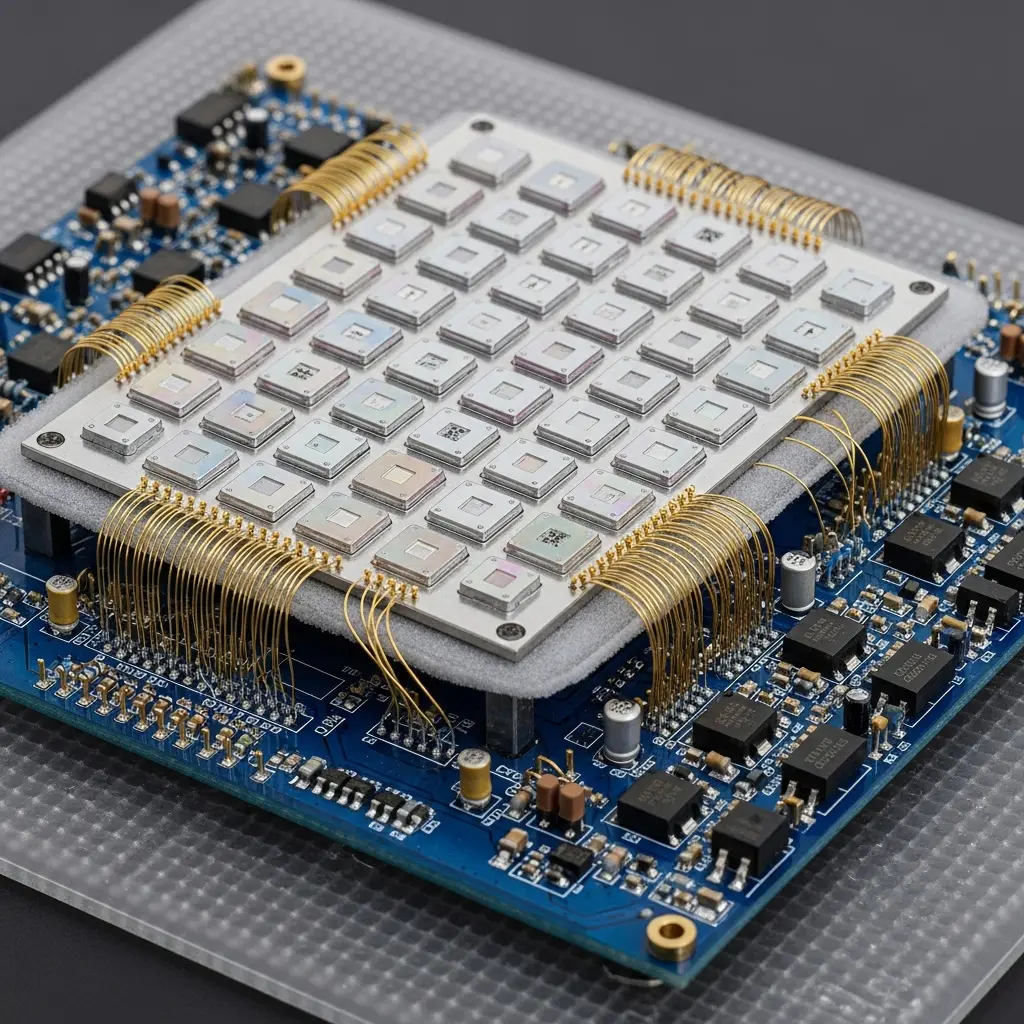
Researchers successfully implemented a Clover hypergraph state experimentally on silicon-photonic quantum chips, demonstrating the feasibility of these structures. Furthermore, the work extends hypergraph states to higher dimensions by utilizing qudit states, which possess state spaces greater than two, enabling increased computational capacity. Scientists defined generalized gate operations for qudits, demonstrating the equivalence between qudit hypergraph states and multi-hypergraph states. To account for imperfections in real-world quantum systems, the team explored the creation of mixed hypergraph states through a randomization process, inspired by the Erdos-Rènyi theory of random graphs. This approach enables the investigation of hypergraph states under noisy conditions, providing a more realistic model for practical quantum computation.
Hypergraph States Exceed Local Realism Bounds
Scientists have demonstrated a deep connection between hypergraph states and Real Equally Weighted (REW) states, revealing potential for advancements in quantum computation. The research establishes that hypergraph states can be described using Mermin-like operators, achieving a quantum value of 2 N-2 on a state with N qubits, significantly exceeding the limitations of local realistic models. The team meticulously calculated the probabilities arising from measurements on these states, demonstrating specific correlations forbidden by the system’s structure. Researchers also developed an entanglement witness to detect entanglement in general hypergraph states.
This witness relies on calculating the maximal overlap between the hypergraph state and biseparable pure states, providing a quantifiable measure of entanglement. The team further established a method for calculating the randomization of superposition, crucial for analyzing mixed hypergraph states. This work demonstrates the potential of hypergraph states in implementing quantum algorithms like Grover’s and Deutsch-Jozsa’s algorithms, establishing a direct correspondence between hypergraph states and REW states used in these algorithms. Key numerical findings include: probabilities of +−− and −−− with XZZ measurement are demonstrably zero and one, respectively, ensuring adherence to the established quantum mechanical framework. Twelve perfect correlations were identified for a three-qubit hypergraph state, and a generalized approach was developed for hypergraphs with N qubits.
🗞 Quantum hypergraph states: a concise review
🧠 ArXiv: https://arxiv.org/abs/2512.02955