The pursuit of reliable quantum computation demands effective strategies for correcting errors, and recent research suggests that complex interactions between multiple qubits may hold the key. David F. Locher, Katharina Brechtelsbauer, and Sebastian Weber, working with colleagues at Josias Old and Hans Peter Büchler’s institutions, investigate the potential of multiqubit gates, operations involving three or more qubits, for achieving fault-tolerant quantum error correction. This work demonstrates that specifically designed multiqubit Rydberg gates, implemented using a streamlined approach with a single laser pulse, offer significant advantages for measurement-free error correction and efficient stabilizer readout in neutral-atom quantum computers. By developing an open-source tool for optimising these gates and simulating their performance with realistic noise, the team shows that achieving competitive logical qubit performance is now within reach of current quantum hardware, potentially reducing the complexity and resource demands of future quantum computers.
Optimized Rydberg Pulses for High-Fidelity Gates
Researchers have developed a new method for creating high-fidelity multiqubit gates, essential for advanced quantum error correction, in neutral-atom quantum computing platforms. The team focused on Rydberg gates, utilizing strong interactions between atoms excited to high-energy Rydberg states, and engineered analytical pulse shapes to minimize gate errors. This was achieved through an open-source Python package, RydOpt, capable of designing few-parameter pulses tailored to specific gate requirements. To demonstrate its capabilities, the team analyzed two-qubit CZ and three-qubit CCZ gates under conditions maximizing atomic interactions.
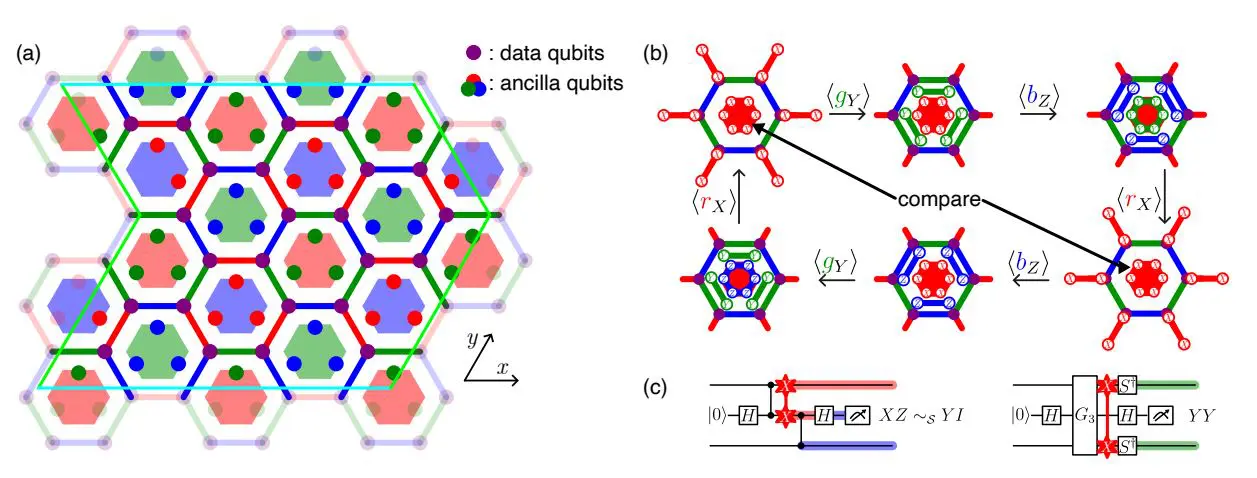
Scientists successfully reproduced previously established optimal gate times and further investigated the fastest possible operation speeds for CCZ gates by systematically varying pulse complexity. For the two-qubit CZ gate, they achieved a minimal pulse duration of 7. 61 using a pulse described by just four parameters. Crucially, the researchers incorporated the natural decay of Rydberg states into their calculations, allowing them to optimize pulses for minimal time spent in these fragile states. Further innovation involved exploring Floquet protocols for stabilizer measurements, which can significantly reduce the number of atom movements required for quantum error correction.
This was accomplished by utilizing global three-qubit gates, offering a pathway to more efficient quantum computations. The team demonstrated that a CCZ gate could be implemented with a faster global Rydberg pulse, achieving a minimal duration of 16. 4, and even further reduced this time by leveraging a specific mathematical identity. Simulations incorporating realistic circuit-level noise indicated that these three-qubit gates yield competitive logical qubit performance, demonstrating the practical viability of this approach for building scalable quantum computers.
Rydberg Gates Optimised for Error Correction
Scientists have made significant progress in designing multiqubit gates for neutral-atom quantum computing platforms, focusing on Rydberg gates crucial for fault-tolerant quantum error correction. The research team developed an open-source Python package, RydOpt, to generate analytical pulse shapes that implement these gates while minimizing errors caused by Rydberg state decay. This tool identifies parameter-optimal pulses, characterized by a minimal number of adjustable parameters, streamlining gate calibration and implementation. The study investigates the performance of CCZ gates, essential for measurement-free quantum error correction, with atoms arranged in both symmetric and asymmetric configurations.
Results demonstrate that measurement-free quantum error correction is within reach of current hardware capabilities, given appropriate single-, two-, and three-qubit gate rates. Furthermore, the team explored Floquet protocols utilizing global three-qubit gates for stabilizer measurements, revealing a potential for substantial reduction in the number of atom movements required for quantum computation. Simulations incorporating realistic circuit-level noise indicate that employing three-qubit gates for stabilizer measurements within Floquet codes can deliver competitive logical qubit performance in experimentally relevant scenarios. Specifically, the team optimized pulses for two-qubit CZ gates and three-qubit CCZ gates under conditions maximizing atomic interactions, reproducing previously reported optimal gate times.
A time-optimal CZ gate was achieved with a pulse described by just four parameters, while the Rydberg time, representing the average time atoms spend in excited Rydberg states, was minimized to reduce errors from natural decay. The team found that a six-parameter pulse yielded an optimized Rydberg time of 2. 936, demonstrating the effectiveness of their approach in balancing gate speed and error mitigation. The research highlights the potential for designing complex multiqubit gates with a limited number of parameters, simplifying experimental control and enhancing the fidelity of quantum computations.
Rydberg Gates Optimised For Error Correction
This work presents a new open-source package, RydOpt, designed to generate optimized pulses for implementing multiqubit Rydberg gates in neutral-atom platforms. Researchers successfully demonstrated the creation of three-qubit gates, specifically CCZ and CZ-CZ-CZ configurations, using analytical functions with a limited number of parameters, achieving Rydberg times comparable to those of standard two-qubit gates. Analysis reveals that while gates utilizing symmetrically arranged atoms are simpler to realize, even those with asymmetric arrangements can be effectively implemented, though with increased sensitivity to interatomic distance variations. The findings demonstrate significant benefits for measurement-free quantum error correction protocols, where multiqubit gates outperform decompositions into single- and two-qubit gates, even with higher error rates.
Furthermore, the application of three-qubit gates in Floquet quantum error correction schemes enables streamlined movement schedules for ancilla atoms, potentially reducing circuit-level errors. Simulations with realistic noise models indicate that these multiqubit gates can achieve competitive logical qubit performance, particularly in the presence of experimentally relevant biased noise. The authors acknowledge that dominant error sources in multiqubit gates likely stem from Rydberg decay, laser frequency instability, and pulse miscalibration, suggesting optimization of a combined metric encompassing both Rydberg time and gate time. Future research directions include exploring the feasibility of genuinely non-symmetric multiqubit gates, building on recent work utilizing dual-species arrays for stabilizer readout. Ultimately, the team emphasizes that achieving practical, low-error quantum computation relies on optimizing performance at moderate physical error rates and scaling to larger code distances, rather than solely pursuing asymptotic improvements in error correction.
🗞 Multiqubit Rydberg Gates for Quantum Error Correction
🧠 ArXiv: https://arxiv.org/abs/2512.00843