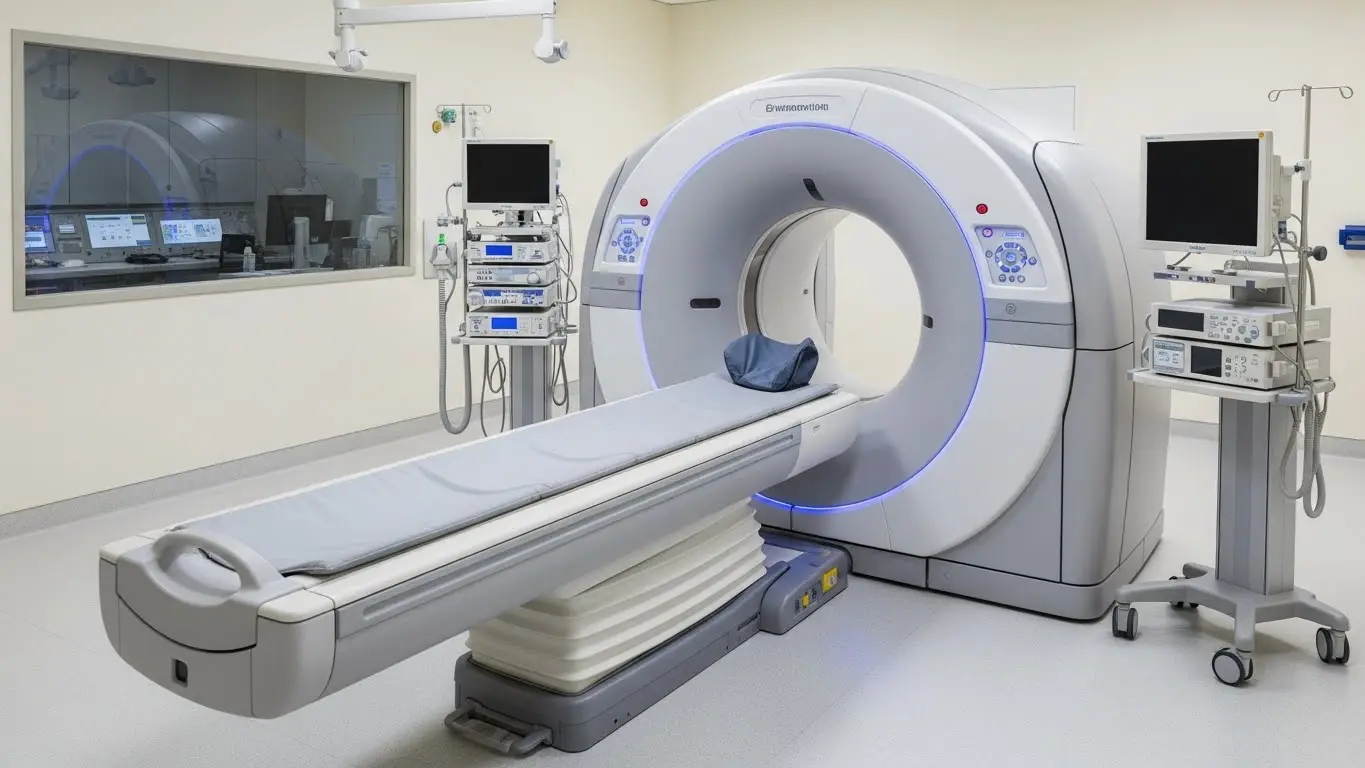
Quantum sensors are poised to revolutionize medical imaging by leveraging the principles of quantum mechanics to achieve unprecedented sensitivity, resolution, and speed. Unlike conventional imaging technologies, which rely on classical physics, quantum sensors exploit phenomena such as superposition and entanglement to detect minuscule changes in magnetic fields, gravity, or light at the atomic scale. These capabilities enable the visualization of biological processes with extraordinary precision, opening new frontiers in diagnostics, treatment monitoring, and disease prevention. For instance, quantum magnetometers can map neural activity in the brain without the need for bulky MRI machines, while quantum gravimeters can detect subtle density variations in tissues to identify tumors at earlier stages. The transformative potential of these sensors lies in their ability to overcome the limitations of current methods, such as high costs, long scan times, and exposure to ionizing radiation. As quantum technologies mature, their integration into medical imaging promises to democratize access to high-accuracy diagnostics and personalize healthcare in ways previously unimaginable.
The urgency of this shift is underscored by the growing demand for non-invasive, real-time imaging solutions in fields like oncology, neurology, and cardiology. Quantum sensors address these needs by offering portability, reduced energy requirements, and compatibility with biological systems. However, their adoption hinges on overcoming technical hurdles, including maintaining quantum coherence in warm, noisy environments and scaling production to meet clinical demands. This article delves into the science behind quantum sensors, their operational principles, and the challenges and opportunities shaping their path to widespread medical use.
The Fundamental Principles Behind Quantum Sensors
Quantum sensors operate by measuring physical quantities through the behavior of quantum systems, such as individual atoms, photons, or superconducting circuits. At their core, these sensors exploit quantum states that are highly sensitive to external perturbations. For example, nitrogen-vacancy (NV) centers in diamond, a common quantum sensor platform, respond to magnetic fields by altering their spin states, which can be read out optically. Similarly, superconducting quantum interference devices (SQUIDs) detect magnetic flux changes by leveraging the quantum coherence of Cooper pairs in superconductors. These systems rely on two foundational quantum phenomena: superposition, where a quantum state exists in multiple configurations simultaneously, and entanglement, where particles become correlated such that the state of one instantly influences another, even over large distances. By encoding measurement information into these delicate quantum states, sensors can achieve sensitivities down to femtotesla levels for magnetic fields or picometer precision for displacement. This quantum advantage arises because classical sensors are limited by thermal noise and the Heisenberg uncertainty principle, which quantum sensors circumvent through careful state preparation and measurement protocols. The ability to detect such minute signals is what makes quantum sensors uniquely suited for medical imaging, where tracking biological processes at the molecular level can reveal early disease markers and guide targeted therapies.
How Quantum Sensors Detect Magnetic Fields at the Atomic Level
Quantum sensors achieve atomic-scale magnetic field detection by monitoring the energy state transitions of quantum systems in response to external fields. For instance, NV centers in diamond are defect sites where a nitrogen atom replaces a carbon atom adjacent to a vacant lattice site. These defects have a ground state spin that interacts with magnetic fields via the Zeeman effect, causing shifts in their energy levels. When illuminated with green light, NV centers emit red fluorescence whose intensity depends on their spin state. By applying microwave pulses to drive spin transitions and measuring fluorescence changes, researchers can map magnetic fields with nanoscale spatial resolution and picotesla sensitivity. This technique, known as optically detected magnetic resonance (ODMR), allows for the non-invasive tracking of neural activity, blood flow, or even single-cell metabolism. Similarly, atomic vapor magnetometers use alkali metal atoms (e.g., rubidium) whose spin precession is influenced by magnetic fields. Circularly polarized light probes these precessions via the Faraday effect, enabling real-time, high-resolution imaging without cryogenic cooling. These methods exemplify how quantum sensors convert abstract quantum phenomena into actionable medical data, bridging the gap between fundamental physics and clinical applications.
Why Sensitivity Matters: Breaking the Resolution Barrier
The sensitivity of quantum sensors is a game-changer for medical imaging, as it directly addresses the resolution and specificity limitations of conventional technologies. Traditional MRI, for example, relies on detecting the collective magnetization of millions of hydrogen nuclei, which averages out subtle spatial variations and requires strong magnetic fields (typically 1.5–3 Tesla) to generate usable signals. Quantum sensors, in contrast, can detect individual spins or single molecules, enabling imaging at the cellular or even subcellular level without the need for large magnets. This capability is particularly valuable in neurology, where monitoring the firing of individual neurons or tracking neurotransmitter release could revolutionize the understanding and treatment of disorders like Parkinson’s or epilepsy. Similarly, quantum sensors can detect minute changes in blood oxygenation levels or metabolic activity in tumors, providing real-time feedback for personalized cancer therapies. The ability to resolve such fine details stems from their femtotesla-level sensitivity, which is orders of magnitude better than classical sensors. This quantum advantage is not merely incremental but transformative, allowing clinicians to observe biological processes in their native, dynamic states rather than static snapshots.
Challenges in Maintaining Quantum Coherence in Medical Environments
A critical challenge in deploying quantum sensors for medical imaging is preserving quantum coherence, the ability of quantum systems to remain in superposition, amid the thermal and electromagnetic noise inherent in clinical settings. Most quantum sensors, such as NV centers or SQUIDs, require isolation from environmental disturbances to function effectively. For example, NV-based sensors typically operate at cryogenic temperatures (near 4 K) to minimize phonon-induced decoherence, but medical applications demand room-temperature operation for practicality. Innovations like dynamic decoupling, where microwave pulses are used to refocus spin states and extend coherence times, have enabled room-temperature NV sensors, but these still face challenges in maintaining stability during prolonged scans. Similarly, atomic vapor magnetometers must contend with magnetic field fluctuations from nearby electronics or even the patient’s movement. Another hurdle is the integration of quantum sensors into compact, wearable devices without compromising their sensitivity. Solutions such as encapsulation in vibration-dampening materials or active noise cancellation are being explored, but these add complexity and cost. Overcoming these coherence challenges is essential for translating quantum sensors from laboratory prototypes to reliable clinical tools.
The Role of Cryogenic Cooling in Quantum Sensor Performance
Cryogenic cooling plays a pivotal role in enhancing the performance of certain quantum sensors by suppressing thermal noise that disrupts quantum states. For instance, superconducting quantum sensors like SQUIDs operate at temperatures close to absolute zero (1.5–4 K) to maintain superconductivity, which is essential for their extreme sensitivity to magnetic fields. At these temperatures, thermal fluctuations are minimized, allowing Cooper pairs to move coherently and detect magnetic flux changes with picotesla precision. However, the need for cryogenic infrastructure, such as liquid helium or dilution refrigerators, limits the portability and scalability of these sensors for medical use. In contrast, NV center-based sensors can function at room temperature, making them more practical for clinical environments. Nevertheless, some applications still benefit from partial cooling to extend coherence times or reduce background noise. Researchers are actively developing cryogen-free SQUID systems using high-temperature superconductors and cryocoolers, which could bridge the gap between ultra-sensitive performance and user-friendly deployment. The balance between cryogenic requirements and practicality remains a key consideration in the design of quantum sensors for medical imaging.
Comparing Atomic Vapor and NV Center Magnetometers
Atomic vapor and NV center magnetometers represent two leading approaches to quantum magnetic field sensing, each with distinct advantages and limitations. Atomic vapor magnetometers use alkali metal atoms (e.g., rubidium or cesium) whose spin precession is influenced by external magnetic fields. These sensors operate at room temperature and offer high sensitivity (nanotesla to picotesla levels) without requiring cryogenic cooling. Their non-invasive nature and compact size make them ideal for applications like magnetoencephalography (MEG), where mapping brain activity with high temporal resolution is critical. However, their spatial resolution is limited compared to NV-based sensors, as the detection volume is larger. NV center magnetometers, on the other hand, leverage the spin states of defects in diamond to achieve nanoscale spatial resolution and femtotesla sensitivity. This makes them suitable for imaging at the cellular or subcellular level, such as tracking ion channels in neurons. However, NV sensors often require optical readout systems and can be more complex to manufacture. The choice between these technologies depends on the specific medical application, with atomic vapor sensors excelling in whole-organ imaging and NV centers in high-resolution, localized diagnostics.
Current Performance Benchmarks and Metrics in Quantum Sensors
The performance of quantum sensors in medical imaging is quantified through key metrics such as sensitivity, spatial resolution, dynamic range, and operational stability. For example, NV center-based sensors have demonstrated magnetic field sensitivities as low as 10–100 pT/√Hz at room temperature, with spatial resolutions down to tens of nanometers. Atomic vapor magnetometers, while slightly less sensitive (typically 1–10 pT/√Hz), offer broader field-of-view imaging and faster response times, making them suitable for whole-brain MEG studies. Superconducting quantum sensors like SQUIDs remain the gold standard for sensitivity, achieving sub-femtotesla levels, but their requirement for cryogenic cooling limits their deployment in clinical settings. In terms of spatial resolution, quantum gravimeters, another class of quantum sensor, can detect density variations in tissues with millimeter precision, potentially improving early tumor detection. However, these systems are still in the experimental phase for medical applications. Operational stability remains a challenge, with coherence times in NV sensors ranging from microseconds to milliseconds under room-temperature conditions. These benchmarks highlight the trade-offs between performance and practicality, guiding the development of quantum sensors tailored to specific medical needs.
Integrating Quantum Sensors with Clinical Workflows
The successful integration of quantum sensors into clinical workflows hinges on addressing practical challenges related to user interface, data interpretation, and compatibility with existing medical infrastructure. Unlike traditional imaging modalities, quantum sensors often generate complex datasets that require specialized algorithms for real-time processing and visualization. For example, the raw output from an NV center-based sensor, a series of fluorescence intensity measurements, must be converted into a coherent magnetic field map using advanced signal processing techniques. Similarly, atomic vapor magnetometers produce time-resolved magnetic field data that must be synchronized with physiological signals, such as heartbeats or neural spikes, to extract meaningful diagnostic information. To facilitate adoption, developers are creating software platforms that automate these tasks, offering clinicians intuitive dashboards akin to those used in MRI or CT scans. Another critical factor is the miniaturization of quantum sensor systems, enabling their use in point-of-care settings. For instance, wearable quantum magnetometers for continuous neural monitoring or handheld quantum gravimeters for rapid tumor screening could streamline diagnostics. However, regulatory approval and validation against established benchmarks remain hurdles, requiring collaboration between physicists, engineers, and clinicians to ensure both safety and efficacy.
The Future of Quantum Sensors in Personalized Medicine
Quantum sensors are set to redefine personalized medicine by enabling the non-invasive, real-time monitoring of biomarkers that reflect an individual’s unique physiological and pathological states. For instance, quantum magnetometers could track the release of neurotransmitters like dopamine or serotonin in the brain, providing insights into psychiatric disorders and guiding tailored pharmacological treatments. Similarly, quantum gravimeters might detect metabolic changes in tumors to assess a patient’s response to chemotherapy or immunotherapy, allowing for adaptive treatment plans. The high sensitivity of these sensors also opens the door to early disease detection, such as identifying the faint magnetic signatures of amyloid plaques in Alzheimer’s patients before symptoms manifest. Furthermore, their ability to operate in compact, portable devices could democratize access to advanced diagnostics in resource-limited settings. As quantum technologies mature, their integration with artificial intelligence and machine learning will likely accelerate, enabling predictive analytics and automated diagnosis. This convergence of quantum physics and biomedical innovation promises to usher in an era where healthcare is not only reactive but proactive, preventive, and deeply personalized.