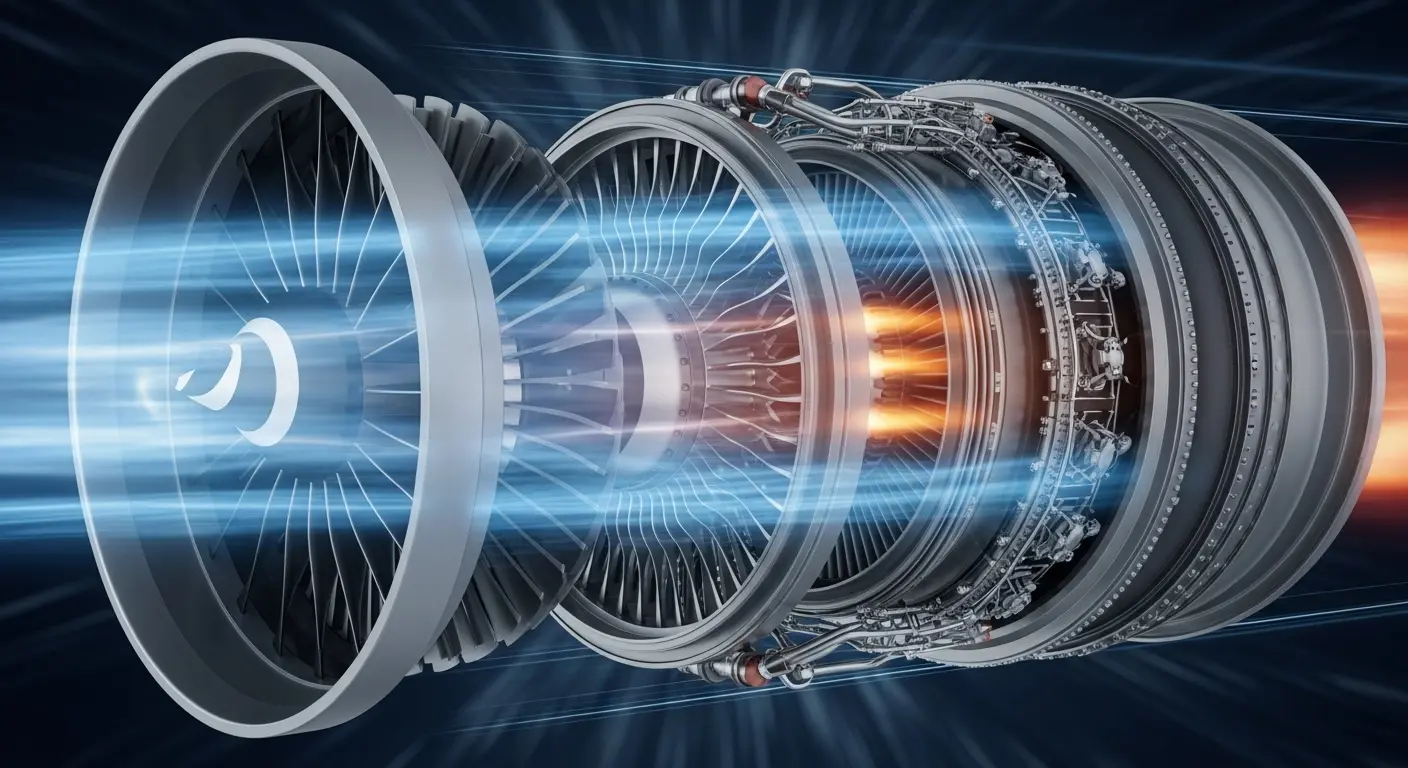
Xanadu, Rolls-Royce, and Riverlane have collaborated to achieve significant improvements in jet engine airflow simulations through the application of quantum computing. The project integrated Xanadu’s PennyLane software and Riverlane’s quantum algorithms, enabling Rolls-Royce to reduce simulation runtimes from weeks to less than an hour. This advancement addresses a notorious bottleneck for classical supercomputers by potentially accelerating simulation time exponentially. The collaboration, initiated on November 25, 2025, successfully reduced prototyping runtimes by up to 1000-fold, overcoming unsustainable wait times and highlighting the effectiveness of Xanadu’s Catalyst compiler in optimizing quantum-classical programs.
Quantum Computing for Jet Engine Airflow
A collaboration between Xanadu, Rolls-Royce, and Riverlane achieved significant improvements in jet engine airflow simulations using quantum computing. The project reduced simulation runtimes by orders of magnitude, shrinking calculations from weeks to less than an hour. This advancement unlocks new prototyping opportunities for the aerospace industry by addressing the notoriously long runtimes associated with simulating airflow on classical supercomputers, paving the way for faster design processes.
The research focused on optimizing the entire workflow, recognizing that bottlenecks aren’t solved by isolating quantum from classical computing. Riverlane accelerated the classical pre-computation step, ensuring it kept pace with quantum computation itself. Xanadu’s PennyLane software, optimized with the Catalyst compiler, further contributed to reducing prototyping runtimes by up to 1000-fold in some instances, overcoming unsustainable wait times previously experienced by Rolls-Royce.
This collaboration anticipates exponential speedups in challenging computational simulations, potentially enabling the next generation of jet engine designs. Rolls-Royce is preparing for these advancements by developing performant quantum algorithm components and software, ensuring they can extract meaningful insights from Xanadu’s fault-tolerant quantum hardware upon its arrival. The project benefited from combined expertise in industrial use cases, novel algorithms, and quantum-classical optimization.
Successful Collaboration Between Companies
A collaborative project between Xanadu, Rolls-Royce, and Riverlane significantly improved jet engine airflow simulations using quantum computing. This work reduced simulation runtimes by orders of magnitude, from weeks to less than an hour, unlocking new prototyping opportunities. The companies targeted a specific application and optimized programs using Xanadu’s PennyLane and Catalyst compiler, demonstrating a reduction in prototyping times of up to 1000-fold. This advancement addresses a notorious bottleneck for classical supercomputers in solving complex airflow equations.
The success hinged on a hybrid quantum-classical approach, optimizing the interplay between both computing types. Riverlane contributed novel quantum algorithms and accelerated the classical pre-computation stage, ensuring it kept pace with the quantum computations. This collaboration highlights the importance of optimizing the entire workflow, not just the quantum component, for practical industrial quantum adoption. The project benefited from each company bringing specialized skills – Rolls-Royce providing the use case, Riverlane the algorithms, and Xanadu the software optimizations.
This partnership received joint funding from the Canadian and United Kingdom governments, signifying a maturing collaboration for building quantum computing expertise between the two nations. NewCo, formed by a business combination of Xanadu and Crane Harbor Acquisition Corp., is expected to be capitalized with approximately $500 million. Riverlane has secured over $120 million in private funding, including an $85 million Series C round in 2024, furthering quantum error correction technology.
Reduction in Simulation Runtimes
The collaboration between Xanadu, Rolls-Royce, and Riverlane achieved significant reductions in jet engine airflow simulation runtimes. Previously taking weeks to complete, these simulations were reduced to less than an hour utilizing quantum computing techniques. This improvement unlocks new prototyping opportunities for the aerospace industry by dramatically shrinking calculation costs. The project focused on fault-tolerant quantum algorithms, positioning the partners as leaders as quantum computing technology advances.
This reduction in runtime was achieved by optimizing the entire workflow, not just the quantum computation itself. Researchers accelerated the classical preprocessing steps necessary to prepare parameters for the quantum circuit, ensuring this stage kept pace with quantum computation. In some instances, prototyping runtimes were reduced by up to 1000-fold. This highlights the importance of a hybrid quantum-classical approach for impactful results.
Rolls-Royce is preparing for future gains by ensuring performant quantum algorithm components and software implementations are in place. The company anticipates being able to extract meaningful insights when Xanadu’s fault-tolerant quantum hardware becomes available. This proactive approach, leveraging expertise in both quantum and classical computing, demonstrates a commitment to realizing the potential of exponential speedups in complex simulations.
the ability to optimize the hybrid quantum-classical structure to achieve a computational advantage, quantum computing’s ability to offer exponential speedups to the most challenging computational simulations related to the next generation of jet engine designs, and the ability to extract meaningful insights following the completion of Xanadu’s fault-tolerant quantum hardware.
Focus on Quantum Error Correction
Riverlane positions itself as the world leader in Quantum Error Correction (QEC), a technology crucial for unlocking the potential of quantum computing. The company partners with over 60% of quantum computer companies and leading high-performance computing centers, focusing on solving the error problems that currently hinder the development of utility-scale systems. Riverlane’s offerings include Deltaflow, a real-time QEC stack, and Deltakit, a software platform designed to aid quantum developers in learning and adopting QEC techniques.
The collaboration between Xanadu, Rolls-Royce, and Riverlane specifically targeted fault-tolerant quantum algorithms, placing the companies in a leading position as the field enters the error-corrected era. This focus on error correction was key to significantly advancing Rolls-Royce’s quantum application capabilities. By preparing performant quantum algorithm components and software, Rolls-Royce is proactively ensuring it can effectively utilize fault-tolerant quantum hardware when it becomes available.
Riverlane’s QEC technology utilizes proprietary chips, decoders, and compilers, demonstrating a comprehensive approach to tackling quantum errors. The company has secured over $120 million in private funding, including an $85 million Series C round in 2024, highlighting investor confidence in its ability to deliver solutions for this critical challenge in quantum computing. This funding supports the development and implementation of its QEC stack, Deltaflow.
This has been a hugely successful collaboration, which has significantly advanced our quantum applications capability. The single-minded focus on fault tolerant quantum algorithms has put us and our partners in a leading position as we enter the error-corrected era.
Leigh Lapworth, Rolls-Royce Fellow in Computational Science
Financial Details of Business Combination
Xanadu Quantum Technologies Inc. is combining with Crane Harbor Acquisition Corp. in a business combination agreement. The resulting company, Xanadu Quantum Technologies Limited (“NewCo”), is projected to be capitalized with approximately US$500 million in gross proceeds. This figure includes roughly US$225 million from Crane Harbor’s trust account and US$275 million from strategic and institutional investors participating in a common equity investment. NewCo anticipates listing on both the Nasdaq Stock Market and the Toronto Stock Exchange.
The financial impact extends to other involved companies as well. Riverlane has secured over $120 million in private funding, including an $85 million Series C round in 2024, highlighting investor confidence in their Quantum Error Correction technology. Rolls-Royce reported annual underlying revenue of £17.8 billion in 2024, alongside an underlying operating profit of £2.46 billion, demonstrating their existing financial strength prior to this quantum computing collaboration.
This business combination will submit a draft registration statement on Form F-4 to the U.S. Securities and Exchange Commission (SEC) for shareholder consideration. The document will include a proxy statement/prospectus distributed to Crane Harbor’s shareholders, outlining details of the transaction. This regulatory step underscores the formal process for merging the two entities and ensuring transparency for investors involved.
Company Overviews: Xanadu, Rolls-Royce, Riverlane
Xanadu, Rolls-Royce, and Riverlane collaborated on a project successfully reducing jet engine airflow simulation runtimes. Traditionally taking weeks, these simulations were completed in under an hour utilizing quantum computing techniques. This was achieved by integrating Xanadu’s PennyLane software with Riverlane’s quantum algorithms, ultimately unlocking new prototyping opportunities within the aerospace industry. The collaboration focused on fault-tolerant quantum algorithms, positioning the companies as leaders in the emerging error-corrected era of quantum computing.
Riverlane specializes in Quantum Error Correction (QEC), a critical technology for unlocking the full potential of quantum computers. They partner with over 60% of quantum computer companies and HPC centers, aiming to overcome the error challenges hindering progress. Riverlane’s offerings include Deltaflow, a real-time QEC stack, and Deltakit, a software platform for QEC development. The company has secured over $120 million in funding, including an $85 million Series C round in 2024.
Xanadu is a Canadian quantum computing company founded in 2016, focused on building accessible and useful quantum computers. They developed PennyLane, an open-source software library for quantum computing applications. Recently, Xanadu entered into a business combination agreement with Crane Harbor Acquisition Corp, expecting approximately $500 million in gross proceeds and listing on both the Nasdaq and Toronto Stock Exchanges. This positions NewCo, the combined company, for growth and innovation.
See today’s quantum computing news on Quantum Zeitgeist for the latest breakthroughs in qubits, hardware, algorithms, and industry deals.