The escalating demands of artificial intelligence, particularly in areas like natural language processing, drive researchers to explore computational shortcuts for complex tasks. Amin Ebrahimi and Farzan Haddadi, both from Iran University of Science and Technology, alongside their colleagues, address this challenge by developing a novel hybrid quantum-classical approach to artificial intelligence. Their work introduces a selection mechanism for the Mamba architecture that integrates variational quantum circuits as gating modules, enhancing feature extraction and suppressing irrelevant information. This integration tackles the computational bottlenecks inherent in deep learning models, offering a path towards more scalable and resource-efficient systems, and initial results on a reshaped MNIST dataset demonstrate improved accuracy and expressivity compared to purely classical methods.
Hybrid Quantum State Space Models for Sequences
This research explores the intersection of Quantum Machine Learning and sequence modeling, with applications to Natural Language Processing. Scientists are investigating hybrid quantum-classical algorithms to efficiently process sequential data, such as text and time series. A key focus is on state space models, including efficient architectures like Mamba, and how quantum computation can be integrated to enhance their capabilities. The team explores Quantum Recurrent Neural Networks, Quantum Transformers, and Quantum Long Short-Term Memory, leveraging the PennyLane software framework and the PyTorch deep learning library for development and testing. The research aims to address limitations in traditional NLP models when handling long sequences, striving for more efficient and expressive models capable of capturing long-range dependencies. By building upon recent advancements in sequence modeling, such as Mamba, the team seeks to unlock the potential of quantum computation for improving NLP capabilities.
Quantum Mamba Architecture for Sequence Classification
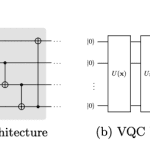
This study pioneers a hybrid classical-quantum approach to improve temporal sequence classification. Researchers engineered a system integrating Variational Quantum Circuits as gating modules within the Mamba architecture, designed to enhance feature extraction and suppress irrelevant information. This integration addresses computational bottlenecks in deep learning by exploiting quantum resources for more efficient representation learning. The methodology involves encoding classical data into quantum states, constructing a parameterized quantum ansatz, and performing measurements to extract meaningful insights.
Scientists employed amplitude encoding to map classical data into quantum states, maximizing structure and density within the quantum representation. Experiments conducted on a reshaped MNIST dataset reveal that the hybrid model achieved 24. 6% accuracy after just four epochs using a single quantum layer, surpassing the 21. 6% accuracy of a purely classical selection mechanism. This improvement highlights the potential of quantum-enhanced gating mechanisms for scalable, resource-efficient models in Natural Language Processing.
Quantum Mamba Achieves Rapid Sequence Classification
Scientists have achieved a breakthrough in hybrid classical-quantum algorithms, demonstrating enhanced performance in temporal sequence classification. Their work focuses on integrating Variational Quantum Circuits as gating modules within the Mamba architecture, a state-of-the-space model known for efficient processing of sequential data. This integration addresses computational bottlenecks in deep learning by leveraging quantum resources for more efficient representation learning and improved suppression of irrelevant information. The team demonstrated that the Variational Quantum Circuit-enhanced gating mechanism increases expressivity, allowing the model to capture more complex relationships within the data. This research builds upon advancements in state space models, such as Mamba, which utilizes Diagonal State Space Models and selective parallel scan techniques to optimize processing speed and reduce computational complexity. By incorporating Variational Quantum Circuits, the team further enhances Mamba’s capabilities, creating a system that efficiently manages information flow and prioritizes critical data.
Variational Circuits Boost Sequence Classification Accuracy
This research demonstrates the potential of integrating Variational Quantum Circuits into deep learning architectures, specifically within the Mamba model, to improve performance on temporal sequence classification tasks. By employing these circuits as gating mechanisms, the team achieved enhanced feature extraction and more effective suppression of irrelevant information, addressing computational bottlenecks inherent in large language models. Results on a reshaped MNIST dataset indicate that the hybrid model, utilizing a single layer, attained 24. 6% accuracy, exceeding the 21. 6% achieved by a purely classical selection mechanism, and demonstrating increased expressivity.
The study acknowledges that further investigation is needed to assess the model’s performance on more complex datasets and real-world applications. Future work will likely focus on expanding the model’s capacity, exploring different circuit architectures, and evaluating its robustness and generalization capabilities across a wider range of tasks. This work contributes to the growing field of hybrid quantum-classical machine learning and offers a novel approach to overcoming the computational challenges associated with modern deep learning models.
🗞 Hybrid Quantum-Classical Selective State Space Artificial Intelligence
🧠 ArXiv: https://arxiv.org/abs/2511.08349


See today’s quantum computing news on Quantum Zeitgeist for the latest breakthroughs in qubits, hardware, algorithms, and industry deals.