Assessing the performance of quantum error correction codes in realistic, noisy environments presents a significant challenge for building practical quantum computers. Francesco Pio Barone, Daniel Jaschke, Ilaria Siloi, and Simone Montangero, from the Dipartimento di Fisica e Astronomia “G. Galilei” and INFN, Padova, Italy, investigate the limits of error correction by extending noise modelling beyond commonly used approximations. Their work focuses on the colour code, a promising quantum error correction scheme, and explores its performance under more realistic noise conditions than previously considered. By incorporating detailed models of coherent errors and energy relaxation directly into circuit simulations using a sophisticated tensor network approach, the team accurately estimates error correction thresholds for codes containing up to 73 qubits, revealing that simplified noise approximations can significantly underestimate error rates as code size increases.
A quantum error correction code is assessed for its ability to correct errors in noisy quantum circuits. This task requires extensive simulations, often made tractable by considering simplified noise models that allow for efficient classical computation. However, these simplified models do not fully capture the variety of errors encountered in real quantum devices. This work extends circuit-level noise modeling by estimating the threshold of the color code under more general noise conditions, specifically considering two representative error channels to provide a more accurate assessment of quantum error correction performance in practical scenarios.
Recent Advances in Quantum Error Correction
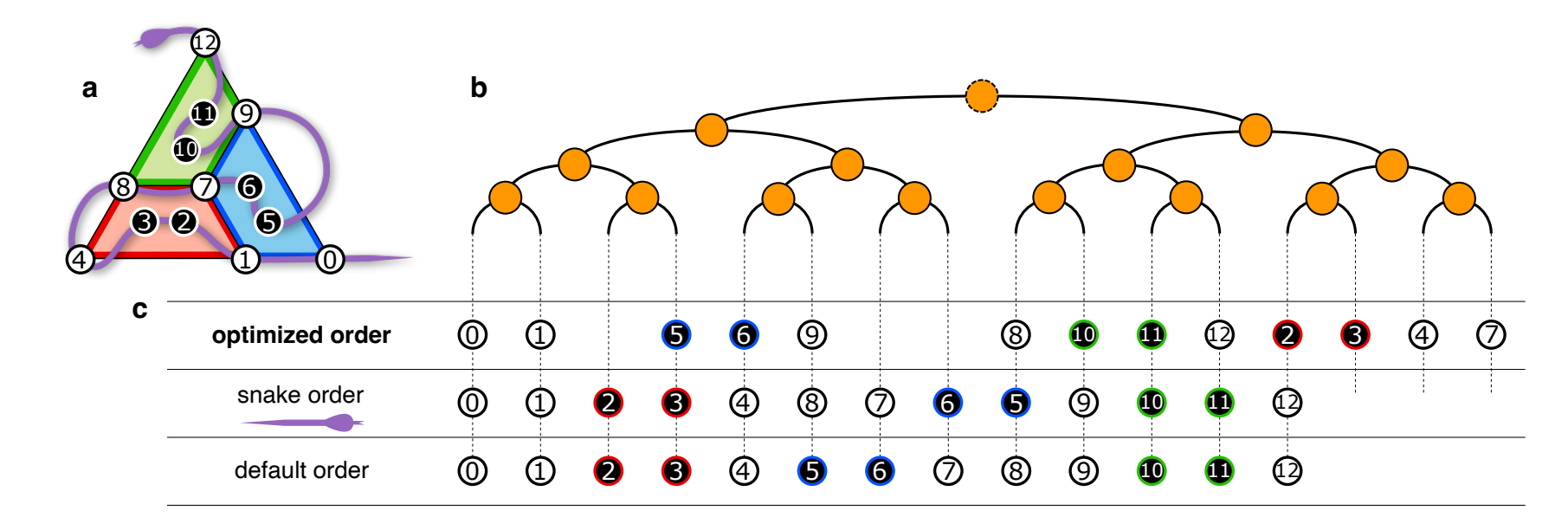
Recent research has focused intensely on quantum error correction, quantum simulation, and tensor networks, forming a robust body of work in the field. A central theme is quantum error correction itself, encompassing a wide range of codes like surface codes, color codes, and triangular codes, alongside various decoding algorithms and performance analyses. There is a strong emphasis on practical error correction, addressing realistic noise models and hardware constraints. Tensor networks are increasingly used as a powerful tool for simulating quantum many-body systems and are integral to these advancements.
Research also covers simulating open quantum systems, crucial for understanding the effects of noise and decoherence on quantum computations. Tensor networks are often employed to efficiently simulate these systems. Significant effort focuses on improving decoding algorithms, particularly for codes like color codes, and analysing their performance under different noise conditions, pushing towards scalable and efficient decoders. A growing area combines the stabilizer formalism with tensor networks, allowing for efficient representation and manipulation of quantum error correction codes and circuits.
Modeling the interaction of quantum systems with their environment, accounting for decoherence and dissipation, is also essential for realistic simulations and error correction. Some research addresses the challenges of implementing error correction on specific hardware platforms, including calibration techniques and error mitigation strategies. Emerging areas include Stabilizer Tensor Networks, combining the power of tensor networks with the stabilizer formalism, and Augmented Tree Tensor Networks, offering a powerful and flexible approach to simulation. New variational methods leveraging Clifford transformations and hardware-aware decoding techniques are also being explored. Research into post-selection techniques to improve error correction performance, a dynamical interpretation of error correction, and new tensor network algorithms for simulating open quantum systems are further expanding the field.
Color Code Threshold Estimation With Tensor Networks
Scientists accurately estimated the threshold for quantum error correction using color codes up to a distance of 7, representing 73 physical qubits. This breakthrough significantly advances the simulation of realistic noise environments for quantum computation, exceeding the capabilities of traditional methods. The team employed Tree Tensor Network simulations to model the behavior of color codes under non-Pauli noise, specifically investigating systematic single-qubit over-rotations and amplitude damping. Results demonstrate that these tensor network approximations accurately capture the threshold behavior, providing a valuable tool for assessing the viability of quantum error correction schemes.
Experiments revealed that amplitude damping error rates closely align with their simplified counterparts, validating the accuracy of the simulation approach. However, coherent over-rotations yielded systematically higher error rates, deviating from the simplified approximation as the code distance increased. This finding highlights the importance of considering non-Pauli noise models for accurate threshold estimation and underscores the limitations of relying solely on simplified approximations. The simulations show that the tensor network method can accurately estimate thresholds for color codes, even when dealing with complex noise models.
Measurements confirm that the computational cost of these simulations is governed by the growth of entanglement in the system, rather than the complexity of the gates used. Within the accessible regime of code distance 7, the team found threshold values consistent with expectations for topological codes. This work delineates a feasible operational regime, supporting further investigations into threshold estimation via coherent information or simulations of small non-Clifford protocols like magic state distillation. The study highlights both the practical boundaries and the potential of tensor network methods for simulating quantum error correction protocols in increasingly realistic noise environments.
Realistic Noise Models Enable Threshold Estimation
This research presents a new framework for simulating quantum error correction using tensor networks, enabling analysis of more realistic noise models than previously possible. Scientists successfully estimated code thresholds for the color code under two specific non-Pauli noise models, coherent single-qubit rotations and amplitude damping, using a Tree Tensor Network approach. Simulations extended to codes of significant size, demonstrating the method’s capability to handle nontrivial distances and extract meaningful threshold values. Importantly, the results reveal that approximating noise models with simpler representations can lead to inaccurate estimations of logical failure rates, highlighting the need for more sophisticated simulation strategies.
The team acknowledges limitations related to controlling the complexity within the tensor network and the need for careful validation to avoid approximation artifacts. Future work will focus on optimising tensor network structures to more efficiently represent quantum states and extend the simulations to even larger codes and deeper error correction circuits. Researchers also plan to apply this approach to simulate non-Clifford operations, which are crucial for certain quantum error correction protocols but inaccessible to traditional simulation methods, and to explore the use of tensor networks for calculating key quantum information quantities like entanglement and magic monotones.
🗞 Color code thresholds under circuit-level noise beyond the Pauli framework
🧠 ArXiv: https://arxiv.org/abs/2511.05719

See today’s quantum computing news on Quantum Zeitgeist for the latest breakthroughs in qubits, hardware, algorithms, and industry deals.