The future of computing took a significant leap forward today, as IonQ, a leader in quantum technology, announced a groundbreaking partnership with the University of Chicago to establish a dedicated center for quantum research and deployment. This collaboration marks the first time a fully functional, production-grade quantum computer and associated network will reside on a university campus, providing researchers with unprecedented access to cutting-edge hardware and software. By uniting IonQ’s commercial advancements with the University of Chicago’s renowned academic expertise—building on a legacy of scientific breakthroughs—this initiative promises to accelerate the development of practical quantum applications, potentially revolutionizing fields from medicine to materials science and bolstering national security.
IonQ and University of Chicago Partnership Established
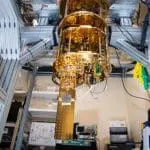
IonQ and the University of Chicago have established the IonQ Center for Engineering and Science, a partnership designed to accelerate quantum research and commercialization. This collaboration marks the first deployment of a production-grade quantum computer and an entanglement distribution quantum network to a university campus. The initiative will focus on translating cutting-edge research into tangible advancements for IonQ’s technology portfolio, spanning computing, networking, sensing, and security applications.
The partnership’s core will be a next-generation quantum computer installed on campus, alongside the innovative entanglement network. Researchers will have access to IonQ’s industry-leading hardware and software, fostering exploration of quantum solutions for chemistry, materials science, and advanced communication. IonQ will also contribute to the construction of a new building housing the center, strengthening its position as a core partner within the Chicago Quantum Exchange—a multi-institutional research consortium.
This collaboration builds on IonQ’s existing academic partnerships and its commitment to pushing quantum boundaries. Notably, IonQ achieved 99.99% two-qubit gate fidelity in 2025, a world record demonstrating significant advancements in quantum computing performance. The long-term vision includes developing a quantum computer with 2 million qubits by 2030, aiming to accelerate innovation across diverse fields like drug discovery and cybersecurity.
Deployment of Quantum Hardware and Network
IonQ and the University of Chicago have established the IonQ Center for Engineering and Science, deploying a next-generation quantum computer and an entanglement distribution quantum network on campus. This marks the first instance of a production-grade quantum system combined with a quantum network being accessible within a university setting. The initiative aims to bridge academic research with commercial quantum technology development, specifically targeting advancements in computing, networking, sensing, and security – areas crucial to IonQ’s future product roadmap.
This collaboration isn’t just about hardware access. IonQ is actively contributing to a new building housing the University’s Pritzker School of Molecular Engineering, demonstrating a significant financial commitment. Furthermore, IonQ is becoming a core partner of the Chicago Quantum Exchange (CQE), linking it to a multi-institutional research consortium including national labs and other universities. This expanded network will foster interdisciplinary research and accelerate innovation beyond what either entity could achieve independently.
IonQ’s recent achievements demonstrate their leadership; they achieved 99.99% two-qubit gate fidelity in 2025 and are aiming for a 2 million qubit system by 2030. Deploying these systems at the University of Chicago allows researchers to test and refine quantum algorithms and applications, ultimately driving advancements in fields like drug discovery, materials science, and financial modeling. This partnership is strategically positioned to capitalize on the growing quantum technology ecosystem and solidify IonQ’s competitive advantage.
Research Focus: Quantum Technologies and Applications
IonQ and the University of Chicago have partnered to establish the IonQ Center for Engineering and Science, deploying a next-generation quantum computer and entanglement distribution quantum network on campus. This collaboration marks the first instance of a production-grade quantum system connected to a university network, providing researchers access to cutting-edge hardware and software. The initiative aims to accelerate quantum technology development, translating academic breakthroughs into commercial applications – specifically bolstering IonQ’s portfolio in computing, networking, sensing, and security.
The partnership’s focus extends beyond hardware access. IonQ will contribute to a new building housing the University of Chicago’s Pritzker School of Molecular Engineering, furthering research into quantum materials and applications. Critically, IonQ achieved 99.99% two-qubit gate fidelity in 2025, a world record, and intends to deliver a 2 million qubit system by 2030. This long-term vision underlines IonQ’s commitment to scalable quantum solutions for complex problems in fields like drug discovery and financial modeling.
This collaboration isn’t isolated; IonQ maintains existing quantum research centers at the University of Maryland, Duke University, and the University of Washington. By fostering a network of academic partnerships, IonQ aims to accelerate innovation and build a robust talent pipeline. The University of Chicago partnership also positions IonQ as a core partner of the Chicago Quantum Exchange, facilitating collaboration with other leading institutions like Argonne and Fermilab, and driving the development of the broader quantum technology ecosystem.
IonQ’s Advancements and Future Quantum Goals
IonQ has established the IonQ Center for Engineering and Science at the University of Chicago, deploying a next-generation quantum computer and entanglement distribution network on campus. This partnership uniquely combines IonQ’s production-grade hardware with leading academic research, aiming to accelerate innovation in quantum technologies. The collaboration intends to translate research into tangible advancements for IonQ’s product portfolio—spanning computing, networking, sensing, and security—and strengthen its position in key markets.
A key achievement for IonQ is a recorded 99.99% two-qubit gate fidelity in 2025, setting a new world record in quantum computing performance. This high fidelity is critical for building stable and reliable quantum computations. Looking ahead, IonQ plans to deliver a quantum computer with 2 million qubits by 2030. This ambitious goal will require continued advancements in qubit control, error correction, and scalability—all areas the University of Chicago partnership will support.
This collaboration expands IonQ’s existing academic relationships, including work with the University of Maryland, Duke, and the University of Washington. Beyond research, the center will act as a hub for collaboration between academia, government, and industry, fostering a wider quantum technology ecosystem. IonQ’s advancements are attracting recognition, including features on the Fortune Future 50 and Forbes’ Most Successful Mid-Cap Companies lists, demonstrating growing industry confidence.
Source: https://ionq.com/news/ionq-and-the-university-of-chicago-sign-landmark-agreement-to-establish-ionq