

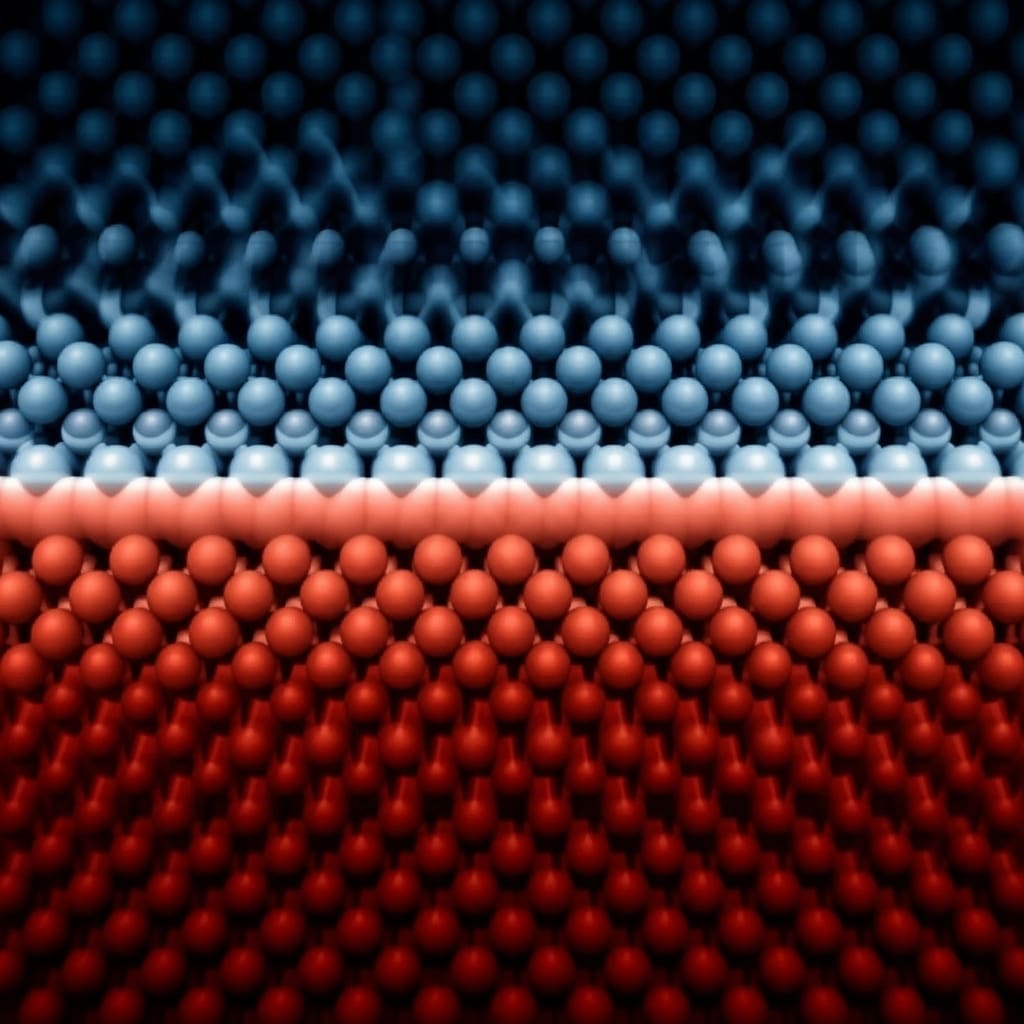
The orbital Hall effect, where electrons deflect due to their orbital angular momentum, attracts growing interest as a foundation for novel electronic devices, a field known as orbitronics. Tarik P. Cysne from the Universidade Federal Fluminense, Ivo Souza from the Universidad del País Vasco and Ikerbasque Foundation, and Tatiana G. Rappoport from the Physics Center of Minho and Porto Universities, alongside their colleagues, now present a detailed analysis of the underlying physics, focusing on the orbital magnetic moments of electrons within materials. Their work rigorously calculates these moments, incorporating a previously overlooked factor that ensures accurate predictions, and reveals that this correction significantly impacts the orbital Hall effect, particularly in layered materials like transition metal dichalcogenides. By accurately modelling these effects, the team’s findings advance the fundamental understanding of orbital magnetism and offer crucial insights for designing future orbitronic devices based on multi-layered van der Waals materials.
This work focuses on bilayer systems and the contribution of orbital magnetic moments associated with Bloch states, which describe the electronic band structure. The team clarifies how these moments contribute to Hall conductivity and identifies previously overlooked mechanisms, employing theoretical calculations using the Kubo formula to connect conductivity to electronic band structure correlations. The results demonstrate that the standard expression for orbital Hall conductivity requires a correction term in bilayer systems.
This correction arises from the specific symmetry properties of the bilayer structure and resulting modifications to electronic states, reaching up to 10% of the total orbital Hall conductivity in certain materials. This finding highlights the importance of considering interlayer effects when calculating the orbital Hall effect in bilayer systems, providing a more accurate description of the phenomenon and advancing the understanding of charge transport in layered materials for novel spintronic devices. This research presents a rigorous derivation of the matrix elements of the orbital magnetic moment of Bloch states, including the Berry connection term previously omitted from many calculations. The resulting formula accurately describes the orbital magnetic moment for non-degenerate Bloch states within any Hilbert space and introduces two new contributions that restore gauge covariance and provide potentially significant quantitative corrections.
Applying this complete expression to bilayer systems, specifically 2H transition metal dichalcogenides and biased bilayer graphene, reveals a reduction in the height of the orbital Hall conductivity plateau compared to prior calculations. These findings suggest that multi-layered van der Waals materials may be particularly susceptible to these newly identified corrections in orbital magnetic moment calculations, impacting the understanding of orbital Hall effects and advancing the field of orbitronics. The team verified the impact of these corrections in simpler single-layer models, finding no effect, which suggests the corrections become more prominent in bilayer systems with weak interlayer hopping and closely spaced energy levels. Future work will extend the formula to accommodate degenerate bands, and a systematic study across diverse materials promises to further illuminate the role of these corrections in orbital transport phenomena.
Orbital Hall Effect, Foundations and Theory
This collection of research papers establishes a deep understanding of the orbital Hall effect and its underlying physics. Initial studies by Xiao, Shi, and Niu, along with Ceresoli, Vanderbilt, and Resta, lay the foundational understanding of the Berry phase and its connection to orbital magnetism and the orbital Hall effect, explaining how geometric properties of electronic bands give rise to these effects. Further work by Kohn and Niu delves into the semiclassical dynamics of electrons in magnetic fields and the role of Berry curvature in determining their motion. A significant portion of the research focuses on the orbital Hall effect in 2D materials, particularly transition metal dichalcogenides and graphene.
Gong and colleagues, Kormányos and colleagues, Bhowal and Satpathy, and McCann explore the orbital Hall effect and related effects, such as the spin Hall effect and valley Hall effect, in these materials, often focusing on bilayer structures and the role of symmetry and band structure engineering. Cysne and colleagues have systematically investigated the orbital Hall effect in bilayer transition metal dichalcogenides, graphene, and related structures, using different theoretical approaches and exploring the potential for controlling the effect through external stimuli, also examining black phosphorus as a platform for observing the orbital Hall effect. Several papers detail the methods used to calculate and predict the orbital Hall effect. Salemi and Oppeneer, Rang and Kelly, and Urru and colleagues focus on first-principles calculations of the orbital Hall effect and related properties, including orbital relaxation length and orbital magnetization.
Lage, Cysne, and Latgé explore orbital magnetization in fractal structures, while Bhowal and Vignale investigate the orbital Hall effect as an alternative to the valley Hall effect in gapped graphene. Emerging areas of research include the importance of understanding the orbital relaxation length, the significance of quantum corrections, and the potential for photocurrents and optoelectronic applications, with the connection between the orbital Hall effect and photocurrents suggesting potential applications in optoelectronics. Related phenomena and extensions of the research include the investigation of orbital pseudospin texture using time-reversal dichroism, and the exploration of the connection between orbital magnetic moment dynamics and Hanle magnetoresistance. The research also explores exciton g-factors and their relation to orbital magnetism. Overall, this is a comprehensive collection of research papers on the orbital Hall effect and related phenomena, with the field rapidly evolving, focusing on 2D materials and the development of theoretical methods to predict and understand the effect. The emerging areas of quantum corrections, photocurrents, and novel materials suggest exciting possibilities for future research and applications.
Orbital Magnetism and Layered Material Conductivity
This work presents a rigorous derivation of the orbital magnetic moment of Bloch states, incorporating the Berry connection term previously omitted from many calculations. The resulting formula accurately describes the orbital magnetic moment for non-degenerate Bloch states within any Hilbert space and introduces two new contributions that restore gauge covariance and provide potentially significant quantitative corrections. Applying this complete expression to bilayer systems, specifically 2H transition metal dichalcogenides and biased bilayer graphene, reveals a reduction in the height of the orbital Hall conductivity plateau compared to prior calculations. These findings suggest that multi-layered van der Waals materials may be particularly susceptible to these newly identified corrections in orbital magnetic moment calculations, impacting the understanding of orbital Hall effects and advancing the field of orbitronics. The team verified the impact of these corrections in simpler single-layer models, finding no effect, which suggests the corrections become more prominent in bilayer systems with weak interlayer hopping and closely spaced energy levels. Future work will extend the formula to accommodate degenerate bands, and a systematic study across diverse materials promises to further illuminate the role of these corrections in orbital transport phenomena.
👉 More information
🗞 Description of the orbital Hall effect from orbital magnetic moments of Bloch states: the role of a new correction term in bilayer systems
🧠 ArXiv: https://arxiv.org/abs/2511.03901

