The challenge of fully characterizing quantum states remains a central problem in physics, and researchers continually seek new ways to represent and interpret quantum information. Jan Sperling, Laura Ares, both from Paderborn University, and Elizabeth Agudelo from TU Wien now present a method for reconstructing quasiprobability distributions from a wide range of measurements, even those that are incomplete or contain noise. This work significantly advances the field because it provides a more robust way to determine whether a quantum state exhibits nonclassical behaviour, a crucial distinction for applications in quantum technologies. By generalizing existing quasiprobability concepts and demonstrating their application to single-qubit systems, the team offers a powerful new tool for analysing and understanding the fundamental properties of quantum states and their departure from classical physics.
Researchers developed a method to analyse how the completeness of a measurement impacts the assessment of a quantum state’s classicality. This work extends established concepts like Kirkwood-Dirac and s-parametrized quasiprobabilities, providing a more versatile approach to characterizing quantum states. The team employed single-qubit systems to demonstrate and compare different measurement schemes, revealing how measurement imperfections influence the resulting quasiprobabilities and identification of nonclassical states.
Scientists formulated a method beginning with the Hilbert-Schmidt inner product to define a metric tensor, relating measurement operators. This tensor enables the determination of a dual basis, allowing for the expansion of a quantum state in terms of the measurement operators themselves. The researchers demonstrated that by inverting this metric tensor, they could reconstruct the quasiprobability distribution, representing the probability of obtaining specific measurement outcomes. Crucially, the team addressed scenarios where the inverse metric tensor does not exist, indicating incomplete information, by employing partial pseudo-inversions in the form of convolutions.
To further refine their approach, the team introduced a parameter to control the degree of deconvolution applied to the measurement data, effectively trading off accuracy for robustness against noise. Researchers expanded the state under study as a function of this parameter, defining a state as σ-classical if all components of the quasiprobability distribution are non-negative. This provides a nuanced criterion for identifying nonclassical states, which exhibit negative components in the quasiprobability distribution, signifying the necessity of quantum superposition. As a concrete example, the team analysed measurements based on orthonormal bases, defining measurement operators as outer products of basis states.
This led to a general weak-measurement scenario, where the outcomes are proportional to the inner product of the state with the measurement operators. The resulting quasiprobability distribution closely resembles the well-known Kirkwood-Dirac distribution, demonstrating the broad applicability of their framework. It aims to provide a deeper understanding of the tools and techniques used to characterize these states, with a particular emphasis on quasiprobability distributions and the role of measurement apparatus. The work contributes to the development of more robust and efficient methods for generating, characterizing, and utilizing nonclassical states in quantum technologies. It also clarifies the relationships between different concepts related to nonclassicality, such as entanglement, contextuality, and uncertainty.
Robust Quasiprobability Reconstruction From Noisy Measurements
This research presents a novel framework for constructing and analysing quasiprobability representations from a variety of measurements, including those affected by noise. The team addressed a practical challenge in quantum state reconstruction, namely incomplete or overcomplete experimental data, which can obscure the identification of genuinely non-classical states. By employing pseudo-inversion and optimisation techniques, scientists developed a method to determine quasiprobabilities even when data is limited or redundant, allowing for a more robust assessment of quantum non-classicality. The methodology successfully generalises established quasiprobability concepts, such as Kirkwood-Dirac and s-parametrized representations, and extends their applicability to a broader range of measurement scenarios.
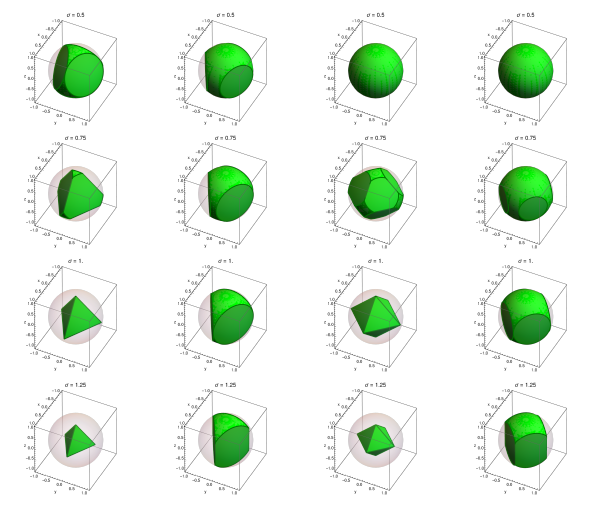
Demonstrations using single-qubit systems illustrate how incomplete and overcomplete measurements impact the determination of non-classical properties, while also enabling the modelling of noisy measurement devices. This work provides a versatile toolbox for defining and probing measurement-based nonclassicality, applicable to diverse experimental contexts. Future research could explore the scalability of these techniques and investigate their performance with more complex quantum systems and measurement schemes. Nevertheless, this device-agnostic and system-agnostic approach offers a valuable tool for researchers seeking to characterise and understand quantum non-classicality in targeted experiments, regardless of the specific detection device or physical system employed.
🗞 Quasiprobabilities from incomplete and overcomplete measurements
🧠 ArXiv: https://arxiv.org/abs/2511.04274