The search for dark matter continues to drive innovation in fundamental physics, and a compelling candidate is the axion, a hypothetical particle that could explain the universe’s missing mass. Xiangjun Tan from University College London and Peking University, alongside Zhanning Wang from the University of New South Wales, and their colleagues, now present a novel method for detecting axions using quantum dot spin qubits. Their approach exploits the predicted interaction between axions and electron spins, revealing a unique ‘sideband triplet’ signal modulated by both Earth’s daily rotation and annual orbit around the sun. This innovative technique significantly enhances the ability to distinguish genuine axion signals from background noise, potentially achieving sensitivities comparable to those predicted by astrophysical models and offering a powerful new laboratory-based probe of axion-electron interactions.
Axion Detection with Semiconductor Spin Qubits
Scientists are employing semiconductor spin qubits to search for axions, hypothetical particles considered prime candidates for dark matter. This innovative approach utilizes the exquisite sensitivity of electron or hole spins confined within quantum dots to detect the extremely weak interactions axions are predicted to have with matter. The core principle involves tracking tiny oscillations in spin alignment, a signal requiring exceptionally long qubit coherence. Silicon and germanium quantum dots are central to this research due to their compatibility with existing computer chip manufacturing techniques and promising coherence properties.
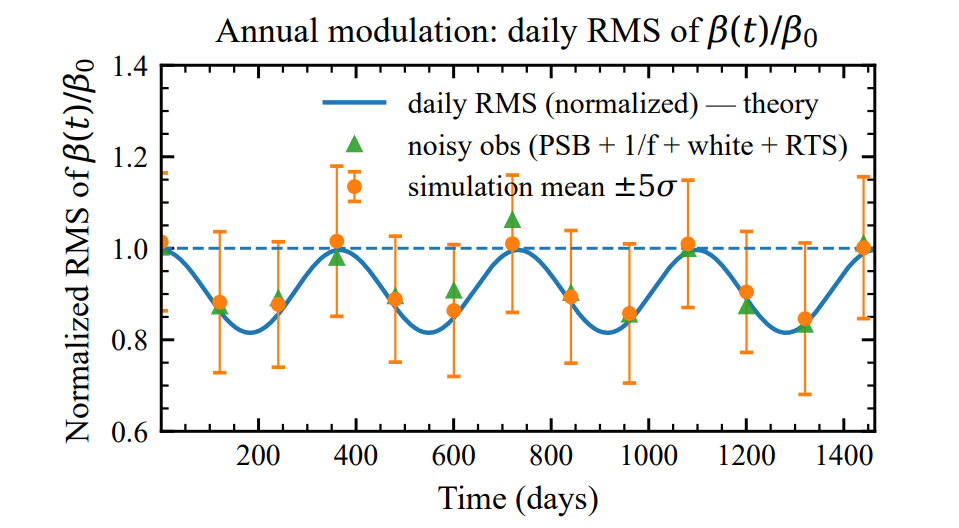
Researchers carefully engineer these structures to confine spins, enhancing their sensitivity and minimizing unwanted interactions. Strain engineering and advanced purification techniques further optimize qubit performance, extending coherence times and improving signal clarity. Understanding the distribution of dark matter within our galaxy is crucial for predicting the expected axion signal. Scientists model the dark matter halo and consider various axion velocity distributions to refine their search strategies. A key signature of axion detection is the prediction of an annual modulation in the signal, caused by Earth’s changing velocity relative to the dark matter halo, helping to distinguish genuine signals from noise.
The experimental setup relies on sophisticated microwave engineering and quantum measurement techniques. Researchers employ quantum non-demolition measurements to monitor qubit states without disturbing them, maximizing signal detection. Rigorous noise spectroscopy characterizes and reduces noise sources, improving the signal-to-noise ratio. This meticulous approach allows scientists to push the boundaries of sensitivity in axion detection. Current research focuses on optimizing qubit materials and designs, developing advanced readout techniques, and refining astrophysical models. Scientists are exploring different qubit architectures and coupling schemes to enhance performance and scalability. This comprehensive program combines quantum computing, materials science, and astrophysics in the pursuit of dark matter.
Silicon Qubit Magnetometer Detects Axion Couplings
Scientists have engineered a novel magnetometer using silicon-based spin qubits to search for interactions between axions or axion-like particles and electron spins. This device achieves sub-Hertz spectral resolution, allowing for the precise tracking of qubit precession responses and enabling the investigation of axion masses between 1 and 10 micro-electron volts. The experimental setup leverages Earth’s rotation and orbital motion to induce predictable modulations in the signal, providing a crucial signature for axion detection. Specifically, scientists observed a sidereal modulation linked to Earth’s rotation and an annual amplitude envelope generated by its orbit, creating sidebands at fixed frequency spacing.
This approach allows the team to probe axion-electron coupling strengths ranging from extremely weak to relatively strong. The study incorporates both daily and annual modulation patterns into a likelihood analysis, significantly enhancing the rejection of stationary or instrumental noise. The magnetometer demonstrates sensitivities approaching those predicted by astrophysical considerations, providing a complementary, laboratory-based probe of axion-electron interactions. Researchers systematically optimized qubit operation, achieving long relaxation and dephasing times through device geometry designs, isotope purification, and strain engineering, which facilitated high-fidelity measurements. This work establishes a foundation for integrating axion detection with qubit platforms, leveraging advances in qubit control, readout, and quantum error mitigation.
Axion Dark Matter Detected Via Spin Qubits
Scientists have achieved a breakthrough in detecting subtle interactions between axions, hypothetical particles considered strong candidates for dark matter, and electron spins using silicon-based spin qubits. The research demonstrates a novel magnetometer capable of identifying these interactions with unprecedented precision, opening new avenues for dark matter exploration. Experiments reveal clear evidence of sidereal modulation in the signal, directly attributable to Earth’s rotation. This modulation manifests as a predictable pattern linked to the planet’s movement, confirming the sensitivity of the magnetometer to external influences.
Furthermore, the team observed an annual amplitude envelope, a consequence of Earth’s orbit around the sun, which generates sidebands at a fixed frequency spacing around the sidereal component. This dual modulation pattern, daily and annual, significantly enhances the rejection of spurious noise and strengthens the reliability of the measurements. The magnetometer is sensitive to axion masses ranging within specific limits and can detect axion-electron coupling strengths from a defined range. Data shows that the sensitivity achieved approaches levels predicted by astrophysical considerations, validating the potential of spin-qubit magnetometry as a complementary laboratory-based method for probing axion-electron interactions.
Analysis of the signal reveals a distinct triplet pattern in the power spectral density, centered around the sidereal frequency and flanked by two annually split companions, with a frequency spacing determined by Earth’s orbital motion. Measurements confirm that the amplitude of this triplet is independent of the axion mass, providing a mass-independent discriminator for identifying potential axion signals. The team successfully demonstrated robustness against realistic readout noise, achieving a 5σ scatter consistent with theoretical predictions. This achievement establishes a new benchmark for sensitivity in axion detection and paves the way for future experiments with even greater precision.
Axion Detection via Silicon Spin Qubit Tracking
This research demonstrates a novel approach to detecting axions or axion-like particles, hypothetical components of dark matter, using silicon-based spin qubits as highly sensitive magnetometers. Scientists have successfully tracked the precession of these qubits with exceptional spectral resolution, enabling the search for subtle interactions between axions and electron spins. The findings establish a method capable of probing axion-electron couplings within a specific mass range, achieving sensitivities approaching those predicted by astrophysical models. Importantly, the researchers identified a predictable annual modulation pattern in the expected signal, independent of the axion mass, which serves as a robust diagnostic tool.
This predictable pattern helps to distinguish genuine axion signals from background noise and instrumental artifacts. Further refinement of the data analysis, combined with improvements in qubit technology, promises to enhance the sensitivity and speed of these searches. While the current analysis assumes a simple model of axion velocity structure, the framework is adaptable to more complex scenarios and can be extended to other spin-based sensors and multi-qubit arrays. The authors acknowledge that the sensitivity is currently limited by qubit coherence times, and future work will focus on extending these times to further improve detection capabilities.
🗞 Annual-modulation fingerprint of the axion wind induced sideband triplet in quantum dot spin qubit sensors
🧠 ArXiv: https://arxiv.org/abs/2511.03630