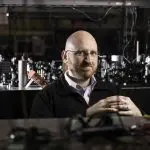
The future of computing took a giant leap forward this week with the announcement that California physicist John Martinis has been awarded the Nobel Prize in Physics. Honoring decades of groundbreaking work beginning in the 1980s, the prize recognizes Martinis’ pivotal experiments with quantum tunneling – the essential principle underlying the development of quantum computers. These aren’t just faster versions of today’s machines; quantum computers promise to revolutionize fields from medicine and materials science to artificial intelligence, and Martinis, now 67, isn’t stopping there – he’s dedicated to bringing this powerful technology out of the laboratory and into everyday use.
Martinis’ Early Influences and Education
John Martinis’ path toward a Nobel Prize began with formative educational experiences in his native California. Growing up in San Pedro, he credits high school teachers with initially sparking his interest in physics and, crucially, instilling a strong work ethic and organizational skills. While he admits to a previously casual approach to problem-solving, a dedicated math teacher emphasized the importance of demonstrating a clear process alongside solutions. This foundation proved vital when he arrived at UC Berkeley in the 1980s, where he encountered John Clarke and Michel Devoret, physicists who would become his graduate advisor and postdoctoral collaborator, respectively. Martinis deeply valued their mentorship, striving throughout his career to replicate the collaborative and inspiring environment they fostered. Berkeley’s advanced facilities further enabled his early experiments, allowing him to fully concentrate on scientific inquiry and ultimately laying the groundwork for his Nobel-winning doctoral project on quantum tunneling.
Quantum Tunneling and Nobel Recognition
John Martinis, alongside physicists John Clarke and Michel Devoret, was awarded the 2025 Nobel Prize in Physics for groundbreaking experiments conducted in the mid-1980s that confirmed quantum tunneling in larger objects. This seemingly improbable phenomenon, where particles pass through barriers they classically shouldn’t, formed the foundational basis for the development of quantum computing. Martinis’ doctoral project, carried out while at UC Berkeley under the mentorship of Clarke and Devoret, demonstrated the possibility of quantum tunneling beyond the subatomic level, opening doors to a new era of computational potential. The award recognizes not only the scientific breakthrough itself, but also the collaborative spirit fostered within the University of California system, where all three laureates are affiliated, Clarke as professor emeritus at Berkeley and Devoret alongside Martinis at UC Santa Barbara. Martinis, now 67, continues to work towards his “professional dream” of bringing quantum computing out of the laboratory and into practical application.
Bringing Quantum Computing to Practical Use
Nobel laureate John Martinis, a Californian physicist whose foundational work in quantum tunneling paved the way for quantum computing, is now focused on translating decades of research into practical application. Rather than resting on his recent award, shared with colleagues Michel Devoret and John Clarke, the 67-year-old Martinis continues to strive for a future where quantum computers are accessible beyond the laboratory. His work, stemming from experiments conducted as a UC Berkeley graduate student in the 1980s, demonstrated the possibility of quantum tunneling in larger objects, a crucial step in building these powerful machines. Martinis emphasizes a desire to see his professional dream realized, bringing quantum computing “out of the lab and into the hands of people who can use it,” and is actively pursuing this goal despite being at an age when many would consider retirement. This dedication highlights a commitment to not just discovery, but to the tangible benefits of quantum technology.



See today’s quantum computing news on Quantum Zeitgeist for the latest breakthroughs in qubits, hardware, algorithms, and industry deals.