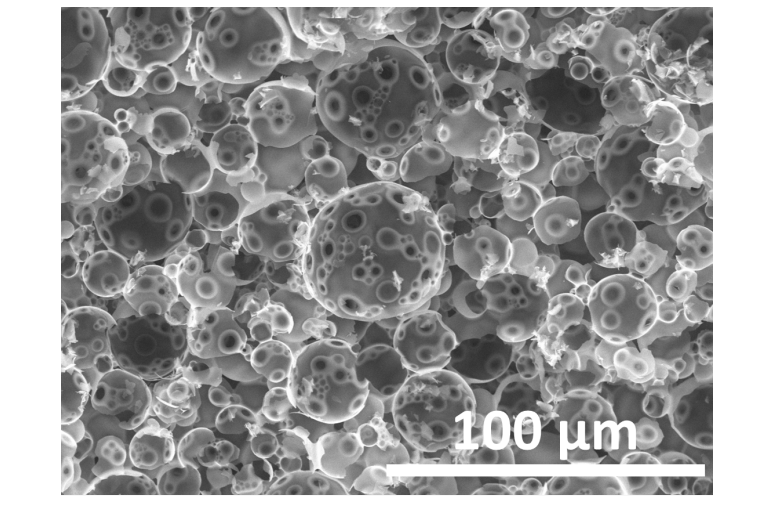
Understanding how light interacts with complex materials is crucial for optimising photocatalytic processes, which drive many applications from air purification to renewable energy production. Renaud A. L. Vallée and Rénal Backov, both from the University of Bordeaux and CNRS, have developed a comprehensive framework that directly links light transport within highly scattering materials to the rates of photocatalytic reactions. Their work establishes a rigorous connection between the way photons move through porous slabs and the resulting chemical activity at the material’s surface, offering a powerful predictive tool for designing more efficient photocatalytic systems. By solving the complex problem of light diffusion within these materials, the researchers provide a simplified, yet accurate, method for determining optimal nanoparticle packing and maximising photocatalytic performance, paving the way for improved material design and enhanced reaction rates.
Researchers developed a finite-slab diffusion model, rigorously solving for how photons travel through these materials and are ultimately absorbed to drive chemical processes. A key achievement is a compact design law, derived from the exact solution, which predicts photocatalytic rates based on material properties and illumination conditions. This law clarifies how rate scales with material characteristics, demonstrating a transition from strong diffusion to a regime dominated by the material’s thickness.
The methodology was successfully applied to air-core/silica-shell monoliths containing titanium dioxide nanoparticles, providing a streamlined approach for predicting photocatalytic activity. By combining effective medium approximations and Mie theory to determine optical properties, alongside calculations of nanoparticle packing, the model accurately predicts intrinsic rate constants. Measurement guidance is also provided, enabling quantitative validation of predictions on fabricated materials.
Light Transport Drives Photocatalytic Reaction Rates
Scientists have developed a comprehensive framework that connects how light travels through highly scattering materials to the rates of photocatalytic reactions occurring on their surfaces. The study utilizes the diffusion approximation, a mathematical technique for modeling light transport, and employs extrapolated boundary conditions to accurately represent light interactions at material interfaces. Researchers solved for the light intensity, or fluence, rigorously mapping external illumination to internal light distribution. Local absorption is then calculated by multiplying the absorption coefficient by the fluence, driving the generation of primary carriers and radicals essential for photocatalysis.
The team specialized this framework to air-core/silica-shell monoliths containing anatase titanium dioxide nanoparticles, the active photocatalytic material. Shell refractive indices were calculated using mixing theories, accounting for the interaction of light with the nanoparticles within the silica matrix. Light scattering was determined using Mie theory, a precise method for calculating how light interacts with spherical particles, and absorption was calculated based on nanoparticle density and absorption cross-section. This detailed modeling allows for accurate prediction of light distribution within the monolith structure, crucial for optimizing photocatalytic efficiency.
Researchers then reduced the complex solution into a compact design law, clarifying when reaction rates scale strongly with material dimensions or simply with light intensity. This simplification enables efficient design and optimization of photocatalytic materials for specific applications. The study also details rigorous measurement and validation protocols, including diffuse reflectance and transmittance measurements, to accurately determine the scattering and absorption properties of the materials. To ensure accuracy, scientists employed a streamlined method for determining rates based on nanoparticle packing fraction, allowing for systematic investigation of material composition. This innovative approach enables precise control over light transport and reaction rates, paving the way for advanced photocatalytic technologies.
🗞 From diffusion optics to photocatalytic rates in multiply scattering porous slabs: finite-slab Green’s function, optical-to-kinetic mapping, and application to core-shell aerogels with embedded anatase nanoparticles
🧠 ArXiv: https://arxiv.org/abs/2510.20315