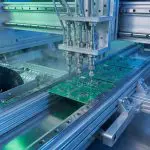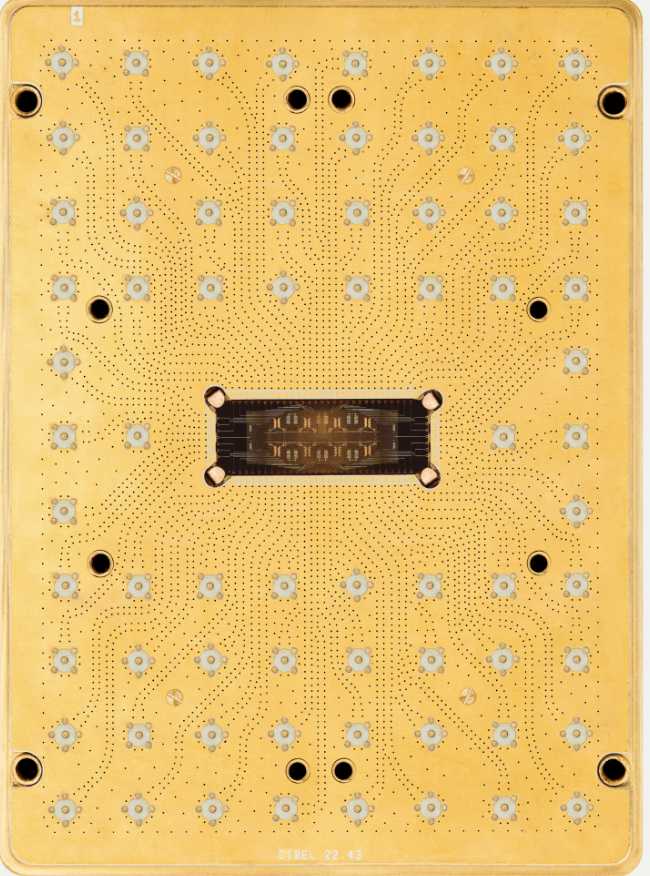
Alice & Bob, a global leader in fault-tolerant quantum computing, has partnered with PLASSYS-BESTEK to deliver the SQUID-6 UHV, a state-of-the-art quantum chip fabrication equipment, as part of the ULTRACAT project. This new, fully automated, ultra-high vacuum deposition system represents a significant milestone in industrial quantum production and addresses the critical need for advanced chip manufacturing to scale quantum computers. The SQUID-6 UHV minimizes contamination and guarantees high-quality Quantum Processing Units (QPUs) through its modular design and UHV operation, responding to the growing demand for reliable quantum chip material processing. Supported by the French Government’s defense innovation agency, this delivery underscores Europe’s commitment to developing fault-tolerant quantum computers and establishing a robust quantum supply chain.
Advancing Quantum Chip Fabrication with ULTRACAT Project
The ULTRACAT project represents a significant investment in the future of quantum computing hardware, culminating in the delivery of the SQUID-6 UHV fabrication equipment. This advanced tool, developed through a partnership between Alice & Bob and PLASSYS-BESTEK, and supported by the AID, is designed to accelerate the creation of next-generation, fault-tolerant quantum chips. According to the company announcement, the SQUID-6 UHV will enable more reliable and automated fabrication processes, crucial for scaling quantum computer designs.
The newly delivered SQUID-6 UHV is a fully automated system intended for the precise deposition of thin films essential for constructing cat-qubit processors. This equipment will be installed within a new €50 million advanced quantum lab currently under construction by Alice & Bob in Paris. The lab features a state-of-the-art nanofabrication cleanroom, expected to be completed in March 2026, which will house the SQUID-6 UHV and other critical fabrication tools. Antoine Gras, VP of Quantum Hardware and Infrastructure at Alice & Bob, emphasized that this investment is vital for reducing design iteration cycles.
Building on this advanced manufacturing capability, Alice & Bob aims to overcome key challenges in scaling quantum computers. Fault-tolerance, a critical requirement for practical quantum computation, demands increasingly complex chip designs and precise fabrication techniques. The SQUID-6 UHV’s automated calibration capabilities will allow for the reliable production of these intricate processors. The AID’s support highlights the strategic importance of domestic quantum technology development for France, positioning the nation as a leader in this rapidly evolving field.
Strategic Partnerships and Innovation in Quantum Technology
Building on this commitment to advancing quantum hardware, Alice & Bob is strategically collaborating with PLASSYS-BESTEK to refine the fabrication process of superconducting qubits. This partnership leverages PLASSYS-BESTEK’s specialized expertise in thin film deposition, a critical step in creating the delicate superconducting circuits that form the basis of quantum processors. According to company announcements, the SQUID-6 UHV tool represents a significant leap forward in automated calibration and reliability during chip fabrication, addressing a key bottleneck in scaling quantum computing systems.
The newly delivered SQUID-6 UHV system is designed to deposit materials with atomic-level precision, ensuring consistent qubit performance and reducing manufacturing defects. This fully automated system minimizes human intervention, improving both speed and reproducibility, a vital requirement for producing a large number of high-quality quantum chips. The investment of €50 million into the advanced quantum lab and nanofabrication cleanroom demonstrates Alice & Bob’s long-term vision for vertically integrating chip design and manufacturing. The company anticipates the completion of the cleanroom in March 2026, enabling immediate installation and operation of the SQUID-6 UHV system.
Antoine Gras, VP of Quantum Hardware and Infrastructure at Alice & Bob, emphasized the importance of this internal capability, stating the need to invest in advanced chip manufacturing to accelerate the design iteration cycle. This strategic move allows Alice & Bob to maintain greater control over the entire production process, fostering innovation and reducing reliance on external foundries. The AID’s support for the ULTRACAT project highlights the French government’s commitment to fostering a domestic quantum technology ecosystem and securing a leading position in this rapidly evolving field. This collaborative approach, combining industrial expertise with government funding, is expected to accelerate the development and deployment of fault-tolerant quantum computers.
Building on advancements in both website functionality and quantum chip fabrication, these parallel developments signal a maturing technological landscape. The strategic partnership between AID, Alice & Bob, and PLASSYS-BESTEK to create next-generation fault-tolerant quantum chips demonstrates a focused effort toward practical quantum systems. This collaborative approach could enable more reliable and scalable quantum computing architectures.
The implications extend beyond quantum computing itself, potentially impacting data security and advanced analytics. For industries relying on secure communications and complex problem-solving, this represents a crucial step toward harnessing the power of quantum technology. Continued progress in areas like cookie consent platforms, ensuring user privacy, and quantum chip development will be vital as these technologies converge and become increasingly integrated into daily life.



See today’s quantum computing news on Quantum Zeitgeist for the latest breakthroughs in qubits, hardware, algorithms, and industry deals.