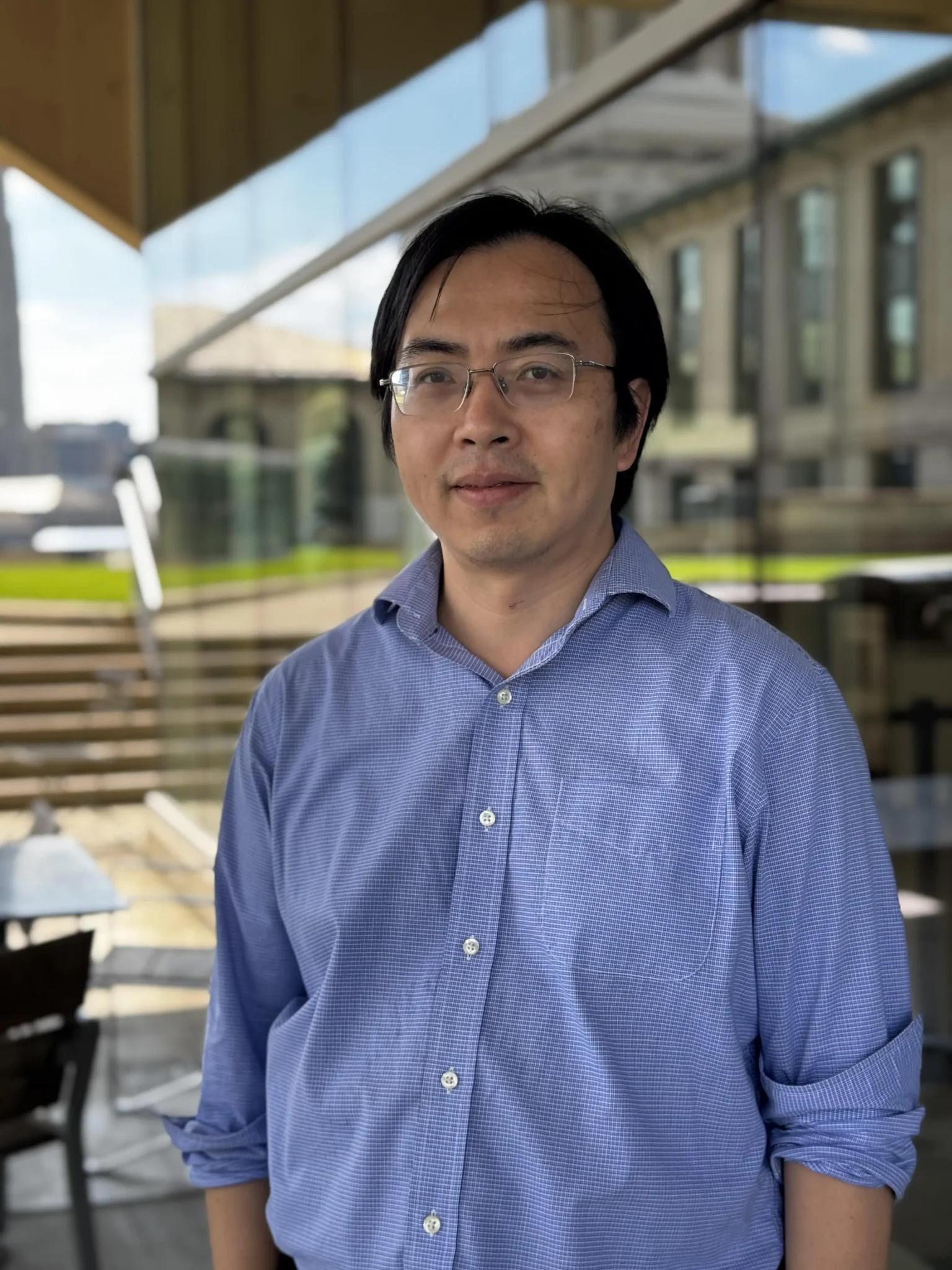
Carnegie Mellon University Associate Professor Sufei Shi has been selected by the Gordon and Betty Moore Foundation to join its 2025 cohort of Experimental Physics Investigators. The programme will award him $1.3 million over five years, joining 21 other mid‑career researchers across the United States who are being funded to push the boundaries of experimental physics. Shi’s grant will support a new platform for quantum simulation that promises to unlock the secrets of complex quantum systems such as superconductors and next‑generation quantum computers.
How Shi’s Work Could Revolutionize Superconductors
Shi’s research sits at the intersection of two‑dimensional materials and excitonic physics, the study of neutral bound pairs of an electron and a hole that form when a semiconductor absorbs light. “Many of the most exciting and useful quantum behaviors , like superconductivity , come from the strong interactions between quasi‑particles,” he says. In conventional superconductors, electrons pair through subtle lattice vibrations, but in the atomically thin systems Shi studies, excitons can be engineered to mimic these interactions with far greater precision. By controlling the density and arrangement of excitons in a moiré superlattice, Shi hopes to recreate the conditions that give rise to superconductivity in a laboratory setting where every parameter can be tuned. If successful, this approach could provide a blueprint for designing materials that conduct electricity without resistance at practical temperatures, a breakthrough that would reshape power grids, magnetic levitation, and high‑speed electronics.
The $1.3M Project Targeting Quantum Simulation Breakthroughs
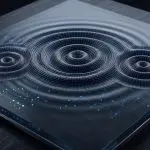
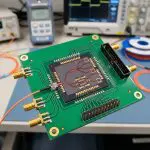
The Moore Foundation’s Experimental Physics Investigators programme offers a generous five‑year grant that allows researchers to pursue high‑risk, high‑reward projects. “We once again received proposals from amazing mid‑career investigators who are taking their research to new levels,” said Theodore Hodapp, program director for the initiative. Shi’s grant will fund two complementary strategies for building a scalable quantum‑simulation platform. In the first, advanced nanofabrication and optical techniques will trap large, highly excited excitons in custom‑designed patterns, creating a lattice of quantum bits that can be manipulated with unprecedented fidelity. In the second, Shi will employ moiré patterns in well‑aligned stacks of atomically thin semiconductors, using electric fields and doping to confine and steer excitons. These methods will allow the precise tuning of exciton interactions, enabling simulations of quantum phenomena that are beyond the reach of classical computation.
The project already has a strong collaborative pedigree. A recent paper in Nature Photonics described a novel approach to controlling excitonic states in an atomically thin semiconductor, a study that brought together Shi, the University of California, Riverside, Arizona State University, and other partners. The work also featured Carnegie Mellon faculty Ben Hunt, associate director of physics and co‑director of the Pittsburgh Quantum Institute, and Shubhayu Chatterjee, assistant professor of physics. “The impact of Shi’s work promises to accelerate innovations in quantum‑enabled technologies,” said Barbara Shinn‑Cunningham, the Glen de Vries Dean of the Mellon College of Science. “His work exemplifies the power and impact of interdisciplinary research.”
Why Classical Computers Fail to Solve Excitonic Physics
The complexity of excitonic systems arises from the many‑body interactions that govern their behaviour. “These systems are so complex that we cannot fully understand them even using the most powerful classical computers,” Shi notes. Classical algorithms struggle to simulate the exponential growth of the Hilbert space as the number of excitons increases, leading to computational bottlenecks that render accurate predictions impractical. Moreover, quantum correlations, entanglement and superposition, are inherently non‑classical, making them difficult to capture with conventional numerical methods. By contrast, a quantum simulator built from controllable excitons can naturally encode these correlations, allowing the system to evolve according to the same rules that govern the physical phenomena of interest. In this way, Shi’s platform seeks to sidestep the limitations of classical computation and provide a direct, scalable route to exploring complex quantum behaviour.
From Two‑Dimensional Materials to Quantum Computing
Shi’s vision extends beyond superconductivity to the broader landscape of quantum information science. The ability to engineer exciton states in moiré superlattices bridges condensed‑matter physics and atomic physics, creating a versatile playground for quantum simulation. The platform could serve as a testbed for quantum optoelectronics, where light and matter interact in engineered ways to perform computation or communication. It could also inform the design of quantum processors that rely on excitonic qubits, potentially offering advantages in coherence times and integration with existing semiconductor technology. By harnessing the precise control afforded by nanofabrication and optical techniques, Shi’s work could lay the groundwork for quantum devices that are both scalable and flexible.
Prior to joining Carnegie Mellon, Shi was an associate professor in the Department of Chemical and Biological Engineering at Rensselaer Polytechnic Institute. He earned his Ph.D. from Cornell University. Since arriving in 2023, he has cultivated collaborations across experiment and theory, with Rachel Mandelbaum, head of the Department of Physics, praising the synergy: “It’s exciting to see how experimentalists and theorists working together can push the boundaries of quantum research,” Mandelbaum said. “I look forward to seeing the impact of the innovative research Sufei has planned with support from the Moore Foundation’s Experimental Physics Investigators program.”
The Moore Foundation’s investment in Shi’s research represents more than a financial boost; it signals a broader commitment to nurturing mid‑career scientists who can translate deep physical insights into transformative technologies. If Shi’s quantum‑simulation platform succeeds, it could unlock new pathways to superconductivity, enable quantum processors that harness excitonic states, and provide a versatile framework for probing the most
See today’s quantum computing news on Quantum Zeitgeist for the latest breakthroughs in qubits, hardware, algorithms, and industry deals.