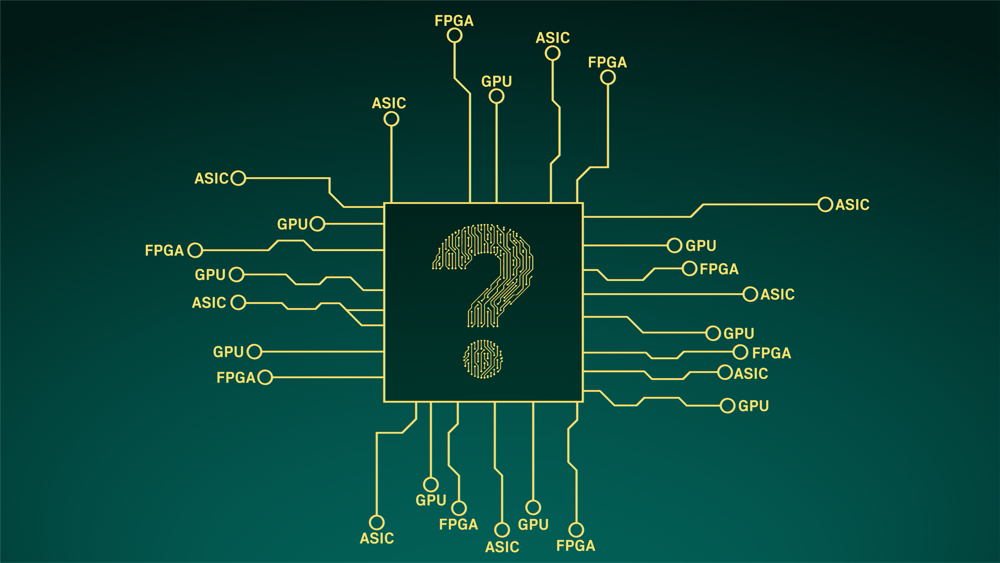
Quantum computers promise to solve problems that are intractable for today’s silicon‑based machines, but they do not operate in isolation. Every qubit that flips, every entanglement that decoheres, creates an avalanche of data that must be processed in real time. Without quantum error correction (QEC), a handful of faulty qubits would collapse a computation long before it finished. Yet QEC itself demands a classical brain that can read, interpret and respond to error syndromes in a few microseconds while juggling tens of terabytes of data per second. The choice of classical hardware,whether it is a graphics processing unit, a field‑programmable gate array or a custom ASIC,has become a strategic decision that will dictate whether a quantum system scales from a few hundred qubits to the millions required for practical applications.
The Classical Backbone of Quantum Error Correction
In a fault‑tolerant quantum computer, every physical qubit is monitored repeatedly by a network of stabiliser measurements. Each round of measurement produces a syndrome pattern that must be decoded instantly to determine the appropriate corrective operation. A single round can generate a deluge of data: for a million‑qubit architecture, the raw syndrome stream can reach 100 terabytes per second, comparable to the global bandwidth of a major streaming service. To keep pace, the classical decoder must operate within a latency budget of tens to hundreds of microseconds, a requirement that pushes the limits of conventional computing.
High‑performance graphics processors have been repurposed to meet these demands. NVIDIA’s CUDA‑Q platform, for instance, integrates quantum processors, simulators and GPUs into a unified programming model. Its QUDA‑Q library delivers 29‑ to 35‑fold speedups over standard decoders for single‑shot decoding, and up to 42‑fold acceleration for high‑throughput syndrome decoding. The cuQuantum library accelerates low‑level quantum circuit simulation by up to 81 times. These figures illustrate how a GPU’s massive parallelism can be harnessed to crunch syndrome data in real time, turning a traditionally graphics‑centric architecture into a quantum‑ready workhorse.
Field‑programmable gate arrays (FPGAs) complement GPUs by offering deterministic, spatially parallel logic that can be reconfigured on the fly. Riverlane’s FPGA‑based decoders achieve sub‑20‑microsecond latency for real‑time error correction, a benchmark that has been replicated by companies such as Rigetti, Xanadu and IBM. Because FPGAs can be re‑wired to accommodate new qubit modalities or updated decoding algorithms without a full hardware redesign, they act as a bridge between prototype quantum systems and the fixed‑function solutions that will dominate later stages of deployment.
Custom application‑specific integrated circuits (ASICs) represent the pinnacle of optimisation. By hard‑wiring the decoding logic into silicon, an ASIC can eliminate the overhead of memory accesses and kernel launches, achieving ultra‑low latency and exceptional energy efficiency. Prototype ASIC decoders for surface codes have demonstrated throughput that far exceeds that of GPUs and FPGAs, and their pipeline‑based architecture is ideally suited to the continuous data flow required by quantum control loops. However, ASICs are expensive to design, require long lead times and offer little flexibility once fabricated, making them a natural fit for mature, well‑understood error‑correction protocols rather than experimental setups.
Parallelism versus Determinism: GPU, FPGA, ASIC Trade‑offs
The three hardware families differ fundamentally in how they balance parallelism, latency and flexibility. GPUs excel at throughput: thousands of cores execute identical instructions on separate data elements simultaneously, hiding memory latency through massive thread scheduling. Their shared‑memory architecture within streaming multiprocessors facilitates complex parallel algorithms but is not optimised for the deterministic, low‑latency control loops that QEC demands.
FPGAs strike a middle ground. Their configurable logic blocks can be wired into bespoke data paths that minimise routing delays, while on‑chip memory and high‑bandwidth interfaces allow for rapid data movement. The spatial parallelism of an FPGA means that multiple decoding pipelines can run side by side, each handling a slice of the syndrome stream. This architecture is highly deterministic, yet the reconfigurability of the fabric ensures that the same chip can adapt to new decoding strategies or qubit technologies.
ASICs remove the middleman entirely. By hard‑coding the decoding logic, an ASIC eliminates the need for a general‑purpose operating system, kernel launches or complex memory hierarchies. The resulting datapaths are streamlined, with contention‑free communication between processing elements. This yields the lowest possible latency and highest energy efficiency, but at the cost of flexibility. ASICs are best suited for the final, high‑throughput stages of a quantum system where the error‑correction algorithm is fixed and the qubit architecture is mature.
Toward a Heterogeneous Quantum Stack
In practice, no single hardware platform can meet all the demands of a large‑scale quantum computer. GPUs provide the raw computational muscle needed for batch decoding, compilation and simulation. FPGAs deliver the deterministic, low‑latency pipelines required for real‑time syndrome extraction and feedback. ASICs supply the ultra‑efficient, high‑throughput decoders that will ultimately sustain millions of qubits. The key to scaling lies in orchestrating these heterogeneous resources so that each performs the role it does best.
This approach mirrors the evolution of classical supercomputers, where CPUs, GPUs and specialised accelerators coexist to tackle different aspects of a workload. For quantum computing, the integration challenges are even steeper: the classical hardware must interface directly with cryogenic control electronics, maintain precise timing across distributed systems and adapt to rapidly evolving qubit technologies. Companies that invest early in a flexible, modular architecture,one that can swap a GPU for an FPGA or an FPGA for an ASIC as requirements change,will be best positioned to ride the wave of quantum adoption.
The stakes are high. A quantum system that cannot decode its own errors in real time will stall, regardless of how many qubits it contains. Conversely, a well‑engineered classical backbone can turn a fragile quantum prototype into a robust, fault‑tolerant machine. As the quantum industry moves from laboratory demonstrations to commercial deployment, the decisions made today about which hardware to invest in will shape the trajectory of the entire field. A heterogeneous mix of GPUs, FPGAs and ASICs, each leveraged for its unique strengths, offers the most promising path to the quantum advantage that has long been promised.
See today’s quantum computing news on Quantum Zeitgeist for the latest breakthroughs in qubits, hardware, algorithms, and industry deals.