Quantum random access memory represents a crucial advancement for complex quantum algorithms, yet current designs often depend on difficult-to-implement operations that hinder progress towards practical quantum computers. Guangyi Li, Yu Gan, and Zeguan Wu, along with their colleagues, now present a new architecture, Stab-QRAM, specifically designed to overcome this limitation. This innovative memory utilises a unique approach tailored for data exhibiting a particular mathematical structure, and crucially, operates entirely with Clifford gates, avoiding the need for expensive and error-prone non-Clifford operations. The team demonstrates that Stab-QRAM achieves optimal efficiency, matching its storage capacity with the speed of data access, and offers a significant step towards realising data-intensive quantum computations on near-term quantum hardware, with potential applications ranging from optimisation problems to analysing complex systems.
Hybrid QRAM with Acoustic and Superconducting Elements
This research details advancements in Quantum Random Access Memory (QRAM) and related quantum computing technologies. QRAM aims to provide quantum algorithms with fast, random access to quantum data, crucial for accelerating computations. Scientists are exploring diverse QRAM implementations, including systems that utilize surface acoustic waves to store and manipulate quantum information, designs employing superconducting qubits to control and route phonons for data access, and integrated microcomb-based systems leveraging photonic circuits. Modular architectures connecting multiple quantum modules with reconfigurable routers are also being developed to scale up QRAM capacity.
Maintaining coherence, achieving scalability, implementing error correction, and ensuring truly random access remain significant challenges. This work extends beyond QRAM itself, encompassing a broad spectrum of quantum computing areas. The research focuses on building practical QRAM for near-term, noisy intermediate-scale quantum (NISQ) devices. The need for QRAM is driven by algorithms that could benefit from fast quantum data access, such as Grover’s algorithm for database searching, the HHL algorithm for solving linear equations, and algorithms for quantum machine learning. Modular QRAM architectures and reconfigurable routers are essential for building quantum networks and distributing quantum information, and QRAM could be used to store and access the states of complex quantum systems for simulation purposes. Researchers are also exploring continuous-variable quantum computing and cluster state quantum computing.
Affline Data Storage with Clifford Gates
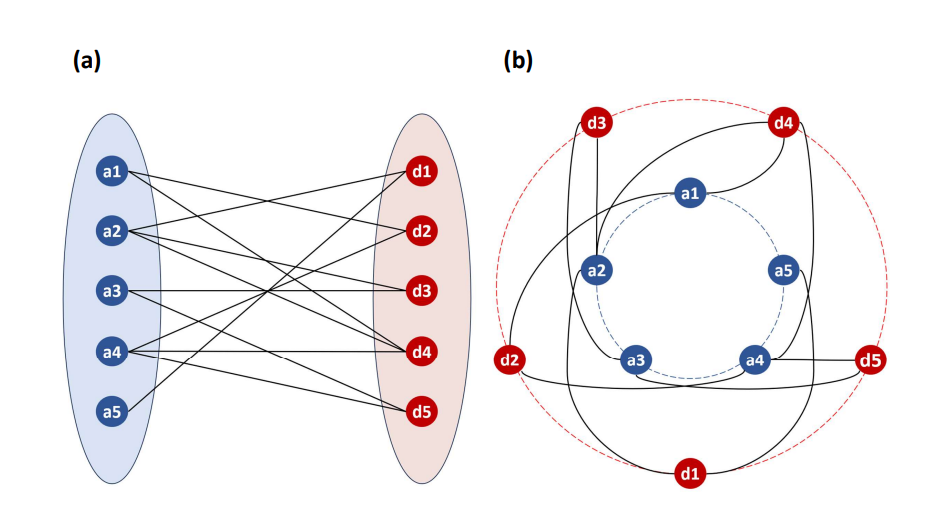
Scientists have developed Stabilizer Quantum Random Access Memory (Stab-QRAM), a specialized architecture designed to overcome limitations in existing quantum memory systems. This work addresses a critical bottleneck in data-intensive quantum algorithms by constructing a memory exclusively from Clifford gates, specifically CNOT and X gates, resulting in a zero non-Clifford gate count. The team engineered this memory to efficiently handle data with an affine Boolean structure, a type of function vital for optimization, time-series analysis, and quantum linear systems algorithms. Researchers demonstrated that the gate interactions required to implement the memory form a bipartite graph, allowing them to apply mathematical principles and prove an optimal logical circuit depth matching the memory’s space complexity for a given number of data items.
The Stab-QRAM’s design enables its implementation on a variety of quantum platforms, including trapped ions, Rydberg atom arrays, photonics, and superconducting qubits, circumventing the need for complex gates often required by general-purpose quantum random access memories. For superconducting circuits, a standard processor equipped with optimized CNOT gates can readily support the Stab-QRAM. Furthermore, the team explored photonic implementations, encoding address and data qubits in cluster states and executing oracle layers as parallel measurements, requiring only short optical delays and avoiding long-lived quantum storage. This approach leverages photonic switching and multiplexing to achieve in-round parallelism. Researchers highlighted the memory’s potential within Quantum Linear Systems Algorithms, providing a resource-efficient oracle for problem data, a common bottleneck in practical implementations.
Clifford Gate QRAM Achieves Logarithmic Depth
The development of a new quantum random access memory (QRAM), termed Stab-QRAM, addresses a critical bottleneck in data-intensive quantum algorithms, the heavy reliance on costly, non-Clifford gates. Researchers have demonstrated a domain-specific architecture tailored for data with an affine Boolean structure, functions vital for optimization, time-series analysis, and quantum linear systems algorithms. The team proved that the gate interactions required to implement the memory form a bipartite graph, enabling an optimal logical circuit depth of O(log N) for data items, matching its space complexity. Crucially, the Stab-QRAM is constructed exclusively from Clifford gates, CNOT and X gates, resulting in a zero non-Clifford gate count.
This design completely circumvents the need for costly magic state distillation, making it exceptionally suited for early fault-tolerant quantum computing platforms. The team formally proved that a universal QRAM cannot be constructed using only Clifford gates, establishing a fundamental limitation that precisely defines the domain where a highly efficient, specialized QRAM can be built. For data fitting the affine class, an exact, all-Clifford oracle can be constructed, enabling precise data loading without approximation. The architecture’s implementation of the affine function is modeled by a logical interaction graph, partitioning qubits into address and data registers.
The resulting graph is inherently bipartite, with edges representing required CNOT interactions between registers. The team demonstrated that the Stab-QRAM achieves a space complexity of O(log N), where N represents the number of memory locations, and a circuit depth that scales favorably with the size of the data. This breakthrough delivers a resource-efficient oracle for discrete dynamical systems and a core component for quantum linear systems algorithms, providing a practical pathway for executing data-intensive tasks on emerging quantum hardware.
Affinely Structured Data Enables Clifford QRAM
The team presents a new quantum random access memory (QRAM) architecture, termed Stabilizer-QRAM (Stab-QRAM), specifically designed for data exhibiting an affine Boolean structure. This specialized design achieves a significant breakthrough by implementing all necessary gate interactions using only Clifford gates, thereby eliminating the need for costly non-Clifford gates that hinder current QRAM designs. The memory’s logical circuit depth matches its space complexity for accessing data items, representing an optimal level of efficiency. This advancement circumvents a critical bottleneck in quantum computing, paving the way for practical data-intensive tasks on emerging quantum hardware, particularly in areas like discrete dynamical systems and quantum linear systems algorithms.
Researchers propose a clear path for expansion, suggesting that minimal additions of non-Clifford gates could extend its capabilities to handle non-linear functions, broadening its applicability to areas such as optimization and cryptography. This approach offers a scalable solution, where increased complexity scales with the degree of non-linearity, not the data size. This work demonstrates a focused design philosophy, prioritizing efficiency for specific data structures over universal applicability, and highlights the potential for specialized quantum accelerators to deliver performance gains before fully universal quantum computers are realized.
🗞 Stab-QRAM: An All-Clifford Quantum Random Access Memory for Special Data
🧠 ArXiv: https://arxiv.org/abs/2509.26494
See today’s quantum computing news on Quantum Zeitgeist for the latest breakthroughs in qubits, hardware, algorithms, and industry deals.