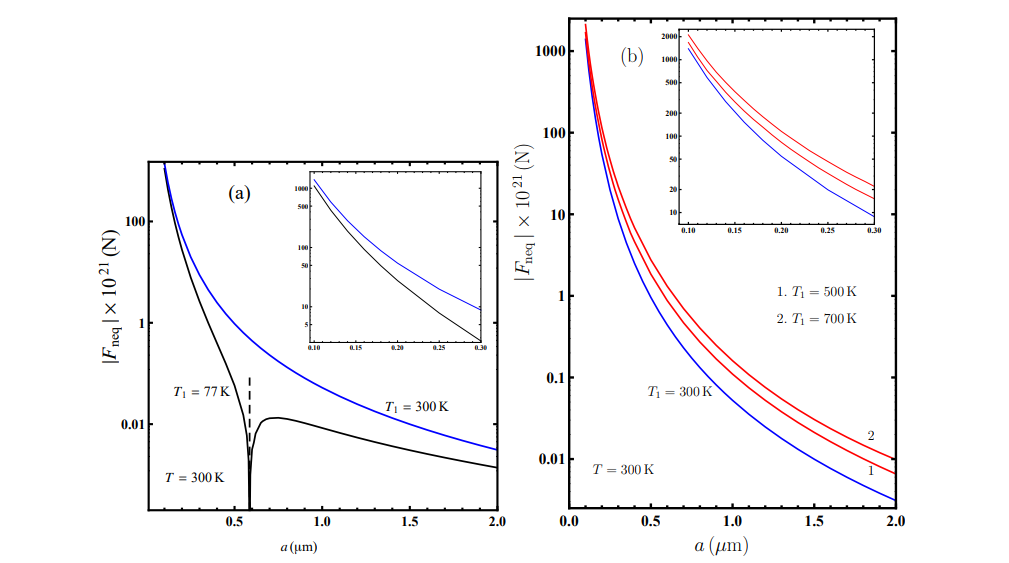
Graphene’s unique electronic properties continue to drive innovation in nanotechnology, and understanding how temperature affects its behaviour is crucial for developing advanced devices. Klimchitskaya and Mostepanenko investigate the temperature dependence of graphene’s response to electromagnetic fields, revealing how these changes impact the subtle Casimir and Casimir-Polder forces that govern interactions at the nanoscale. Their work establishes a detailed picture of graphene’s dielectric properties at varying temperatures, both when in a stable state and when disturbed from equilibrium, and highlights the importance of factors like energy gaps and underlying materials. This research provides fundamental insights for designing and controlling nanoscale systems, paving the way for more precise and efficient nanotechnologies.
Graphene Dispersion Forces and Interatomic Interactions
This body of work extensively investigates graphene, its interactions, and related phenomena. Research focuses on understanding the fundamental properties of graphene, including the strength of attractive forces between graphene and other materials, its electronic characteristics, and how strain affects its behavior. Scientists explore how graphene is produced and characterized, laying the groundwork for its application in various technologies. A significant area of study involves the Casimir effect, a quantum force between closely spaced objects, and how it manifests in graphene systems, considering factors like temperature and geometry.
Researchers also investigate near-field radiative heat transfer, where heat is exchanged between objects in close proximity, and how graphene can enhance this process. This includes exploring graphene-based metamaterials designed to control heat flow and methods for modulating and rectifying near-field heat transfer. Applications of graphene are a key focus, including its use in transistors, sensors, thermal management systems, and energy harvesting devices. Furthermore, scientists examine combinations of graphene with other materials, such as silicon carbide and hexagonal boron nitride, to create structures with tailored properties.
Theoretical and computational methods, including density functional theory and quantum field theory, are employed to model these interactions and predict material behavior. Current trends highlight increasing interest in understanding how temperature gradients affect these forces and developing new ways to control near-field heat transfer. Researchers are creating complex graphene heterostructures with tailored properties and exploring the synergy between graphene and other two-dimensional materials. Strain engineering remains a crucial area, with scientists using strain to create new functionalities in graphene-based devices.
Graphene Dielectric Response and Casimir Force Calculations
Scientists meticulously investigated the temperature-dependent response of graphene, developing a comprehensive understanding of its dielectric properties and their impact on Casimir and Casimir-Polder forces. The study pioneered a method for calculating these forces by first determining the polarization tensor of graphene within the framework of quantum field theory, accounting for electronic quasiparticle interactions. Researchers calculated this tensor using loop diagrams, considering both zero and non-zero temperatures and incorporating the effects of energy gaps and chemical potentials within the graphene material. The polarization tensor, dependent on frequency, wave vector, and temperature, was then used to derive expressions for the longitudinal and transverse dielectric functions, crucial for understanding the material’s response to electromagnetic fields.
The team focused on accurately representing the behavior of these dielectric functions both below and above a specific threshold frequency, linked to the material’s unique electronic structure. A key aspect of the work involved careful consideration of a double pole at zero frequency present in the transverse response function, a characteristic feature of graphene’s electronic properties. Scientists then applied these calculated response functions to determine the equilibrium Casimir force between two graphene sheets and the Casimir-Polder forces between an atom or nanoparticle and a sheet, meticulously accounting for the influence of energy gaps, chemical potentials, and underlying material substrates. Furthermore, the research extended to explore out-of-equilibrium conditions, investigating how Casimir and Casimir-Polder forces behave when the system deviates from thermal equilibrium. The approach enables precise calculations of these forces, crucial for designing and optimizing nanoscale devices and exploring novel quantum phenomena.
Graphene’s Temperature-Dependent Dielectric Response and Forces
Scientists have achieved a detailed understanding of how temperature influences the forces between graphene sheets and other materials, with implications for nanotechnology and fundamental physics. This work builds upon the established Lifshitz theory of Casimir and Casimir-Polder forces, which describes interactions arising from electromagnetic fluctuations, and extends it to account for the unique properties of graphene. Researchers derived expressions for the longitudinal and transverse dielectric functions of graphene, investigating their behavior at varying temperatures both below and above a critical threshold. A key finding is the presence of a double pole at zero frequency within the transverse response function of graphene, a characteristic that significantly impacts force calculations.
The team calculated the equilibrium Casimir force between two graphene sheets and the Casimir-Polder forces between an atom or nanoparticle and a graphene sheet, carefully considering the roles of energy gaps, chemical potential, and underlying material substrates. Furthermore, the study extends these calculations to systems that are not in thermal equilibrium, providing a more complete picture of these forces under diverse conditions. The research highlights that, unlike traditional 3D materials where temperature effects on Casimir forces are primarily determined by summation over Matsubara frequencies, graphene exhibits a more complex temperature dependence. At separations of 1 micrometer, the effective temperature for graphene is approximately 3.
82 Kelvin, significantly lower than the 1145 Kelvin found for conventional materials. This difference arises from the unique behavior of massless or very light quasiparticles in graphene, described by the Dirac equation, and leads to a substantial contribution from the explicit temperature dependence of graphene’s response functions. The team’s calculations demonstrate that both the summation over Matsubara frequencies and the temperature dependence of graphene’s response functions contribute significantly to the overall force at moderate experimental separations.
Graphene’s Temperature-Dependent Casimir and Casimir-Polder Forces
This research presents a detailed investigation into the temperature-dependent response of graphene, specifically examining how it influences Casimir and Casimir-Polder forces. Scientists developed expressions for key dielectric functions, revealing their behavior both below and above a critical frequency threshold, and paying particular attention to a unique double pole at zero frequency within the material’s response. These functions were then applied to calculations of the Casimir force between graphene sheets and the Casimir-Polder force between an atom or nanoparticle and a sheet, considering the impact of factors like an energy gap, chemical potential, and underlying substrate material. The study extends these calculations to scenarios where the graphene is not in thermal equilibrium, demonstrating how deviations from equilibrium affect these forces. Researchers meticulously analyzed the behavior of these forces at various frequencies and temperatures, providing a comprehensive understanding of the interplay between thermal effects and quantum forces in graphene systems. Future work could explore the impact of external magnetic fields or investigate similar effects in other two-dimensional materials, potentially leading to advancements in nanotechnology and fundamental physics.
🗞 Temperature Dependence of the Response Functions of Graphene: Impact on Casimir and Casimi-Polder Forces in and out of Thermal Equilibrium
🧠 ArXiv: https://arxiv.org/abs/2510.00672