The quantum race is no longer a laboratory curiosity; it has become a race to build, test and deploy machines that can outpace classical computers on specific tasks. In a move that could accelerate that transition, Bluefors, the world‑leading manufacturer of dilution refrigerators, has teamed up with Delft Circuits, a Dutch specialist in quantum input/output (I/O) cabling. By embedding Delft Circuits’ CrioFlex system into Bluefors’ cryogenic platforms, the partnership offers a plug-and-play, high-density wiring solution that enables researchers to control thousands of qubits with unprecedented ease.
From Cryogenic Labs to Industrial Scale
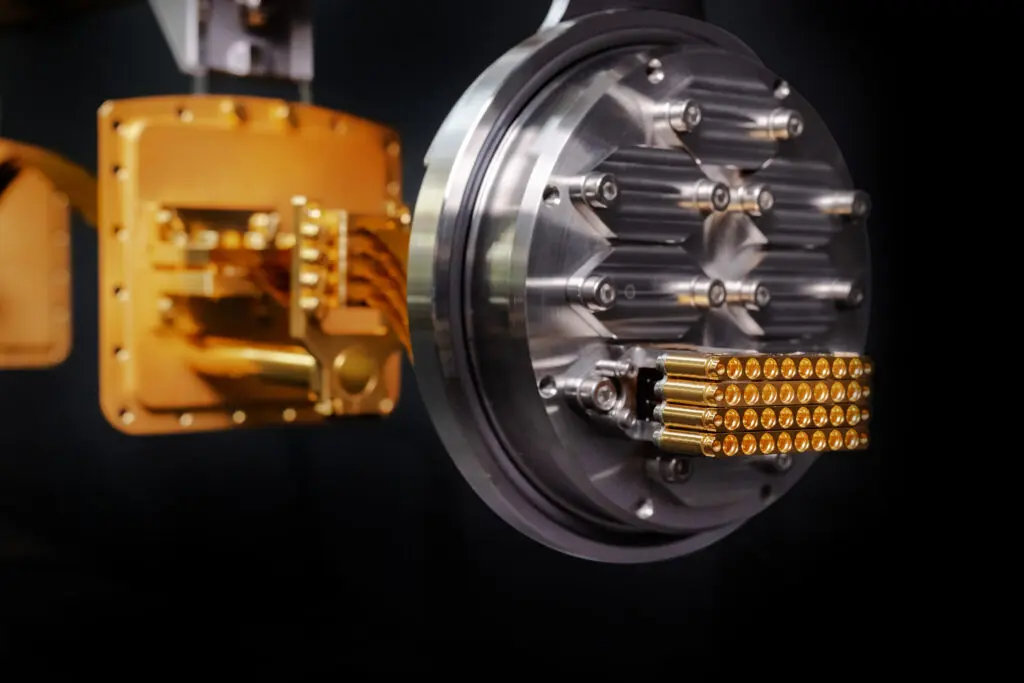
In a dilution refrigerator, qubits are cooled to millikelvin temperatures, a process that demands meticulous thermal and electromagnetic isolation. The new Cri oFlex® modules are designed from the ground up to meet these stringent requirements. They integrate attenuation and filtering directly into the cabling, eliminating the need for separate, fragile components that often become points of failure in large‑scale experiments. In practical terms, a single side‑loading port on a Bluefors system can now host up to 50 % more channels, delivering 1 536 input or control lines to an XLDsl system. This leap in channel density is achieved without sacrificing the microwave performance that qubit operations demand; the Cri oFlex® lines match conventional coaxial cables in signal fidelity while providing superior thermal anchoring.
The partnership also streamlines the installation process. Researchers no longer need to solder individual wires or manually configure filters; the modules arrive pre‑tested and ready to connect. This “one‑stop‑shop” approach reduces the time from prototype to production by weeks, a critical advantage when teams are racing to demonstrate new algorithms or error‑correcting codes.
Wiring the Future: Density, Reliability, and Cost
Beyond sheer channel count, the modular monolithic design of Cri oFlex® brings a host of reliability benefits. Traditional wiring schemes rely on a mesh of connectors, adapters, and coaxial cables, each a potential failure point. In contrast, the Cri oFlex® architecture consolidates these elements into a single, robust block that can be hot‑swapped or upgraded with minimal disruption. This design reduces the risk of thermal cycling damage and electromagnetic interference, both of which can degrade qubit coherence times.
Cost savings also accrue from the reduced need for custom splicing and the elimination of redundant components. For large‑scale quantum systems, where the price of a single cryostat can exceed a million euros, even modest reductions in wiring overhead translate into significant budget relief. Moreover, the standardised KF port options allow customers to tailor the system to their exact qubit count, preventing over‑engineering and further trimming expenses.
The partnership’s joint research paper demonstrates that Cri oFlex® performs on par with traditional coaxial solutions in real qubit experiments. By validating the technology in a real‑world cryogenic environment, Bluefors and Delft Circuits provide the industry with confidence that the solution will hold up under the rigours of commercial deployment, not just academic proof‑of‑concepts.
Scaling the Quantum Frontier: Market Impact and Roadmap
The collaboration arrives at a pivotal moment. Quantum processors have already scaled from dozens to a few hundred qubits, but the next milestone, thousands of qubits, requires a new generation of infrastructure. Delft Circuits’ five‑year roadmap, now backed by Bluefors’ global distribution network, outlines a clear path from hundreds to thousands of qubits, addressing the bottleneck that has long stymied progress.
Industry players are taking notice. Start‑ups developing quantum‑enhanced optimisation algorithms, as well as established semiconductor firms exploring quantum hardware, are all grappling with the same wiring challenge. The ability to plug in a ready‑made, high‑density I/O system could lower the entry barrier, allowing smaller companies to compete in a space that has been dominated by well‑funded research labs.
From a supply‑chain perspective, the partnership also signals a maturation of the quantum ecosystem. By industrialising a critical component, wiring infrastructure, Bluefors and Delft Circuits are moving quantum technology from bespoke, lab‑specific setups toward mass‑produced, standardized platforms. This shift could accelerate the transition from research to commercial products, such as quantum‑accelerated cloud services or specialised hardware for finance and materials science.
A Quantum Leap in Practicality
By marrying Bluefors’ proven cryogenic platforms with Delft Circuits’ cutting-edge I/O modules, the partnership delivers a solution that is both practical and powerful. It removes a longstanding technical hurdle, enabling researchers to focus on the algorithms and error‑correction codes that will ultimately determine whether quantum computers can outperform their classical counterparts. As the quantum industry marches toward larger, more complex processors, such collaborations will be essential to turn the promise of quantum advantage into a tangible reality.




See today’s quantum computing news on Quantum Zeitgeist for the latest breakthroughs in qubits, hardware, algorithms, and industry deals.