Relativistic quantum systems present a significant challenge for simulation, yet understanding their behaviour is crucial for advancements in physics and chemistry. Jaewoo Joo from University of Portsmouth, Timothy P. Spiller from University of York, and Kyunghyun Baek and Jeongho Bang from Yonsei University, now demonstrate a novel method for simulating these systems using the principles of first quantisation. Their approach discretises the wavefunction onto a quantum computer’s qubits and approximates relativistic kinetic energy through a carefully constructed expansion, allowing for the variational optimisation of quantum states. This work represents a practical pathway towards simulating relativistic effects on currently available quantum devices, potentially unlocking new insights into complex physical and chemical phenomena.
Relativistic Quantum Systems via Perturbation Theory
Scientists have developed a novel quantum simulation method employing first quantisation to determine relativistic ground-state energies under both periodic and Dirichlet boundary conditions. The study discretises the quantum wavefunction across a finite grid represented by system qubits, enabling the representation of a one-dimensional spatial wavefunction with a defined number of grid points. This discretization assigns a probability amplitude to each discrete position, ensuring normalisation across all grid points. Researchers utilise this framework to model a scaled one-dimensional space, derived from an original domain, with coordinates representing dimensionless values.
The core of the method involves defining a translation operator, crucial for expressing the squared momentum operator using a finite-difference method. To accurately model relativistic effects, the team approximates the relativistic kinetic energy through a perturbative expansion of the total kinetic Hamiltonian, incorporating higher-order momentum terms. This expansion accounts for corrections beyond the standard non-relativistic approach, particularly relevant when relativistic effects become significant. The approach estimates total energy by calculating the expectation value of the relativistic kinetic energy and potential energy, utilising the defined discrete grid and perturbative expansion. By employing this first-quantised method, scientists aim to provide an intuitive and effective means of simulating complex quantum systems, paving the way for advancements in quantum physics and chemistry by enabling the study of relativistic effects on near-term quantum devices.
Relativistic Quantum Systems Simulated on Qubits
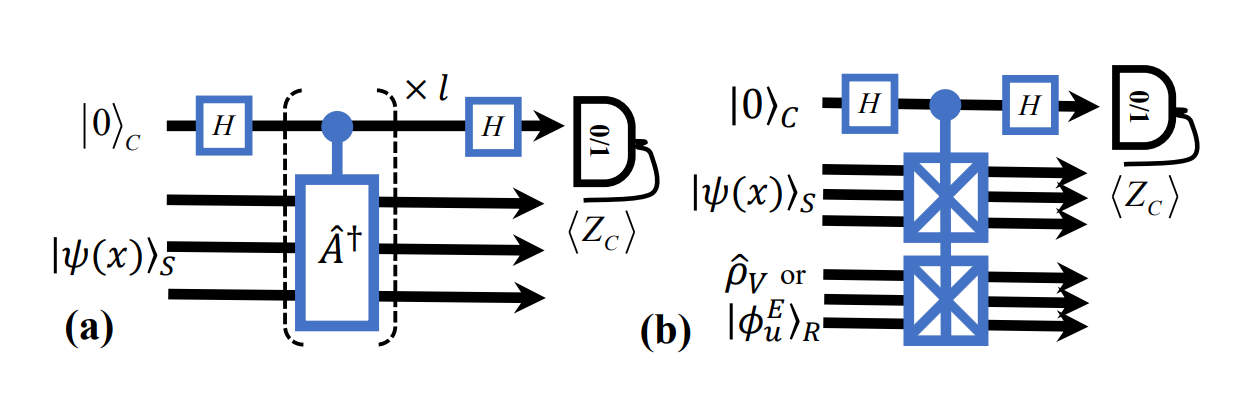
Scientists have developed a new method for simulating relativistic quantum systems using a first quantisation approach and perturbative expansion of the kinetic energy. By discretising the wavefunction on a finite grid of qubits, the team successfully approximated relativistic effects under both periodic and Dirichlet boundary conditions. The method utilises variational ansatz states and controlled-translation gates to evaluate kinetic and potential energies, offering a practical route to explore relativistic quantum phenomena on near-term quantum devices. The researchers demonstrated the ability to estimate ground-state energies, paving the way for advancements in both physics and chemistry.
While the current approach offers a significant step forward, the authors acknowledge limitations related to the accuracy of the grid resolution and the applicability of perturbation theory. Increasing the number of system qubits improves resolution, but must be carefully balanced with the parameters of the system to maintain the validity of the perturbative expansion. Future research will focus on implementing higher-order Laplacian operators and exploring the potential for improved accuracy through more sophisticated perturbative terms. These ongoing investigations aim to refine the method and broaden its applicability to a wider range of relativistic quantum systems, ultimately contributing to a deeper understanding of fundamental physical processes.
Relativistic Quantum Systems Simulated with Perturbation Theory
Scientists have developed a new method for simulating relativistic quantum systems using a first quantisation approach, offering a practical route to explore these effects on near-term quantum devices. The study focuses on accurately estimating ground-state energies for systems under both periodic and Dirichlet boundary conditions, representing a significant advancement in the field of quantum simulation. The team discretises the quantum state across a finite grid represented by system qubits, allowing for the approximation of the squared momentum operator using a finite-difference method based on translation operations. The core of this achievement lies in approximating the relativistic kinetic energy through a perturbative expansion of the total kinetic Hamiltonian, incorporating higher-order momentum terms.
This expansion allows for the simulation of systems where relativistic effects are becoming relevant, specifically focusing on scenarios where the squared momentum is significantly less than the square of the mass times the speed of light. Experiments demonstrate that the method accurately represents the relativistic kinetic energy, utilising translation operators to shift the position state and approximate the second-order derivative operator, crucial for calculating the squared momentum. Measurements confirm that the discretised expression for the second-order derivative operator remains stable even with increasing precision. The team successfully implemented the translation operators as unitary operators on quantum circuits, paving the way for application on conventional quantum circuit platforms. For a system with periodic boundary conditions, the relativistic kinetic energy is calculated by considering the wavefunction’s behaviour at the boundaries, ensuring continuity across the simulation domain. This breakthrough delivers a powerful tool for exploring complex quantum phenomena, with potential applications in physics and chemistry, and opens new avenues for simulating relativistic effects on emerging quantum technologies.
🗞 Relativistic Quantum Simulation under Periodic and Dirichlet Boundary Conditions: A First-Quantised Framework for Near-Term Devices
🧠 ArXiv: https://arxiv.org/abs/2509.22579
See today’s quantum computing news on Quantum Zeitgeist for the latest breakthroughs in qubits, hardware, algorithms, and industry deals.