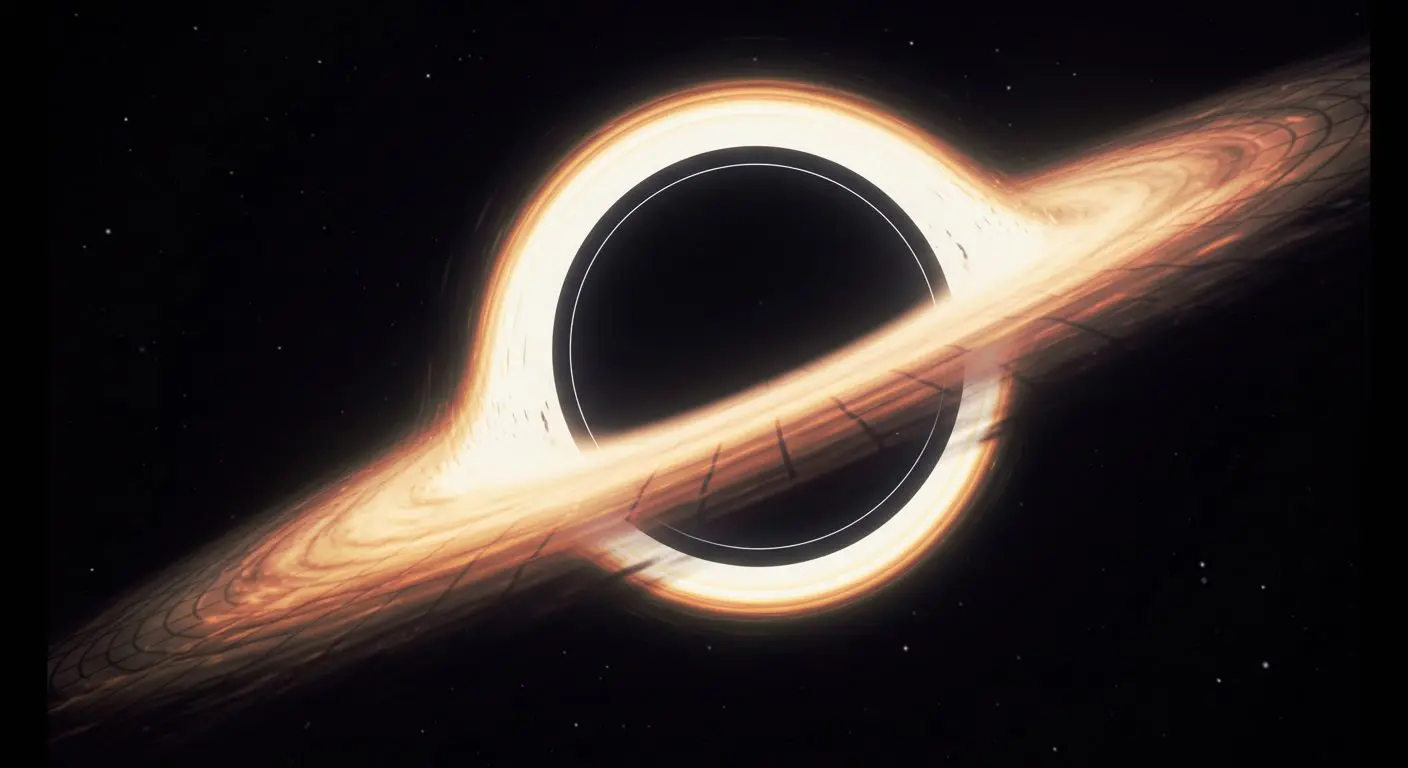
Black holes, long considered points of infinite density, may possess internal structures that prevent such singularities, a question physicists continue to explore. Alfio Bonanno, Roman A. Konoplya, Giovanni Oglialoro, and Andrea Spina investigate this possibility by constructing a class of regular black holes using a sophisticated approach to quantum gravity. Their work demonstrates that these black holes, unlike their classical counterparts, avoid singularities while remaining consistent with current astronomical observations, a crucial test for any proposed modification to Einstein’s theory. The team calculates key properties, revealing significant changes to the black hole’s behaviour, including a suppressed rate of evaporation via Hawking radiation and alterations to the frequencies at which the black hole ‘rings’ following a disturbance, offering new insights into the fundamental nature of these enigmatic objects and potentially easing constraints on their role as dark matter candidates.
A central challenge lies in ensuring the robustness of physical predictions to the chosen regularization scheme. Researchers address this issue by computing key observables for their quantum-corrected black holes, which are non-singular and asymptotically approach the Schwarzschild solution. Calculations of the quasinormal mode spectrum reveal significant deviations from the classical case, while the Hawking radiation spectrum is strongly suppressed.
Black Hole Perturbations and Gravitational Waves
This compilation details a comprehensive body of research concerning black hole physics, gravitational waves, quasinormal modes, and related topics. The collection focuses on understanding how black holes respond to external disturbances and the resulting characteristic oscillations, known as quasinormal modes, which are crucial for detecting and characterizing these objects through gravitational wave observations. A significant portion of the research explores the detection of gravitational waves from black hole mergers and the use of quasinormal modes to confirm the nature of the detected objects. The collection also covers the study of black hole shadows, as observed by the Event Horizon Telescope, and how to interpret these images to test general relativity and alternative theories of gravity.
Growing interest exists in regular black holes, solutions that avoid the singularity at the center of a traditional black hole, often explored in the context of quantum gravity or as potential explanations for dark matter. Some research investigates the possibility that primordial black holes could constitute a significant portion of dark matter. The collection includes studies employing numerical relativity and time-domain evolution methods to simulate the evolution of black hole perturbations and gravitational waves. The eikonal approximation, a method for calculating quasinormal modes in the high-frequency regime, is also explored, along with methods for improving its accuracy. This compilation serves as an excellent starting point for researchers and students interested in black hole physics and gravitational wave astronomy.
Asymptotically Safe Black Holes Avoid Singularities
Scientists derived a class of regular black holes using the proper-time renormalization group approach to asymptotic safety, addressing the crucial issue of robustness to the regularization scheme employed. The resulting black holes are non-singular and asymptotically approach the Schwarzschild solution, offering a potential resolution to the singularity problem inherent in classical general relativity. Calculations of quasinormal modes revealed significant deviations from the classical case, demonstrating a clear signature of quantum corrections to the black hole spacetime. Experiments demonstrated a strong suppression of the Hawking radiation spectrum, implying a slower evaporation rate for these regular black holes compared to their classical counterparts.
This slower evaporation relaxes constraints on primordial black holes as potential dark matter candidates, broadening the parameter space for their existence. Furthermore, analysis of the shadow cast by these black holes and the radius of the innermost stable circular orbit (ISCO) showed consistency with current observational constraints, validating the physical realism of the model. The research team employed both the continued fraction method and integration-through-midpoints techniques to investigate the quasinormal mode spectra, achieving high precision in their calculations. These methods proved particularly suitable for analyzing spacetimes with complex structures near the origin, a key feature of the regular black holes derived in this work. The team’s work establishes a clear connection between theoretical predictions and potential observational signatures, paving the way for future tests of quantum gravity using astrophysical observations.
Regular Black Holes Resolve Singularity Problem
This research presents a class of regular black holes derived using the proper-time renormalization group approach to asymptotic safety, offering a potential resolution to the singularity problem inherent in classical general relativity. By investigating how quantum corrections modify black hole geometry, the team demonstrates the construction of non-singular spacetimes that closely resemble Schwarzschild black holes at large distances. Crucially, the study establishes that the singularity resolution and its primary observational implications are robust, remaining largely unaffected by variations in the regularization scheme employed. The team calculated key properties of these regular black holes, revealing significant deviations from classical predictions in the quasinormal mode spectrum, which governs the ringdown phase following a black hole merger.
Furthermore, the analysis indicates a suppression of the Hawking radiation spectrum, suggesting a slower evaporation rate for these black holes and potentially easing constraints on their contribution to dark matter. Calculations of shadow shapes and innermost stable circular orbit radii confirm consistency with current observational data. While acknowledging the dependence of results on choices made in constructing the effective action, the team demonstrates that critical properties and dynamical signatures remain largely consistent across different schemes, strengthening the validity of the findings.
🗞 Regular Black Holes from Proper-Time flow in Quantum Gravity and their Quasinormal modes, Shadow and Hawking radiation
🧠 ArXiv: https://arxiv.org/abs/2509.12469
See today’s quantum computing news on Quantum Zeitgeist for the latest breakthroughs in qubits, hardware, algorithms, and industry deals.