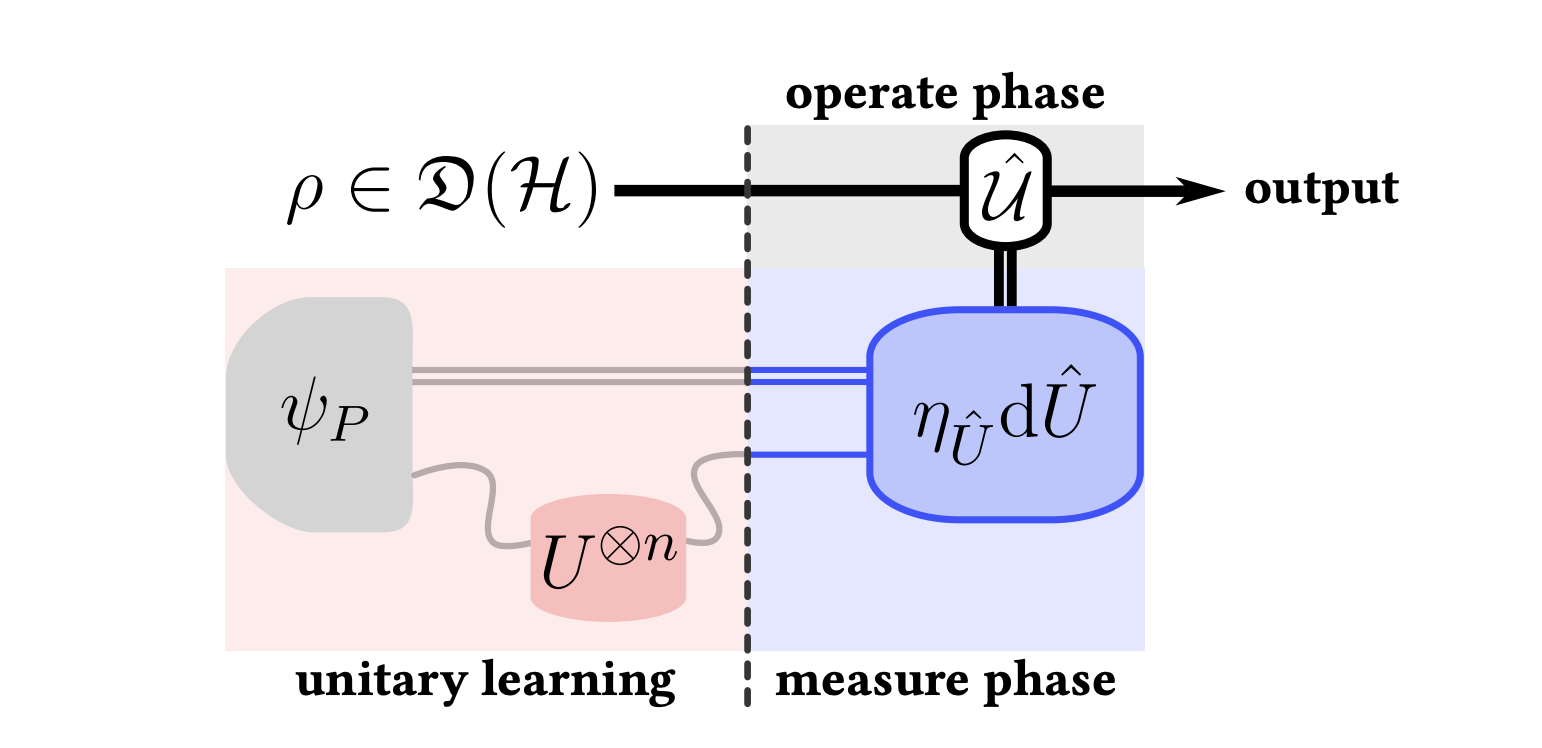
The quest to build practical quantum computers focuses increasingly on noisy intermediate-scale quantum (NISQ) devices, which promise to outperform classical computers despite their limitations, and require efficient methods for programming these systems. Entong He and Yuxiang Yang, from The University of Hong Kong, investigate the resources needed to program these low-depth quantum circuits, a critical challenge as the number of qubits increases. Their work reveals a fundamental limit to the size of the program required, providing a tight characterization of the worst-case scenario for universal programming, and demonstrates that programming gates directly, rather than relying on complex descriptions of their arrangement, offers the most efficient approach in this low-depth regime. This research establishes a crucial benchmark for evaluating programming strategies and guides the development of algorithms tailored for near-term quantum hardware.
Low-Depth Circuits and Quantum Resource Trade-offs
Resource quantification is crucial for programming low-depth quantum circuits, essential for utilising noisy intermediate-scale quantum (NISQ) devices. These devices offer the potential for quantum algorithms that outperform classical computers, but their inherent noise necessitates resource-efficient quantum programs. This work investigates the quantum resources required to program these circuits, focusing on the balance between different resource types. The research introduces a framework for analysing circuit complexity based on ‘programmability’, which measures how easily a circuit can be implemented on a quantum device.
The team explores the relationship between circuit weight, entanglement, and the number of non-Clifford gates needed for a desired level of performance. The results demonstrate that minimising circuit weight and entanglement is vital for achieving high fidelity in low-depth computations, and that the number of non-Clifford gates presents a significant obstacle to scaling up quantum systems. This work offers a new perspective on quantum resource management and provides practical guidance for designing efficient quantum algorithms for NISQ devices.
Quantum Circuit Complexity and Programmability Limits
This research delves into the fundamental limits of programmability in quantum computation, moving beyond simply building a quantum computer to investigating how efficiently it can perform computations. The core argument is that there is a trade-off between circuit complexity, depth, and the ability to universally approximate computations. The authors explore achieving the best possible approximation with the fewest resources, connecting this to quantum machine learning and examining how well quantum states and operations can be learned, revealing underlying computational complexity. Symmetry and locality play a crucial role in determining what is efficiently programmable.
The paper covers several key themes, including quantum programmability, universal approximation, and circuit complexity, with a focus on depth as a critical measure due to its resistance to noise. The research explores the connection between learning quantum states/operations and circuit complexity; difficult-to-learn states likely require complex circuits. Random circuits are used to generate complex operations and study their properties, while unitary designs quantify how well a set of operations can approximate arbitrary operations. Symmetry and locality simplify quantum circuits, and the work draws on concepts like entropy, fidelity, and distance measures, alongside compression of quantum states and implications for quantum machine learning.
The work is novel in establishing tight bounds on programmability and demonstrating a strong link between learning quantum states/operations and their circuit complexity. The authors propose new techniques for exploiting symmetry and locality to simplify quantum circuits and develop new methods for constructing efficient unitary designs. They provide new insights into random quantum circuits and establish results on the incompressibility of certain quantum states, impacting the ability to learn quantum models and drawing connections to classical complexity theory. The authors employ a wide range of techniques, including quantum information theory, operator Lipschitz functions, random matrix theory, symmetry arguments, compression techniques, classical complexity theory, and analysis of quantum entanglement. In conclusion, this paper is a significant contribution to quantum computation, providing new insights into the limits of programmability and exploring the connections between complexity, learning, and symmetry. The results have important implications for the design of quantum algorithms and the development of quantum machine learning techniques.
NISQ Circuit Programming Costs Scale Optimally
This research presents a detailed analysis of the computational resources required to program quantum circuits specifically designed for noisy intermediate-scale quantum (NISQ) devices. The researchers demonstrate that efficiently programming these circuits is crucial for realising the potential of NISQ algorithms. They establish a provably tight scaling for the program cost, the resources needed to describe the circuit, showing it scales as N multiplied by a polynomial of log N, where N represents the number of qubits. The findings suggest that, within the constraints of low-depth circuits, a straightforward “gate-wise” programming approach is optimal, meaning directly specifying each gate operation is the most efficient strategy. Furthermore, the research connects the difficulty of programming these circuits to the difficulty of learning their behaviour, suggesting a link between synthesis, metrology, and learning in the NISQ era. Future research directions include exploring more compact ways to encode circuit structure within the program and developing efficient programming strategies.
🗞 Resource quantification for programming low-depth quantum circuits
🧠 ArXiv: https://arxiv.org/abs/2509.09642