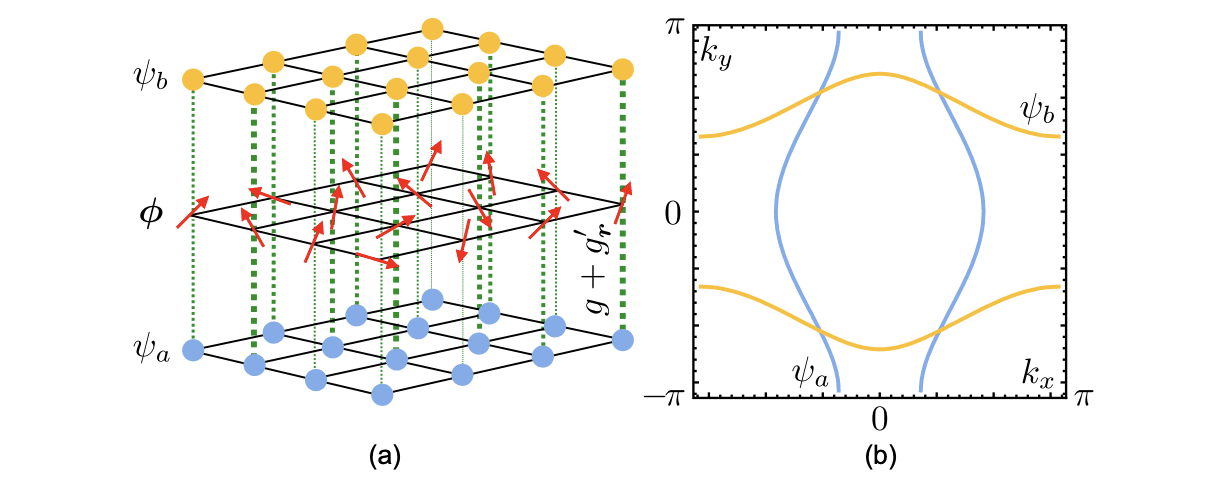
Strange metals, which defy the predictions of conventional metallic behaviour, are commonly found in materials exhibiting superconductivity driven by electron interactions. Recent research suggests that spatial randomness in these electron interactions is critical to understanding their behaviour, specifically enabling their unusual, linear-in-temperature resistivity to persist even at low temperatures. This unusual resistivity represents a fundamental departure from typical metallic behaviour, where resistivity usually decreases with decreasing temperature, and researchers are investigating the role of disorder and randomness in mediating the electronic properties of these materials.
Linear Resistivity in Strange Metals
Strange metals exhibit unusual metallic behaviour, deviating from the standard theory governing electron behaviour in metals, including a linear increase in resistivity with temperature and a broad distribution of electronic energies. This behaviour is linked to a theoretical framework called “Planckian transport”, which suggests that the maximum possible conductivity, and therefore minimum resistivity, is limited by quantum mechanics, and in strange metals, resistivity appears to approach this quantum limit. Current research employs a multi-faceted approach, combining theoretical modelling with advanced experimental techniques, such as Angle-Resolved Photoemission Spectroscopy, precise resistivity measurements, and advanced imaging techniques like Scanning Tunneling Microscopy and Transmission Electron Microscopy, allowing researchers to probe the material at the nanoscale and understand the interplay between structure and electronic behaviour. The primary focus is on understanding strange metal behaviour in high-temperature superconductors, investigating the role of disorder and inhomogeneities in driving this behaviour, and determining whether the scattering of electrons is truly limited by the fundamental quantum rate. Progress in this field requires a multidisciplinary approach, bringing together experts in condensed matter physics, materials science, and computational science.
Localized Magnetic Modes Explain Strange Metal Behaviour
Researchers have developed a realistic model demonstrating that the linear resistance and universal scattering rate observed in high-temperature superconductors, known as “strange metals”, can be explained by electrons scattering off localized magnetic fluctuations. These fluctuations arise from interactions within the material, and the team’s simulations reveal a state characterized by short-range correlations and a gapless bosonic sector, emerging under specific conditions. Within this state, a strange-metal state exhibiting “Planckian” transport emerges, displaying a scattering rate proportional to temperature, a key characteristic of these materials. Notably, the largest temperature-linear resistivity occurs at a specific parameter value, demonstrating a strong connection between the model’s parameters and the observed material properties, and the results demonstrate that this strange-metal behaviour is not associated with a traditional “quantum critical point”, instead arising from the localized magnetic fluctuations.
Localized Magnetic Fluctuations Explain Strange Metal Resistance
This research presents a model explaining the unusual electrical resistance observed in “strange metals” and high-temperature superconductors, demonstrating that the linear resistance arises from electrons scattering off localized magnetic fluctuations created by variations in the material’s properties. Importantly, the scattering rate remains consistent regardless of the strength of these fluctuations, suggesting a fundamental mechanism governing electron behaviour in these materials. The findings offer a potential explanation for a long-standing puzzle in condensed matter physics, bridging the gap between strange metals and the phenomenon of high-temperature superconductivity, and by identifying the source of electron scattering, the model provides a foundation for understanding and potentially engineering materials with enhanced superconducting properties. Future work will likely focus on refining the model and exploring its implications for different materials, potentially accelerating the discovery of new superconducting materials.
👉 More information
🗞 Strange Metals and Planckian Transport in a Gapless Phase from Spatially Random Interactions
🧠 DOI: http://link.aps.org/doi/10.1103/611k-yxb9