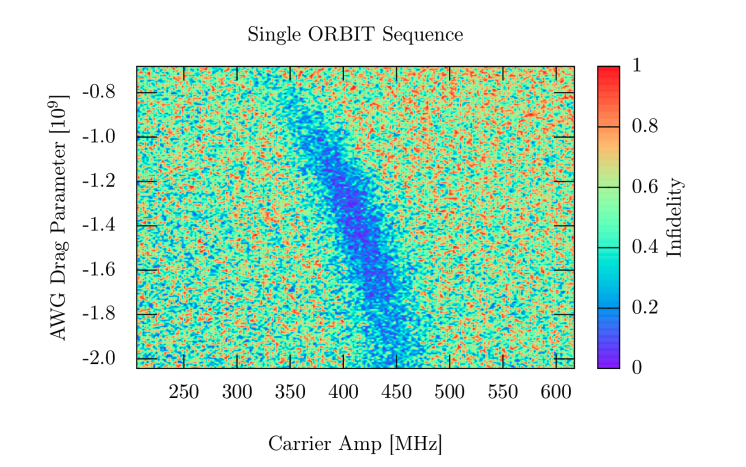
Automated calibration represents a critical challenge in the development of practical quantum computers, and researchers are actively seeking robust optimisation algorithms to streamline this process. Kevin Pack, from the Peter Gr ̈unberg Institut, alongside Shai Machnes from Qruise GmbH and Frank K. Wilhelm from the Peter Gr ̈unberg Institut, present a comprehensive benchmark of several optimisation algorithms designed to address this need. Their study rigorously evaluates the performance of both established methods, such as Nelder-Mead, and more advanced techniques, including the Covariance Matrix Adaptation Evolution Strategy, within a simulated environment mirroring the complexities of real quantum experiments. The results demonstrate that the CMA-ES algorithm consistently outperforms others across a range of calibration scenarios, offering a promising pathway towards fully automated tuning and control of increasingly complex quantum devices and accelerating progress in the field.
As part of ongoing efforts to automate the setup, tuning, and characterization of these systems, this work investigates the performance of several algorithms when applied to realistic calibration problems. The study focuses on commonly used machine learning algorithms, such as gradient descent and Nelder-Mead, alongside quantum-specific methods like the Quantum Approximate Optimization Algorithm. By systematically evaluating these algorithms across a range of quantum device parameters, including qubit frequencies, coupling strengths, and gate durations, the team determined their robustness and efficiency. The findings reveal significant performance variations between different algorithms, emphasizing the importance of careful algorithm selection for automated quantum device calibration and control.
During this investigation, researchers explored a broad range of optimizers within a simulated environment designed to closely mimic real-world experimental conditions. Performance evaluation took place in both low-dimensional settings, representing simple pulse shapes, and high-dimensional regimes, reflecting the demands of complex control pulses. The goal is to find pulse shapes that maximize the fidelity of quantum operations, a crucial step in building reliable quantum computers. Precisely controlling qubits requires applying electromagnetic pulses, and finding the optimal pulse shapes is a complex, high-dimensional optimization problem that can overwhelm traditional methods.
Researchers employed CMA-ES, a powerful evolutionary algorithm known for its robustness and efficiency in tackling difficult, non-convex optimization problems. It adapts the search distribution based on the covariance of successful solutions, allowing it to effectively explore the parameter space. Pulse shapes are represented by a set of parameters that CMA-ES can optimize. Importantly, CMA-ES is a gradient-free method, advantageous because calculating gradients in quantum systems can be computationally expensive or impossible.
The key findings demonstrate that CMA-ES is a highly effective algorithm for optimizing quantum control pulses, achieving high fidelity for various quantum operations. The algorithm also proved robust to noise and imperfections in the quantum system, and can potentially scale to more complex quantum systems and operations. This research contributes to the development of more accurate and reliable quantum control techniques, advancing the field of quantum computing.
CMA-ES Excels at Complex Calibration Tasks
This research presents a comprehensive evaluation of optimization algorithms used for calibrating quantum devices, focusing on scenarios that mimic the challenges of real-world experimental conditions. Results consistently demonstrate that CMA-ES outperforms all other algorithms tested, achieving the lowest error in every scenario and proving its robustness to noise and ability to navigate complex landscapes.
The findings highlight the importance of selecting an effective optimization algorithm for automated calibration procedures, demonstrating that algorithm choice directly impacts achievable fidelity. The study also identifies the loss function as a critical factor, suggesting that further research into effective figures of merit for calibration is needed. The authors propose that exploring algorithms specifically tailored for quantum system calibration could lead to further improvements in performance.
🗞 Benchmarking Optimization Algorithms for Automated Calibration of Quantum Devices
🧠 ArXiv: https://arxiv.org/abs/2509.08555