The pursuit of unconventional superconductivity, materials that conduct electricity with zero resistance in ways not predicted by standard theory, continues to drive materials science, and a new family of these materials emerges from research led by Junseok Seo of the Massachusetts Institute of Technology, alongside Armel A. Cotten, Mingchi Xu, and colleagues. This team investigates crystalline graphene layers, specifically tetralayer and pentalayer structures, and reveals a spectrum of superconductivities that exhibit remarkable resilience to magnetic fields, far exceeding the limits of conventional superconductors. The researchers demonstrate that these materials not only withstand strong magnetic fields, but also display unusual enhancements and even induction of superconductivity through the application of these fields, suggesting a fundamentally different mechanism at play. This discovery establishes a promising platform for exploring exotic quantum states and potentially engineering building blocks for future quantum technologies, all within a remarkably clean and controllable material system.
Graphene Superconductivity Mapped by Electric Fields
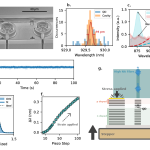
Researchers thoroughly investigated superconductivity within rhombohedral multilayer graphene, revealing unusual properties and establishing a family of new superconducting states. The team fabricated devices, carefully controlling electronic properties with applied electric fields and precisely measuring resistance to map the superconducting phases. They identified four distinct superconducting regions, including one previously observed state and three new states, labeled SC2, SC3, and SC4, characterizing them with detailed transport measurements to observe resistance changes with temperature and current. The researchers also employed analysis to understand the underlying electronic structure, determining the shape of the Fermi surface and identifying specific electronic configurations correlated with the emergence of superconductivity.
They discovered that SC2 is strengthened by an in-plane magnetic field, exhibiting an expanded phase space and increased critical current, and remarkably induced a new superconducting state, SC4, with the application of an in-plane field. SC3 proved robust against magnetic fields, connecting to SC2 at fields up to 8. 5 Tesla, exceeding the Pauli limit for conventional superconductors and confirming the unconventional nature of these materials. These meticulous measurements establish rhombohedral graphene multilayer as a promising platform for exploring unconventional superconductivity and engineering novel quantum states.
Unconventional Superconducting Phases in Layered Materials
Researchers have discovered a family of novel superconductors within multilayered rhombohedral materials, exhibiting behaviors that defy conventional understandings of superconductivity. These materials demonstrate superconductivity even in remarkably clean conditions, allowing for detailed observation of their unique properties. The team identified four distinct superconducting phases, SC2, SC3, SC4, and SC1, each with unusual responses to applied magnetic fields. Notably, SC2 is strengthened by an in-plane magnetic field, while SC3 is boosted by a small out-of-plane field, and SC4 is induced by an in-plane field.
These superconductors remain robust against magnetic fields up to 8. 5 Tesla, exceeding the Pauli limit, suggesting a fundamentally different mechanism driving superconductivity within these materials. Experiments reveal that introducing spin-orbit coupling through proximity effects generates even more superconducting phases, while maintaining the high material quality. Further investigation demonstrates that applying a magnetic field enhances the superconducting properties of SC3, with the critical current increasing and the transition temperature rising with a small field. The team also observed Fraunhofer patterns, indicative of quantum interference, within the phase space of SC3, confirming its quantum nature. These findings establish a new platform for exploring unconventional superconductivity and offer promising avenues for engineering materials with exotic quantum properties, potentially paving the way for future applications in quantum computing and advanced electronics. The researchers also identified additional superconducting phases, SC6, and SC7, expanding the range of observable phenomena.
Enhanced Superconductivity in Multilayer Graphene
This research demonstrates the discovery of multiple superconducting states within rhombohedral multilayer graphene, including several exhibiting unconventional behavior. The team observed that three of these superconductors are notably enhanced by magnetic fields, one strengthened by an in-plane field, another boosted by a small out-of-plane field, and a third induced by an in-plane field, all while maintaining robustness against fields far exceeding the limits expected for conventional superconductors. These findings suggest that the observed superconductivity arises from mechanisms beyond the standard theory. Furthermore, the researchers found that introducing spin-orbit coupling through proximity effects generates additional superconducting states without compromising the material’s quality. This multilayer graphene system presents a promising platform for engineering more complex superconducting states and potentially realizing exotic quasiparticles crucial for fault-tolerant quantum computing. Future work will focus on combining these superconductors with quantum anomalous Hall states to create topological superconductors and advance the development of robust quantum technologies.
🗞 Family of Unconventional Superconductivities in Crystalline Graphene
🧠 ArXiv: https://arxiv.org/abs/2509.03295