The pursuit of practical quantum advantage increasingly focuses on hybrid classical-quantum algorithms, and delivering these to users requires a robust high-performance computing infrastructure. Mateusz Slysz, Piotr Rydlichowski, and Krzysztof Kurowski from the Poznan Supercomputing and Networking Center, alongside colleagues from NVIDIA and ORCA Computing, now present the first implementation of a multi-user, multi-quantum processing unit and multi-GPU environment within a standard high-performance computing centre. This setup, operating within existing data centre facilities and utilising familiar workload management systems, allows researchers to explore and execute complex hybrid algorithms, demonstrating applications in machine learning and optimisation. The work represents a significant step towards integrating quantum computing into mainstream high-performance computing, providing a valuable experimental platform for the wider research community and paving the way for practical quantum enhancement of existing computational capabilities.
To deliver a practical advantage to users, high-performance computing (HPC) centers require a software and hardware stack that supports advanced algorithms. This work describes the world’s first implementation of a classical-quantum environment within an HPC center, allowing multiple users to execute hybrid algorithms on multiple quantum processing units (QPUs) and graphics processing units (GPUs).
Datacenter Integration of Quantum and Classical Resources
Researchers engineered a pioneering hybrid classical-quantum computing environment within an operational HPC datacenter, integrating multiple QPUs and GPUs into a multi-user cluster managed by a scheduler. This setup deliberately follows existing HPC practices, meaning the quantum hardware resides within a standard datacenter room without requiring specialized facilities, and leverages the established Slurm workload management system. The team successfully demonstrates the feasibility of running hybrid algorithms, crucial for near-term quantum applications, within this integrated environment. This implementation relies on a three-pronged approach, beginning with a programming framework, CUDA-Q, capable of expressing and orchestrating complex hybrid workloads, seamlessly integrated with Slurm for efficient resource allocation.
Crucially, the team prioritized progressively tighter hardware-level integration between classical and quantum resources to minimize latency, a critical factor for many hybrid algorithms. Co-locating the QPUs with the classical resources represents a first step towards achieving this goal, with future work aiming for sub-millisecond round-trip latency through integration of the QPUs’ control systems. This environment supports a diverse range of quantum hardware modalities, including trapped ions, neutral atoms, superconducting qubits, and photonics, through its integration with aggregators like Amazon Braket, and continually expands its simulation capabilities. Researchers anticipate that this approach will accelerate both algorithmic innovation and systems-level co-design in pursuit of a practical quantum advantage.
Quantum Computing Integrated Into HPC Infrastructure
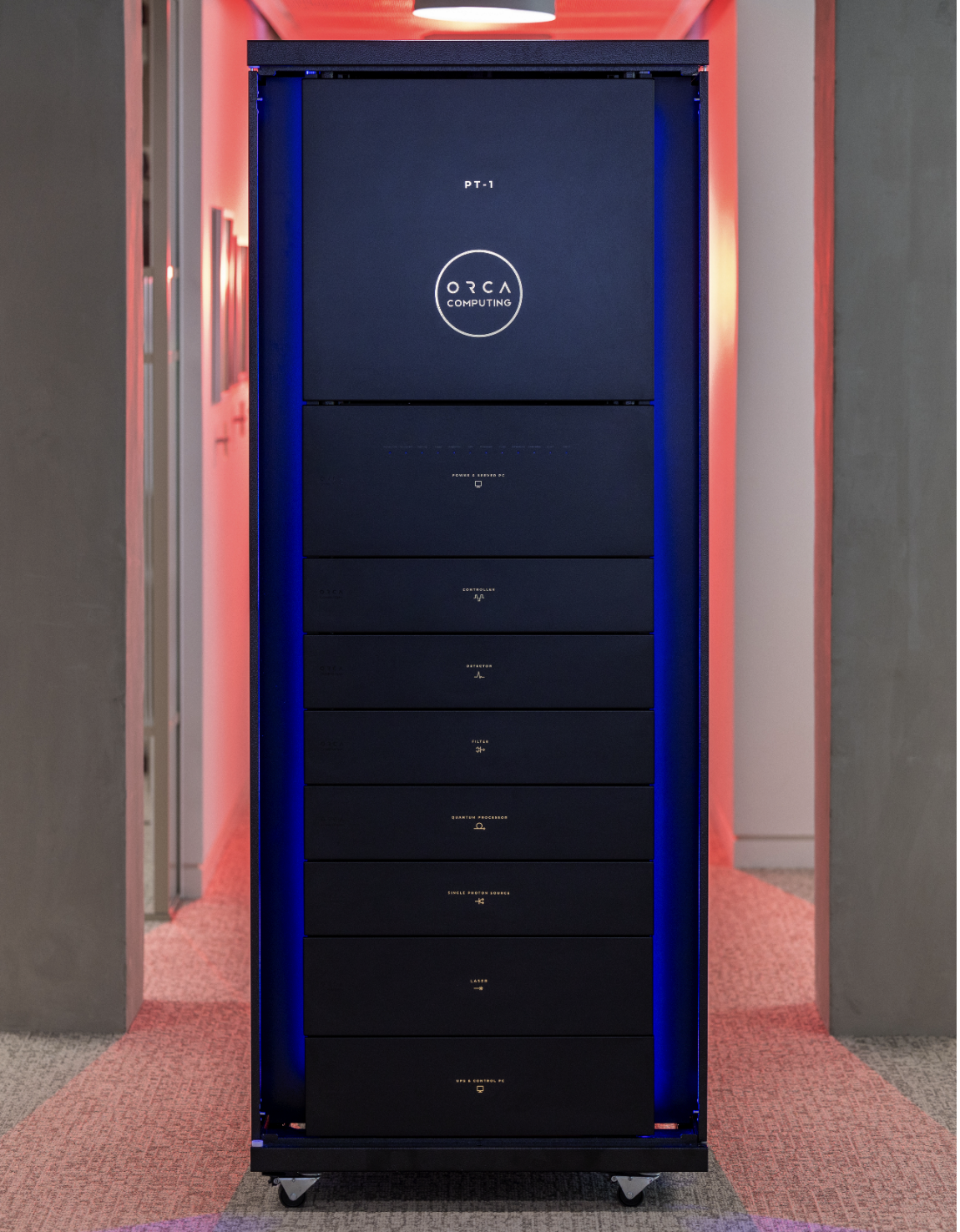
Researchers have successfully established the world’s first classical-quantum environment within an HPC center, enabling multiple users to execute hybrid algorithms on both QPUs and GPUs. This implementation at PCSS adheres to standard HPC practices, integrating quantum hardware into an active data center without requiring special modifications to networking, power, or cooling infrastructure. The team utilizes Slurm for workload management and the CUDA-Q extension API for seamless classical-quantum interactions, demonstrating a practical pathway for incorporating quantum computing into existing HPC ecosystems. The core of this achievement lies in the integration of ORCA Computing’s photonic PT-1 systems within the CUDA-Q framework, allowing programmers to access the quantum hardware via familiar C++ or Python interfaces.
CUDA-Q facilitates asynchronous logic, enabling users to leverage multiple QPUs to accelerate workflows and supports both real hardware and simulated photonic quantum processors. Researchers developed a higher-level Python software stack, termed “PTLayer”, to provide an algorithm-level programming interface specifically tailored for PT-Series processors, facilitating the implementation of algorithms like optimization routines, hybrid quantum/classical generative adversarial networks, and photonic quantum neural networks. Furthermore, the team extended Slurm, a widely used workload manager, to simultaneously allocate heterogeneous resources, CPUs, GPUs, and QPUs, essential for executing complex hybrid experiments. This integration allows GPU-based workloads running on HPC nodes to interact in real-time with remote QPUs via NVIDIA CUDA-Q, effectively merging quantum computing into classical HPC workflows. The system supports running a simple circuit on two PT-1 systems with 4-photon input states and 14 programmable parameters, demonstrating the feasibility of complex quantum computations within the HPC environment. This breakthrough delivers a crucial step towards realizing practical quantum advantage for near-term applications and provides a valuable experimental platform for the broader research community.
Quantum Computing Integrated With Data Centre Infrastructure
This work demonstrates the first operational integration of QPUs with an HPC data centre, creating a multi-user environment managed by standard scheduling software. The researchers successfully implemented a system allowing hybrid classical-quantum algorithms to run across multiple quantum and classical processors, without requiring specialized facilities beyond those typically found in modern data centres. This setup utilizes existing HPC practices, such as the Slurm workload manager, and a programming framework called CUDA-Q to orchestrate the interaction between classical and quantum resources. The findings highlight the feasibility of integrating quantum computing into existing HPC infrastructure, paving the way for broader access and algorithmic development.
While acknowledging the current limitations in latency and hardware heterogeneity, the authors outline future research directions focused on optimising scheduling strategies, reducing communication delays, and expanding the capabilities of the CUDA-Q framework. Further work will also explore different hardware topologies and broaden the range of algorithms suitable for this hybrid approach, with the ultimate goal of accelerating the path towards achieving a practical quantum advantage. The team intends to develop benchmark suites to aid performance tuning and scheduling policy development for these complex hybrid systems.
🗞 Hybrid Classical-Quantum Supercomputing: A demonstration of a multi-user, multi-QPU and multi-GPU environment
🧠 ArXiv: https://arxiv.org/abs/2508.16297
See today’s quantum computing news on Quantum Zeitgeist for the latest breakthroughs in qubits, hardware, algorithms, and industry deals.