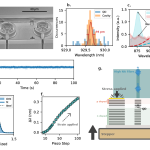
The seemingly random motion of particles suspended in fluids, known as Brownian motion, forms the basis of many physical processes, and understanding its behaviour within confining forces is crucial for fields ranging from biology to materials science. Eyad I. B. Hamid of International University of Africa, along with Giorgio Volpe and Giovanni Volpe, have independently reimplemented and extended a computational model of a Brownian particle held in an optical trap, a technique used to manipulate microscopic objects. This work not only validates the original 2013 study’s findings regarding the transition between different types of particle movement and its confinement within the trap, but also expands the model to incorporate more complex forces and phenomena, such as rotational fields and transitions between energy states. By reconstructing the simulations from first principles, the researchers provide a valuable pedagogical tool for understanding stochastic dynamics and reinforce the original study’s importance for both teaching and ongoing research in statistical and physics.
Rather than simply verifying previous results, the team rebuilt the simulation from fundamental principles using modern computational techniques, offering a valuable resource for understanding stochastic dynamics and computational physics. The core of the simulation lies in accurately representing the interplay between random thermal forces and the controlled forces of the optical trap. The simulation accurately models the particle’s motion using the Langevin equation, which describes how the particle responds to both deterministic and random forces.
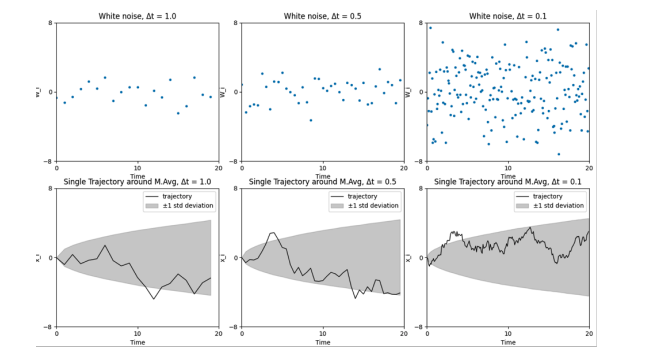
To translate this continuous equation into a form suitable for computer simulation, the researchers employed a finite difference algorithm, breaking time into discrete steps and iteratively updating the particle’s position. A key challenge was accurately representing the “white noise” term, embodying the random thermal fluctuations, which the team addressed by generating carefully scaled sequences of random numbers to match the theoretical properties of the noise. Beyond replicating the original findings, the research extends the simulation to incorporate more complex phenomena, including rotational forces, Kramers transitions, and stochastic resonance. Kramers transitions describe the particle escaping from a potential well due to thermal fluctuations, while stochastic resonance demonstrates how adding a specific amount of noise can enhance the detection of weak signals.
By successfully implementing these effects, the team demonstrates
By successfully implementing these effects, the team demonstrates the versatility and accuracy of their simulation framework. The simulation’s performance is validated by its ability to accurately reproduce key physical behaviors, such as the transition from ballistic to diffusive motion, and the team provides comprehensive code appendices to facilitate reproducibility and hands-on learning. This work serves as a powerful educational tool and a valuable resource for researchers studying complex systems and stochastic processes. The researchers successfully replicated key phenomena described in a previous study of Brownian motion within an optical trap, using independent simulations developed in Python.
The simulations accurately modeled thermal forces with white noise and demonstrated a transition from ballistic to diffusive motion consistent with theoretical expectations. Within the optical trap, the particle trajectories and resulting probability distributions reflected the expected anisotropic stiffness and confinement. This work reinforces the value of the original study as a pedagogical and research tool for statistical and physics applications. The authors acknowledge that the simulations represent a specific implementation and further investigation could explore different parameter regimes or more complex trap geometries. Future work might also focus on extending the model to include additional forces or exploring the system’s behaviour over longer timescales, providing a more comprehensive understanding of Brownian motion in complex potentials.
👉 More information🗞Reproducing and Extending Brownian Motion in
🗞 Reproducing and Extending Brownian Motion in Optical Trap: A Computational Reimplementation of Volpe and Volpe (2013)
🧠 ArXiv: https://arxiv.org/abs/2508.08138