The intricate relationship between network science and quantum mechanics is now yielding promising new avenues for technological advancement, as explored by Eric Chitambar from University of Illinois Urbana-Champaign, Kenneth Goodenough from University of Massachusetts Amherst, and Otfried Gühne, along with their colleagues. This recent workshop brought together leading experts to investigate how the principles of classical graph theory can unlock innovation in quantum technologies, specifically through the use of quantum graph states. Researchers demonstrate that understanding the underlying structure of these states, using concepts like rank-width and hypergraphs, is crucial for building more efficient quantum computers, secure communication networks, and sensitive sensor technologies. The findings highlight the importance of collaborative, interdisciplinary research to overcome challenges in generating entanglement, benchmarking performance, and ultimately realising the full potential of these complex quantum systems.
The motivation stems from the idea that many fundamental problems in quantum gravity, such as understanding the nature of time and the structure of spacetime at the smallest scales, may be approached using the tools of quantum information theory and the mathematical language of graph theory. Researchers focused on the concept that spacetime itself might emerge from the intricate patterns of entanglement within a quantum system, and that graph theory provides a powerful way to describe this entanglement. A central goal was to identify and adapt mathematical techniques from graph theory to the study of quantum gravity, and conversely, to see how insights from quantum gravity can inspire new developments in graph theory and quantum information science. The workshop fostered collaboration and the exchange of ideas, aiming to deepen our understanding of the fundamental nature of spacetime and quantum gravity.
Graphs Unlock Advances in Quantum Technologies
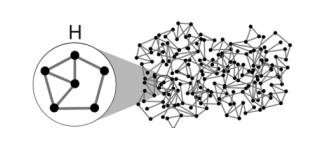
The workshop revealed the increasingly important connection between classical graph theory and quantum information science, demonstrating how mathematical tools developed for network analysis can significantly advance quantum computing, sensing, and communication. Experts highlighted that graphs, structures representing connections between points, provide a powerful framework for understanding complex systems, from road networks to the entanglement within quantum states. Classical graph theory offers concepts like expansion and tree-width, which describe how robust and efficiently solvable a network is, and these are proving surprisingly relevant to building better quantum technologies. Researchers discussed how the properties of graphs directly impact the performance of quantum systems.
For example, graphs with high ‘expansion’, meaning they remain connected even with some connections removed, are valuable for efficient communication and error correction in quantum networks. Similarly, graphs with low ‘tree-width’ allow for more efficient algorithms, potentially speeding up quantum computations. Identifying and constructing graphs with specific structural properties is crucial for optimizing quantum performance. A key focus was the application of graph theory to measurement-based quantum computing, where quantum computations are performed using entangled states called ‘graph states’.
The structure of these graph states, mirroring the topology of a graph, dictates the computational power of the system. Researchers are investigating how manipulating the graph structure can enhance the capabilities of these quantum computers, and how concepts like ‘local Clifford equivalence’ and ‘local complementation’ can help determine the equivalence of different quantum states. Modern graph theory is extending beyond simple connections to explore higher-dimensional structures, such as networks with triangular or tetrahedral connections, which are particularly relevant to error correction and the development of robust quantum systems. The workshop underscored the potential of these advanced graph-theoretic tools to unlock new possibilities in quantum technology, bridging the gap between mathematical foundations and practical applications in computing, sensing, and communication.
The workshop successfully brought together experts from classical graph theory and quantum science, revealing the fundamental role of graph-theoretic structures in advancing quantum technologies. Discussions highlighted how concepts like rank-width and hypergraphs underpin measurement-based computation, fault-tolerant architectures, and distributed quantum sensing, demonstrating a powerful synergy between these traditionally separate fields. The event underscored the potential of leveraging classical graph theory to address key challenges in building and scaling quantum systems. Participants identified several areas requiring further investigation, including scalable entanglement generation, robust benchmarking techniques, and a more complete theoretical understanding of generalized graph states. The workshop emphasized the need for continued interdisciplinary collaboration to overcome these hurdles and to explore the full potential of entanglement within graph-based systems, particularly concerning simulation complexity and experimental realization across various platforms. Researchers acknowledge that significant work remains to translate these theoretical insights into practical quantum technologies.
🗞 Quantum Graph States: Bridging Classical Theory and Quantum Innovation, Workshop Summary
🧠 ArXiv: https://arxiv.org/abs/2508.04823
See today’s quantum computing news on Quantum Zeitgeist for the latest breakthroughs in qubits, hardware, algorithms, and industry deals.