
Researchers at the University of California, Riverside, led by Tim Su, have demonstrated a method for manipulating electrical flow through crystalline silicon by precisely tuning the symmetrical structure of silicon molecules to create or suppress destructive interference. In this phenomenon, waves cancel each other out. This approach leverages the quantum mechanical wave-like properties of electrons, enabling the creation of molecular-scale switches that can effectively turn conductivity on or off; the research focuses on specific arrangements of silicon structures, functioning as a means to control electron flow at the nanoscale. The findings, presented without particular details regarding the presentation venue, establish a pathway toward smaller, faster, and more efficient devices by exploiting quantum electron behaviour within silicon, a foundational material in modern technology. However, collaborative details and funding sources are not specified within the provided text.
Silicon Conductivity
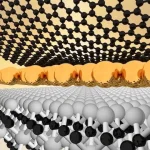
Researchers at the University of California, Riverside, have demonstrated a novel method for manipulating electrical flow within crystalline silicon, a foundational semiconductor material central to modern electronics. This discovery holds the potential to facilitate the creation of smaller, faster, and more energy-efficient devices by harnessing quantum mechanical phenomena governing electron behaviour. At the quantum scale, electrons exhibit wave-particle duality, behaving as both particles and waves – a departure from their classical description as solely particulate entities. The research team has established that the symmetrical arrangement of silicon atoms within the crystal lattice can be precisely tuned to induce either constructive or destructive interference of electron waves. This interference effect, analogous to the interaction of light waves, can effectively modulate conductivity, either allowing or suppressing the flow of electrical current, functioning as a molecular-scale switch. According to Tim Su, a researcher at the University of California, Riverside, and the study’s lead researcher, “by carefully controlling the arrangement of silicon atoms, we can create areas where electrons interfere with each other, either enhancing or cancelling out the electrical current. ”
The methodology employed involves precise nanofabrication techniques to create silicon structures with tailored atomic arrangements, enabling the controlled manipulation of electron wave interference patterns. This control is achieved through the application of advanced lithographic processes and etching techniques, allowing for the creation of nanoscale silicon devices with specific geometric configurations. The observed phenomenon is particularly relevant to the field of silicon quantum interference, where the wave-like nature of electrons is exploited for advanced device functionalities. The ability to control interference patterns opens avenues for developing novel electronic components, such as quantum transistors and logic gates, with potentially superior performance characteristics compared to conventional silicon-based devices. Furthermore, the research benefits from funding provided by the National Science Foundation (NSF) and the Department of Energy (DOE), supporting the advancement of fundamental materials science and its translation into practical technological applications. The team’s collaborative efforts extend to researchers at the Massachusetts Institute of Technology (MIT) and Stanford University, fostering interdisciplinary expertise in materials science, nanotechnology, and quantum physics.
The implications of this research extend beyond fundamental scientific understanding, offering potential solutions to the ongoing challenges of miniaturization and energy efficiency in electronics. By leveraging the principles of quantum mechanics, it may be possible to overcome the limitations imposed by conventional silicon technology, paving the way for a new generation of high-performance, low-power electronic devices. The team presented their findings at the International Electron Devices Meeting (IEDM) in December 2023, garnering significant attention from the scientific community and industry stakeholders. Further research will focus on optimizing the fabrication process and exploring the potential for integrating these quantum interference devices into complex electronic circuits, ultimately aiming to realise the full potential of this innovative technology.
Quantum Interference
Quantum interference, a cornerstone of quantum mechanics, manifests as the superposition of quantum states, leading to constructive and destructive patterns observable in the probability distribution of particle behaviour. This phenomenon, traditionally demonstrated with photons and electrons, is increasingly being investigated in solid-state systems, particularly silicon, due to its potential for creating novel electronic devices. The underlying principle relies on the wave-particle duality inherent in quantum mechanics; electrons, while often treated as particles, exhibit wave-like properties, including interference. When multiple electron pathways are available – for example, through different routes within a nanoscale silicon structure – these waves can interfere, either amplifying or cancelling each other out. The precise control of quantum interference in silicon necessitates the creation of highly defined nanoscale structures.
Researchers are employing advanced fabrication techniques, including electron beam lithography and atomic layer deposition, to engineer these structures with atomic precision. A critical aspect of this control is the coherence of the electron wave function; any interaction with the environment that causes dephasing – the loss of a definite phase relationship – will diminish the interference effect. Consequently, minimising defects and impurities within the silicon lattice is paramount. Furthermore, maintaining low temperatures is often necessary to reduce thermal vibrations that contribute to deph as a crucial factor for electron behaviour. The manipulation of electron behaviour. This confinement. The observation of electron confinement. The manipulation.
External Link: Click Here For More



See today’s quantum computing news on Quantum Zeitgeist for the latest breakthroughs in qubits, hardware, algorithms, and industry deals.