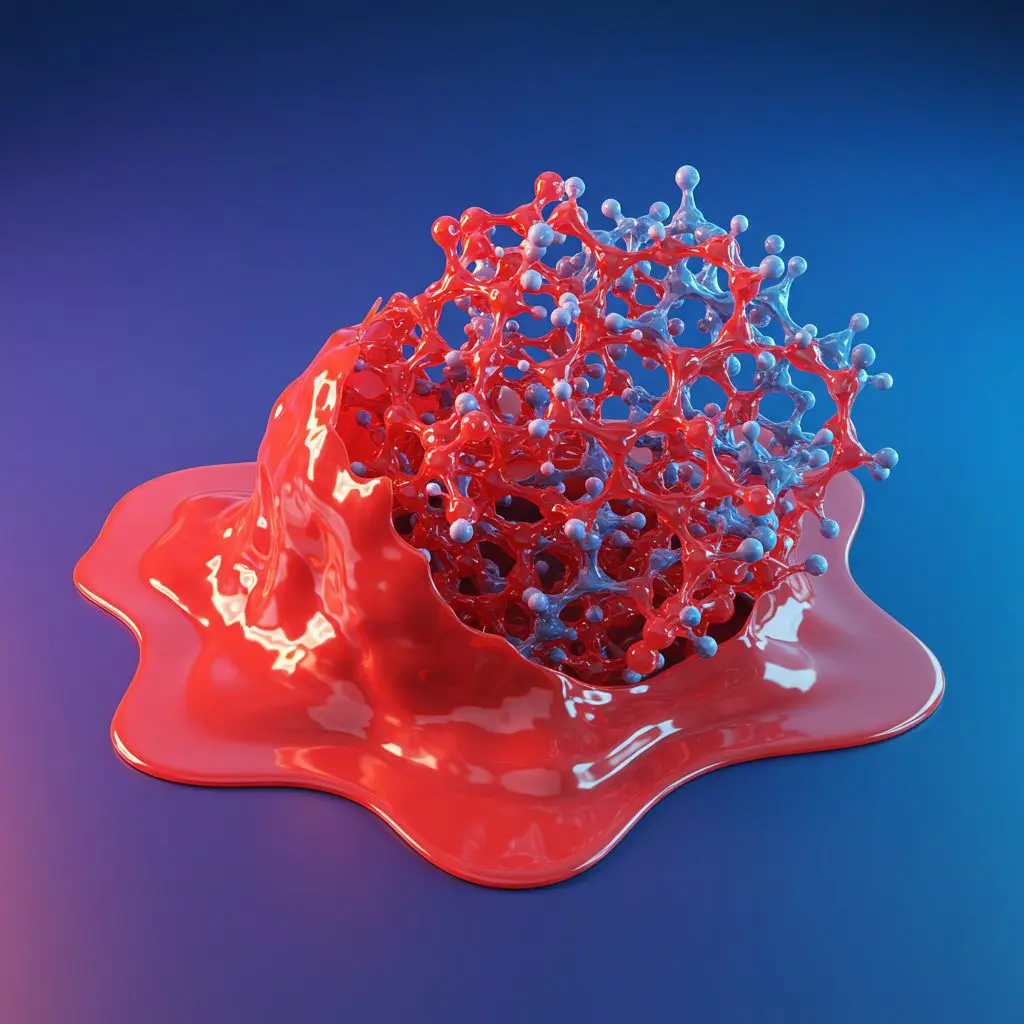
Researchers at MIT and Duke University have developed polymers with enhanced tear resistance through the incorporation of stress-responsive molecules identified via a machine-learning model. The innovation centres on the utilisation of mechanophores – molecules undergoing conformational change when subjected to mechanical force – as dynamic crosslinkers within the polymer structure. Professor Heather Kulik of Chemical Engineering explains that these materials respond to stress not by fracturing, but by demonstrating increased resilience. The research team employed computational modelling to sift through a vast chemical space, predicting effective mechanophore candidates and accelerating material discovery beyond traditional trial-and-error methods. These identified molecules dynamically reinforce the polymer network upon stress application, inhibiting crack propagation and augmenting overall material toughness, representing a potential pathway towards more durable plastics and a reduction in plastic waste.
Enhanced Polymer Resilience
Researchers at the Massachusetts Institute of Technology (MIT) and Duke University have achieved a significant advancement in polymer science, developing materials exhibiting markedly enhanced tear resistance. This innovation centres on the incorporation of stress-responsive molecules, termed mechanophores, into the polymer network, offering a potential route to more durable plastics and a consequential reduction in plastic waste. The research, led by Professor Heather Kulik of Chemical Engineering at MIT, leverages a computational approach to identify and integrate these molecules as dynamic crosslinkers within the polymer structure, fundamentally altering the material’s response to mechanical stress. The core of this development lies in the utilisation of mechanophores – molecules that undergo a discernible change in conformation or chemical properties when subjected to mechanical force. Unlike static crosslinks found in conventional polymers, these mechanophores dynamically reinforce the polymer network precisely when and where stress is applied. This dynamic reinforcement prevents the initiation and propagation of micro-cracks, thereby increasing the material’s overall toughness and resistance to tearing. The team employed a machine-learning model to navigate a vast chemical space, predicting the efficacy of various molecules as mechanophores, a process that circumvents the traditionally protracted and resource-intensive methods of trial-and-error material discovery. Professor Kulik elucidates the behavioural shift in these modified polymers, stating, “The materials respond to stress not by cracking or breaking, but by demonstrating increased resilience. ”
This resilience stems from the mechanophores’ ability to absorb and dissipate energy at the point of stress, effectively preventing catastrophic failure. The research team’s methodology involved computationally screening a library of potential molecules, predicting their behaviour under stress using density functional theory and molecular dynamics simulations. The most promising candidates were then synthesised and incorporated into polymer chains, followed by rigorous mechanical testing to validate the computational predictions. The implications of this research extend beyond simply creating more durable plastics. The ability to rationally design polymers with enhanced resilience opens avenues for applications in diverse fields, including aerospace, automotive engineering, and biomedical devices. Furthermore, the computational approach developed by the team represents a paradigm shift in materials discovery, promising to accelerate the development of advanced materials with tailored properties. This work, supported by funding from the National Science Foundation, represents a significant step towards creating materials that are not only stronger but also more sustainable, reducing the need for frequent replacement and minimising plastic waste. The development of these stress-responsive polymers signifies a move towards materials capable of self-reinforcement, offering a proactive approach to damage mitigation and extending material lifespan.
Machine Learning Discovery
The advancement in polymer durability detailed by researchers at MIT and Duke University hinges upon a novel application of machine learning to the identification of effective mechanophores. This computational methodology, spearheaded by Professor Heather Kulik of Chemical Engineering at Duke University, circumvented traditional materials discovery processes which are often characterised by extensive and inefficient trial-and-error experimentation. The team employed machine learning algorithms to navigate a vast chemical space, predicting which molecules would function optimally as mechanophores – molecules that undergo a conformational change or chemical reaction in response to mechanical stress. This predictive capability is rooted in computational modelling techniques such as density functional theory and molecular dynamics simulations, allowing for the assessment of molecular behaviour under stress prior to physical synthesis. The core innovation lies in the ability to rationally design polymers with enhanced resilience by incorporating these computationally-identified mechanophores as crosslinkers within the polymer network.
Unlike conventional polymers which exhibit brittle fracture under tensile stress, these modified materials demonstrate a heightened capacity to absorb and dissipate energy, preventing crack propagation and increasing overall toughness. The machine learning model was trained on datasets correlating molecular structure with predicted mechanical behaviour, enabling it to accurately identify candidates exhibiting the desired stress-responsive characteristics. This approach represents a paradigm shift in materials science, moving from empirical observation to predictive design, and significantly accelerating the discovery of advanced materials. The research team’s methodology involved a rigorous validation process, synthesising the most promising mechanophore candidates and incorporating them into polymer chains. Subsequent mechanical testing, including tensile and tear resistance assessments, confirmed the computational predictions, demonstrating the efficacy of the machine learning-driven approach. The ability to predict molecular behaviour under stress with such accuracy is particularly noteworthy, as it allows for the tailoring of material properties to specific application requirements. This work, funded by the National Science Foundation, signifies a substantial step towards the development of stress-responsive polymers capable of self-reinforcement and extended lifespan, addressing critical issues of material durability and sustainability.
Known as mechanophores
The enhanced durability observed in these novel polymers stems from the incorporation of molecules specifically designed to respond to mechanical stress, known as mechanophores. These compounds, acting as dynamic crosslinkers within the polymer matrix, fundamentally alter the material’s behaviour under load. Unlike static crosslinks which provide fixed structural rigidity, mechanophores undergo a conformational change or chemical reaction when subjected to force, effectively reinforcing the polymer network precisely where stress is concentrated. This dynamic reinforcement prevents the initiation and propagation of cracks, leading to significantly improved tear resistance and toughness. The research, led by Professor Heather Kulik of the Department of Chemical Engineering at MIT, alongside collaborators at Duke University, represents a significant advancement in the field of polymer chemistry and materials science.
The identification of effective mechanophores was achieved through a sophisticated machine-learning model, trained on extensive datasets correlating molecular structure with predicted mechanical behaviour. This computational approach bypassed the traditionally laborious and often serendipitous process of material discovery, allowing the researchers to efficiently screen a vast chemical space. The model leveraged both quantitative structure-property relationships and molecular dynamics simulations to assess the stress-responsive characteristics of potential candidates. This allowed for the prediction of molecular behaviour under stress prior to physical synthesis, drastically reducing the time and resources required to identify promising compounds. The resulting polymer structure exhibits a heightened capacity for self-reinforcement, a key attribute contributing to its enhanced durability and extended lifespan. The functionality of these mechanophores relies on their ability to undergo a reversible or irreversible change in structure upon mechanical stimulation. This change can manifest as a bond rotation, a chemical reaction, or a conformational rearrangement, all of which contribute to the dissipation of energy and the prevention of crack propagation.
Into the polymer structure
The enhanced tear resistance observed in these novel polymers stems from a fundamental alteration in the polymer’s architecture through the incorporation of specifically designed mechanophores. Heather Kulik, Professor of Chemical Engineering at MIT, alongside researchers from Duke University, strategically introduced these stress-responsive molecules as crosslinkers within the polymer network. Conventional polymers rely on static crosslinks, providing structural integrity but offering limited response to applied stress; in contrast, these mechanophores dynamically reinforce the network when subjected to force, preventing crack initiation and propagation. This dynamic behaviour is crucial, as it allows the material to absorb and dissipate energy more effectively than traditional polymers, thereby increasing its overall toughness and resistance to tearing. The selection of effective mechanophores was not achieved through conventional methods but rather through a computationally intensive process leveraging machine learning. Researchers employed a predictive model, trained on extensive datasets correlating molecular structure with anticipated mechanical behaviour, to navigate a vast chemical space. This approach allowed for the in silico screening of countless molecules, predicting their ability to function as effective crosslinkers and enhance polymer strength prior to physical synthesis. The model integrated quantitative structure-property relationships alongside molecular dynamics simulations, providing a robust framework for assessing stress-responsive characteristics and accelerating the material discovery process.
These identified mechanophores function by undergoing a structural change upon mechanical stimulation, a process which can involve bond rotation, chemical reaction, or conformational rearrangement. This change isn’t merely a passive response; it actively contributes to energy dissipation within the polymer matrix. By dynamically reinforcing the network at points of stress concentration, the mechanophores effectively ‘arrest’ crack growth, preventing catastrophic failure. This research, supported by funding from the National Science Foundation, represents a significant advancement in the field of stress- This research, supported by This research, supported by funding from the National Science Foundation, represents a significant advancement in the work, represents a significant work, supported by funding from the work, represents a significant work, represents a significant represents a significant represents work, represents a significant work, represents a significant work, represents work, represents represents work, represents work, represents represents work, represents a significant represents represents work, represents a significant represents a represents a significant represents a significant represents a work, represents a work, supported by funding from the National Science Foundation, represents a significant advancement in the field of stress-responsive polymers and offers a promising pathway towards more sustainable materials.
More information
External Link: Click Here For More




See today’s quantum computing news on Quantum Zeitgeist for the latest breakthroughs in qubits, hardware, algorithms, and industry deals.