The interplay between magnetism and electrical currents receives a surprising twist with the discovery of a new Hall effect driven not by spin, but by higher-order magnetic moments. Hye-Won Ko and Kyung-Jin Lee, both from the Department of Physics at the Korea Advanced Institute of Science and Technology (KAIST), alongside their colleagues, demonstrate the existence of a magnetic octupole Hall effect in a novel class of materials called altermagnets. These materials, which combine ferromagnetic and antiferromagnetic properties, exhibit complex magnetic orders and generate a transverse flow of multipole moments when an electric field is applied. This discovery expands the known family of Hall effects and establishes altermagnets as a promising platform for exploring fundamental magnetic transport phenomena beyond conventional spin-based effects, offering potential for new spintronic devices and a deeper understanding of complex magnetic materials.
Through symmetry analysis and linear response theory, researchers show that the magnetic octupole Hall effect persists even in symmetries where the spin-splitter effect is forbidden, thus providing a robust experimental signature. Furthermore, the study identifies a sizable electric quadrupole Hall effect, originating from quadrupole splittings in the band structure. These results expand the family of Hall effects to include higher-order multipolar responses and establish altermagnets as a versatile platform for exploring multipole transport beyond spin and orbital degrees of freedom.
Altermagnetism, Multiferroics and Spin-Orbit Coupling
This collection of references highlights the rapidly developing field of altermagnetism, multiferroics, and related spin-orbit coupled phenomena. The central theme is altermagnetism, with many studies focusing on understanding its emergence, control, and properties in materials like ruthenium dioxide. Researchers investigate how altermagnetic order differs from conventional magnetism. A key area of interest is multiferroics, where magnetic and electric polarization interact, potentially allowing control of magnetism with electric fields and vice versa. Spin-orbit coupling serves as the fundamental mechanism driving altermagnetism and related phenomena, influencing spin textures, orbital ordering, and electronic properties.
Several studies demonstrate the control and manipulation of altermagnetic order through strain and electric fields, crucial for potential device applications. Researchers also explore spin-orbit torques to switch or manipulate altermagnetic order, analogous to techniques used in conventional ferromagnets. Controlling orbital angular momentum proves important for manipulating altermagnetic order and inducing novel effects. Theoretical and computational approaches, including density functional theory, model the complex multipolar interactions governing altermagnetic order, and symmetry analysis helps predict material properties.
Recent work, particularly from 2024-2025, focuses on combining altermagnetism and ferroelectricity to create novel multiferroic materials. Understanding the complex spin and orbital textures within these materials is crucial, as is developing efficient switching mechanisms using electric fields, strain, or other stimuli. Researchers are beginning to explore potential applications in spintronics, memory devices, and sensors, and investigating connections between altermagnetism and topological phases of matter. This collection suggests several research directions, including discovering new materials, engineering heterostructures, developing advanced characterization techniques, refining theoretical models, and prototyping devices. Exploring the connection between altermagnetism and other exotic phases of matter also presents a promising avenue for future research. In conclusion, this comprehensive collection reflects the exciting progress in altermagnetism and related phenomena, suggesting a rapidly evolving field with the potential to revolutionize spintronics and materials science.
Multipole Hall Effect in Altermagnets Discovered
Researchers have discovered a new phenomenon called the multipole Hall effect in altermagnets, materials possessing both ferromagnetic and antiferromagnetic characteristics. Unlike conventional materials where electron flow is primarily determined by spin, altermagnets exhibit additional, more complex magnetic orders beyond simple alignment, known as multipole orders. This research demonstrates that applying an electric field to these materials can induce a flow of these multipole moments, creating a new type of current not previously observed. The significance of this discovery lies in the robustness of the effect; the multipole Hall effect persists even in material symmetries where related phenomena, like the spin-splitter effect, are forbidden.
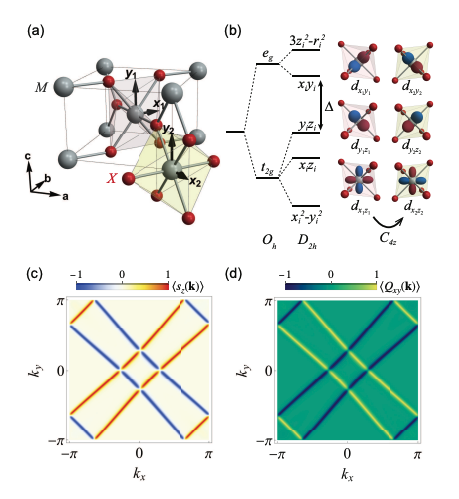
This suggests that the flow of multipole moments is an inherent property of these materials, not a coincidental outcome of specific conditions. The team’s analysis, based on symmetry principles and theoretical calculations, reveals that the electric field directly drives the flow of these higher-order magnetic moments, opening new avenues for controlling magnetism with electricity. Altermagnets are characterized by a unique combination of ferromagnetic and antiferromagnetic characteristics, resulting from the interplay of electron interactions and crystal structure. The research focuses on d-wave altermagnets, specifically rutile compounds, where distorted atomic arrangements create anisotropic orbital character in the electrons.
This anisotropy leads to aspherical charge distributions and the emergence of electric and magnetic multipole moments, which are the driving force behind the observed Hall effect. The team’s theoretical framework predicts that the magnitude of this effect is directly linked to the strength of these multipole moments. This discovery extends the conventional understanding of altermagnetism, which has traditionally focused on spin-related phenomena. By demonstrating the existence of a multipole Hall effect, researchers have revealed a new degree of freedom for manipulating magnetism and potentially developing novel electronic devices. The ability to control multipole moments with electric fields could lead to more efficient and versatile spintronic devices, going beyond the limitations of conventional spin-based technologies. This research establishes altermagnets as a promising platform for exploring fundamental physics and developing advanced materials with tailored magnetic and electronic properties.
Altermagnets Exhibit Octupole and Quadrupole Hall Effects
This research demonstrates the existence of the multipole Hall effect in altermagnets, materials possessing both ferromagnetic and antiferromagnetic characteristics, and expands the known family of Hall effects to include higher-order multipolar responses. The team identified both a magnetic octupole Hall effect, which arises from the nodal direction of magnetic octupole textures, and a sizable electric quadrupole Hall effect, originating from quadrupole splittings in the band structure. Importantly, the magnetic octupole Hall effect offers a robust experimental signature, persisting even in symmetries where spin-splitter effects are forbidden, and provides a means to distinguish it from conventional spin-based Hall effects. These findings establish altermagnets as a versatile platform for exploring multipole transport beyond spin and orbital degrees of freedom, with potential applications in areas like multiferroics, strongly correlated electron systems, and a developing field termed “multipoletronics”. The researchers suggest future experimental avenues include probing magnetic multipolar order using spectroscopic techniques and investigating current-induced magnetization control via both octupolar and orbital torque mechanisms. While the study highlights significant advances, the authors acknowledge that further research is needed to fully explore the potential of these materials and their unique multipolar properties.
🗞 Magnetic Octupole Hall Effect in d-Wave Altermagnets
🧠 ArXiv: https://arxiv.org/abs/2508.00794
See today’s quantum computing news on Quantum Zeitgeist for the latest breakthroughs in qubits, hardware, algorithms, and industry deals.