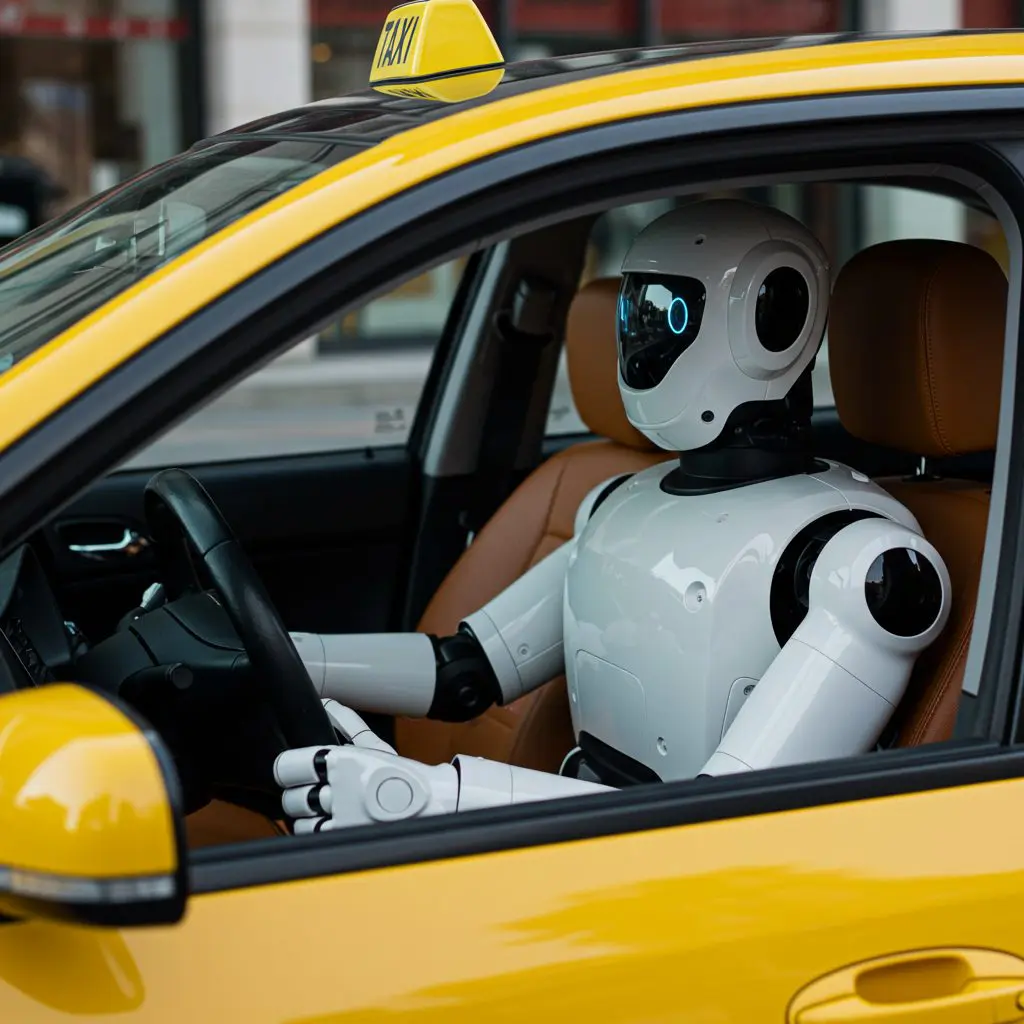
Srinivas Peeta, Director of the Autonomous and Connected Transportation Lab and Frederick R. Dickerson Chair and Professor in the School of Civil and Environmental Engineering at Georgia Tech, has been analysing the deployment of Waymo’s Level 4 autonomous vehicle systems in partnership with Uber, currently operational within a 65-square-mile area of Atlanta since April 2024. This ongoing research assesses the distinctions between Waymo’s approach to autonomous navigation and that of other vehicle manufacturers, alongside an investigation into the role of social media in influencing public acceptance and adoption of this new transportation modality. The work, presented as part of the ‘Generating Buzz’ series, further considers potential future developments in autonomous vehicle technology and its integration into urban transportation networks, with planned expansion of Waymo’s service to seven cities by 2026. This analysis builds upon broader discussions within the series, encompassing topics ranging from cybersecurity – specifically the CrowdStrike outage – to the application of artificial intelligence in cancer detection and treatment.
Autonomous Vehicle Deployment in Atlanta
Atlanta has emerged as a key testbed for autonomous vehicle technology, notably through the deployment of retrofitted Jaguar I-Pace robotaxis operated by Waymo in partnership with Uber, commencing in April 2024. These vehicles currently service a 65-square-mile area within the city, positioning Atlanta alongside a limited number of US cities offering this service, with expansion plans targeting seven cities by 2026. The initiative represents a significant real-world evaluation of Level 4 autonomous systems – vehicles capable of handling all driving tasks under certain conditions – operating within a complex urban environment characterised by high traffic density and varied road infrastructure.
Srinivas Peeta, Director of the Autonomous and Connected Transportation Lab and Frederick R. Dickerson Chair and Professor in the School of Civil and Environmental Engineering at Georgia Tech, has offered insights into the nuances of Waymo’s approach. Peeta’s expertise centres on the comparative analysis of autonomous systems, highlighting distinctions between Waymo’s implementation and those of traditional vehicle manufacturers. This comparative analysis likely encompasses differences in sensor suites – typically comprising LiDAR, radar, and camera systems – algorithmic approaches to perception, path planning, and decision-making, and the robustness of the system to adverse weather conditions or unexpected events. Furthermore, Peeta has addressed the role of social media in shaping public perception and accelerating the adoption of this nascent technology, suggesting a feedback loop where positive or negative experiences shared online can significantly influence public trust and willingness to utilise autonomous ride-sharing services.
The deployment also provides a unique opportunity to study the interplay between autonomous systems and existing transportation networks. Researchers are likely monitoring key performance indicators such as traffic flow, congestion levels, and overall transportation efficiency to assess the impact of autonomous vehicles on the urban mobility landscape. The data collected will be crucial for refining algorithms, improving system reliability, and informing future infrastructure planning to accommodate a growing fleet of autonomous vehicles. Understanding these dynamics is paramount to ensuring a seamless and safe integration of autonomous vehicle technology into the existing transportation ecosystem.
Waymo’s Technological Differentiation
Waymo’s technological differentiation, as elucidated by Srinivas Peeta, Director of the Autonomous and Connected Transportation Lab and Frederick R. Dickerson Chair and Professor in the School of Civil and Environmental Engineering at Georgia Tech, extends beyond mere operational deployment to encompass fundamental architectural and algorithmic distinctions. While many vehicle manufacturers are integrating autonomous features, Waymo’s approach prioritises a fully driverless ‘Level 4’ or ‘Level 5’ autonomy, necessitating a significantly more robust and redundant system. This is achieved through a layered safety architecture, integrating multiple sensor modalities – including high-resolution LiDAR, long- and short-range radar, and redundant camera systems – to create a comprehensive environmental perception.
The core differentiation lies in Waymo’s proprietary algorithms for sensor fusion and scene understanding. Unlike systems relying heavily on pre-mapped environments, Waymo’s algorithms are designed for ‘dynamic world modelling’, enabling the vehicle to accurately predict the behaviour of other road users – pedestrians, cyclists, and other vehicles – in real-time. This predictive capability is crucial for navigating complex urban environments and mitigating potential hazards. The system employs advanced machine learning techniques, specifically deep neural networks, trained on vast datasets of driving scenarios to improve accuracy and robustness. Furthermore, Waymo’s ‘virtual driver’ software incorporates sophisticated path planning and decision-making algorithms, optimising routes for safety, efficiency, and passenger comfort.
Peeta’s research suggests that Waymo’s system exhibits superior performance in handling ‘edge cases’ – unusual or unexpected events that challenge conventional autonomous systems. This is attributed to the extensive simulation testing conducted by Waymo, utilising a ‘closed-loop’ simulation environment where the virtual vehicle interacts with a realistic virtual world. This allows for the systematic evaluation of system performance under a wide range of conditions, identifying and addressing potential vulnerabilities before deployment. The emphasis on redundancy, coupled with advanced algorithmic approaches, positions Waymo as a leader in the development and deployment of fully autonomous vehicle technology. The ongoing data collection and analysis within the Atlanta deployment, and similar projects, will further refine these algorithms and contribute to the broader advancement of autonomous systems.
More information
External Link: Click Here For More




See today’s quantum computing news on Quantum Zeitgeist for the latest breakthroughs in qubits, hardware, algorithms, and industry deals.