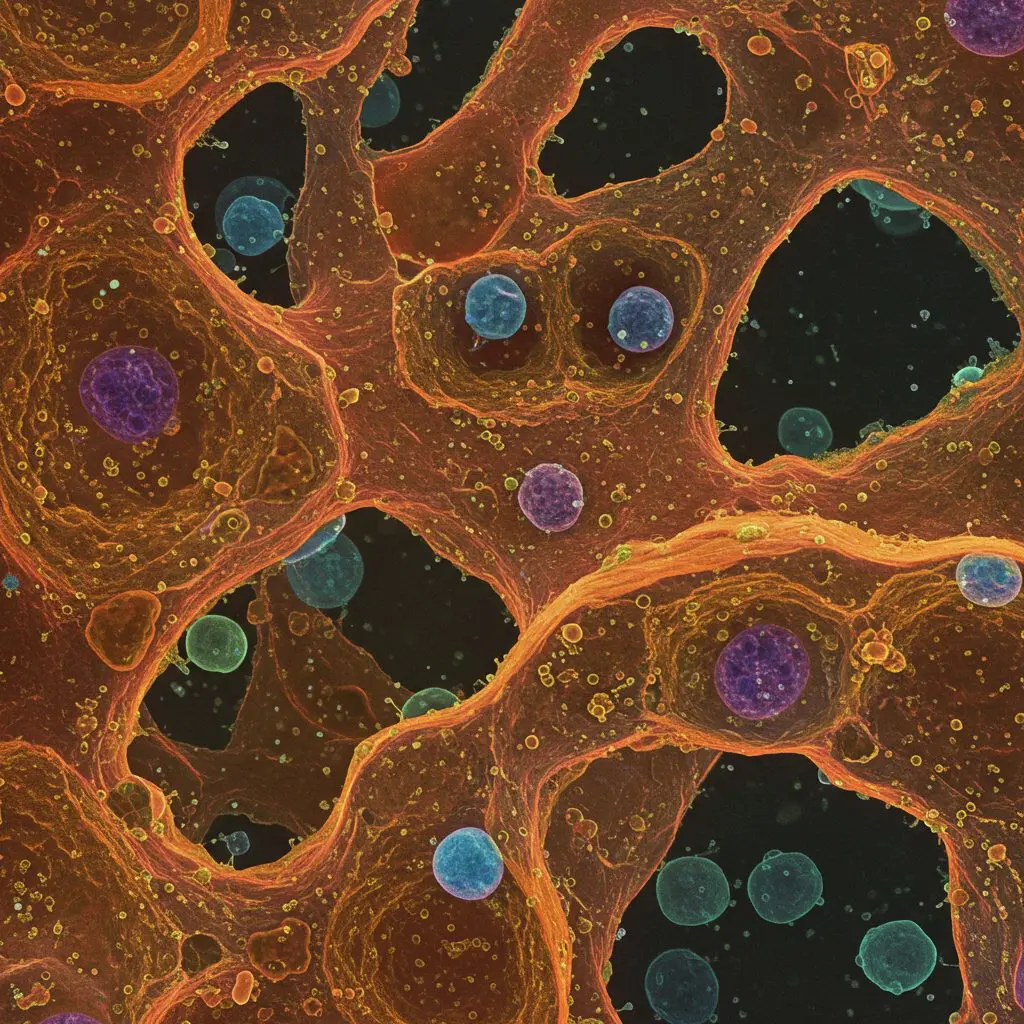
The Omics for Assessing Signatures for Integrated Safety (OASIS) consortium, launched in 2023 by the Broad Institute, HESI Global, and over 50 scientific partners, is evaluating ‘omics’ tools – including Cell Painting, a high-content imaging technique utilising fluorescent dyes, and transcriptomics, the study of RNA transcripts – to predict liver toxicity. This collaborative effort, currently in its initial three-year pilot phase, applies cell-based models and integrates cellular, transcriptomic, and proteomic technologies alongside artificial intelligence. The aim is to improve prediction of compound toxicity, addressing the issue that approximately one-third of drug candidates fail during early clinical trials due to unanticipated effects not detected in animal testing; researchers are currently generating and sharing datasets from initial experiments.
Predictive Toxicology and the OASIS Consortium
The Omics for Assessing Signatures for Integrated Safety (OASIS) consortium is actively engaged in reducing animal usage within drug safety evaluation. Launched in 2023, this collaboration, involving over 50 partner groups from industry, governmental bodies, and academic institutions, is focused on predicting the liver toxicity of potential pharmaceutical and agrochemical compounds. The consortium operates under a three-year pilot phase, supported by catalytic funding from the Massachusetts Life Sciences Center, and centres its approach on utilising ‘omics’ technologies in cellular models. These ‘omics’ tools encompass transcriptomics – the comprehensive study of RNA transcripts – and Cell Painting, a high-content imaging technique employing fluorescent dyes to visualise cellular characteristics. By integrating these advanced technologies – including cellular, transcriptomic, and proteomic analyses alongside artificial intelligence – OASIS aims to more accurately forecast the damaging effects of compounds on the liver. This is particularly significant given that approximately one-third of drug candidates fail during the initial phase of clinical trials, frequently due to unforeseen toxic effects not detected through conventional animal testing. Consortium members are currently testing compounds on multiple cell models, simultaneously generating and sharing datasets derived from these initial experiments, with the expectation that these resources will ultimately reduce reliance on animal testing in the development of pharmaceuticals and agricultural chemicals. The core focus on drug-induced liver toxicity represents a critical area of pharmaceutical safety, and the consortium’s work seeks to improve predictive capabilities in this domain.
Advancing ‘Omics’ Technologies
The OASIS consortium’s advancement of ‘omics’ technologies centres on enhancing the prediction of drug-induced liver toxicity, a significant challenge in pharmaceutical and agrochemical development. The initiative integrates several analytical approaches, notably transcriptomics and Cell Painting, to create a more comprehensive understanding of cellular responses to chemical compounds. Transcriptomics, the study of complete RNA transcript sets, allows researchers to assess gene expression changes indicative of cellular stress or damage. Complementing this, Cell Painting employs fluorescent dyes to visualise diverse cellular phenotypes, providing a high-content imaging analysis of morphological alterations that may signal toxicity. This multi-faceted approach moves beyond traditional methods by leveraging the power of cellular models and integrating cellular, transcriptomic, and proteomic technologies. The resulting data is then analysed using artificial intelligence to identify predictive biomarkers of liver damage. The consortium’s current work involves testing compounds on multiple cell models and generating shared datasets from these initial experiments. This collaborative data-sharing strategy is intended to accelerate the development of robust predictive tools and diminish reliance on animal testing, addressing a critical need within the industry given that roughly one-third of drug candidates fail during the first phase of clinical trials due to unanticipated toxicity.
Reducing Reliance on Animal Testing
A central objective of the Omics for Assessing Signatures for Integrated Safety (OASIS) consortium is the reduction of animal use in drug safety assessment. Current preclinical testing frequently relies on animal models to predict potential toxicity in humans, a process that is both ethically complex and often inaccurate, contributing to a high failure rate in early-stage clinical trials. Approximately one-third of drug candidates are discontinued after the first phase of clinical trials, frequently due to unforeseen toxic effects not detected in prior animal studies. OASIS aims to address this limitation by developing and validating cell-based predictive models. These models utilise advanced ‘omics’ technologies – including transcriptomics and Cell Painting – to provide a more nuanced understanding of how compounds affect cellular function. By generating comprehensive datasets from these cellular assays, the consortium intends to create robust, predictive tools capable of identifying potential liver toxicity before initiating animal studies. The collaborative nature of the consortium, encompassing over 50 partner groups from industry, government, and academia, facilitates data sharing and accelerates the development of these alternative testing methods. The initiative, launched in 2023 and currently in its initial three-year pilot phase, received catalytic funding from the Massachusetts Life Sciences Center to support this transition towards more predictive and ethically sound drug development processes. The ultimate goal is to diminish the reliance on animal testing in both pharmaceutical and agrochemical development, improving both the efficiency and ethical standing of the industry.
More information
External Link: Click Here For More


See today’s quantum computing news on Quantum Zeitgeist for the latest breakthroughs in qubits, hardware, algorithms, and industry deals.