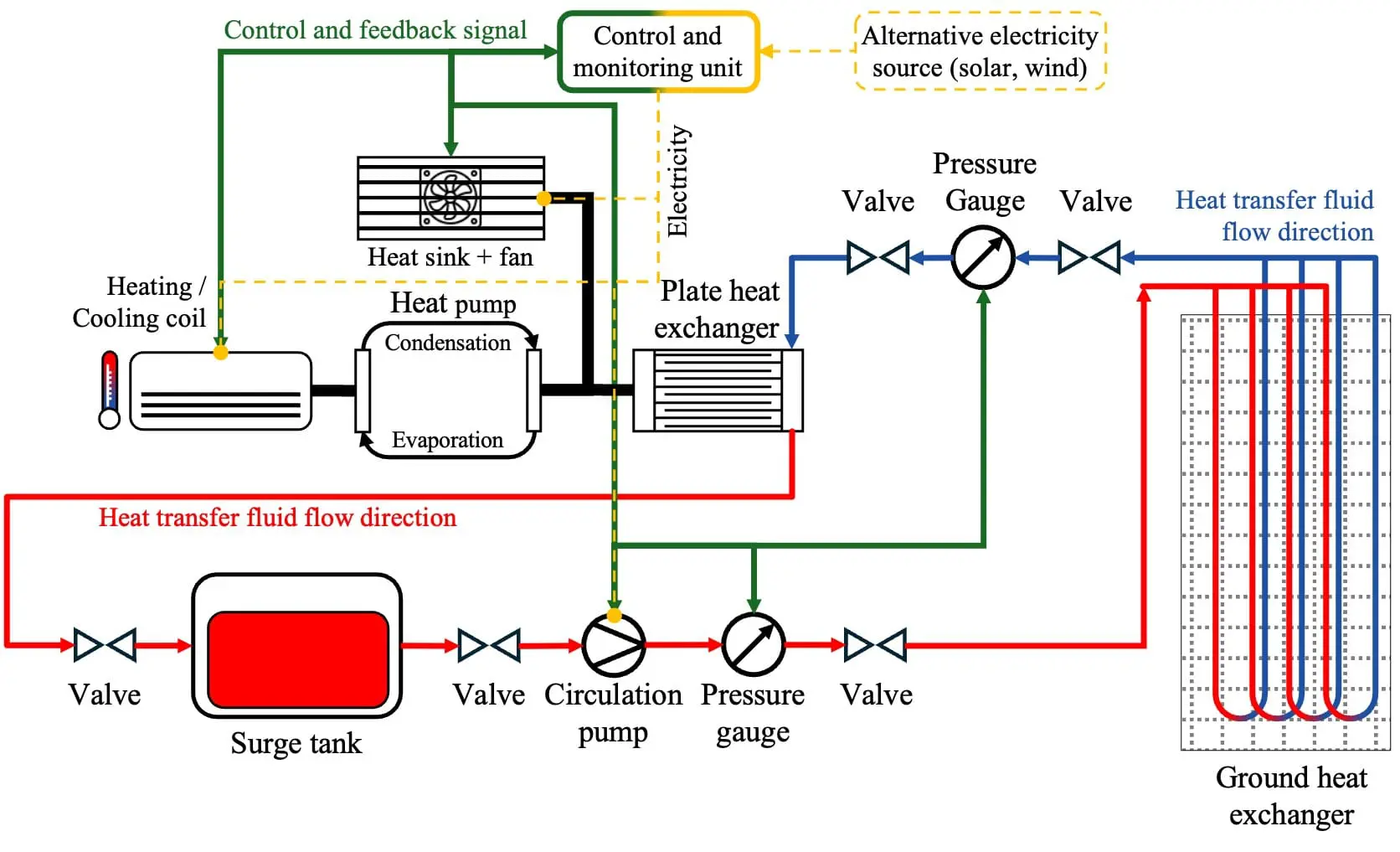
The research detailed the quantification of thermal interference between energy piles and soft clay soil, revealing that soil temperatures rose from 2.18% to 15.43% around closely spaced piles. Estimating this interference during the design phase is considered critical to maintaining system efficiency. To simplify thermal performance prediction, the researchers introduced practical multiplier factors, ranging from 1.6498 to 2.9119, which can be applied to results from single-pile simulations, thereby negating the need for complex three-dimensional models. Reducing operational hours of the energy pile systems was also found to delay temperature saturation by 103 hours and decrease peak soil temperatures by 29% over a five-year period.
The study indicated that central piles within a group experience greater heating compared to those at the periphery, demonstrating the effect of pile crowding and suggesting opportunities for optimized group design. This optimization strategy can contribute to both structural integrity and extended system lifespan. The developed model is particularly relevant for engineers working in rapidly urbanizing cities built on soft soils, where traditional heating, ventilation, and air conditioning systems are both energy-intensive and susceptible to climate vulnerability; the simplified simulation shortcuts, validated with real-world data, aim to lower the barriers to geothermal system adoption in Southeast Asia and beyond.
More information
External Link: Click Here For More
See today’s quantum computing news on Quantum Zeitgeist for the latest breakthroughs in qubits, hardware, algorithms, and industry deals.