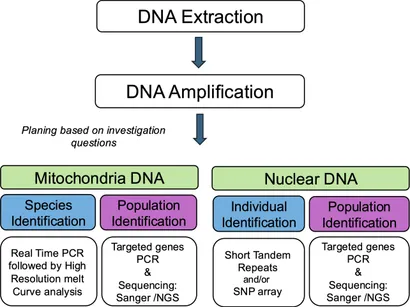
Genetic tools, primarily DNA analysis, are increasingly applied to wildlife forensics and conservation, aiding in the identification of illegally traded species and monitoring population structures. Researchers utilise techniques including mitochondrial DNA analysis and multiplex PCR to address issues such as hybridisation between wild and domestic animals – exemplified by studies on Corsican pigs – and the impact of urbanisation on species like the white-footed mouse. These methods support conservation efforts, informed by resources such as the Israeli Red List, and are crucial in addressing the rise of environmental crime, as highlighted in reports by UNEP-INTERPOL.
Genetic Tools in Wildlife and Livestock Management
Genetic tools are increasingly employed in forensic casework and conservation management, directly addressing the escalating issue of illegal wildlife trafficking as highlighted in a recent UNEP-INTERPOL report. The application of DNA analysis facilitates the identification of illegally traded wildlife, providing crucial evidence for legal proceedings and supporting enforcement of legislation such as Israel’s Wildlife Protection Law. These techniques extend beyond simple species identification, enabling detailed investigations into population structures and genetic diversity, which are vital for effective conservation strategies.
Analysis of mitochondrial DNA, frequently utilized in these investigations, provides insights into maternal lineages and aids in tracing the origins of wildlife specimens. Coupled with the use of genetic markers like microsatellites and single nucleotide polymorphisms, researchers can assess genetic diversity within populations and monitor the impact of factors such as urbanization and human intervention. Software such as GENALEX is employed for population genetics analysis, contributing to a more comprehensive understanding of genetic relationships.
Investigations into hybridization and introgression, such as those conducted on Corsican pigs involving domestic and wild boar, demonstrate the potential for gene flow to impact species boundaries and genetic diversity. Similar analyses are being conducted on a range of species, including golden jackals, to understand genomic origins and patterns of expansion. The validation of DNA-based methods is paramount, ensuring the reliability and accuracy of results used in both forensic and conservation contexts.
The assessment of minimum sample sizes is a critical consideration in genetic studies, ensuring sufficient statistical power to draw meaningful conclusions about population structure and diversity. Specific kits, such as the Maxwell FSC DNA IQ Kit, are utilized for DNA extraction and amplification, contributing to the standardization of laboratory procedures. These tools are not limited to mammalian species, with applications extending to Caribbean insectivores and various poultry, as evidenced by the development of multiplex assays for species identification.
Applications of DNA Analysis in Conservation
The application of genetic tools extends to livestock breeding, specifically for parentage verification and the selection of desirable traits within domestic animals like goats and pigs. Investigations into hybridization between domestic and wild boar in Corsica demonstrate the impact of gene flow on genetic diversity and species boundaries, a phenomenon also explored in golden jackals through genomic analyses.
These techniques are not limited to mammals; multiplex assays have been developed for species identification in a broader range of organisms, including Caribbean insectivores and various poultry species. The Israeli Red List of Threatened Breeding Birds serves as a resource for conservation status assessment, informing management decisions based on genetic data and population demographics.
Maintaining genetic diversity within populations is a key focus of these studies, with researchers employing tools like high-resolution melting (HRM) analysis in conjunction with PCR to assess variation. Population genomics, analyzing genome-wide variation, further enhances understanding of genetic relationships and population dynamics, contributing to more effective conservation management strategies.
Methodologies and Analytical Approaches
The application of these genetic tools extends to investigations of hybridization and introgression, exemplified by studies on Corsican pigs examining gene flow between domestic and wild boar populations. Similar analyses are undertaken with species such as golden jackals to elucidate genomic origins and expansion patterns, contributing to a broader understanding of species boundaries and genetic diversity.
These methodologies are not confined to mammalian species; the development of multiplex assays demonstrates their applicability to a wider range of organisms, including Caribbean insectivores and various poultry species, facilitating species identification across diverse taxa. The Israeli Red List of Threatened Breeding Birds serves as a valuable resource for conservation status assessment, integrating genetic data with population demographics to inform management decisions.
Population genomics, which analyzes genome-wide variation, provides a more comprehensive understanding of genetic relationships and population dynamics, complementing techniques such as high-resolution melting (HRM) analysis used in conjunction with PCR. These advanced techniques contribute to more effective conservation management strategies by providing detailed insights into genetic diversity within populations.
Furthermore, these methodologies are applicable to livestock breeding, specifically for parentage verification and the selection of desirable traits within domestic animals like goats and pigs, extending the utility of genetic analysis beyond conservation contexts.
More information
External Link: Click Here For More