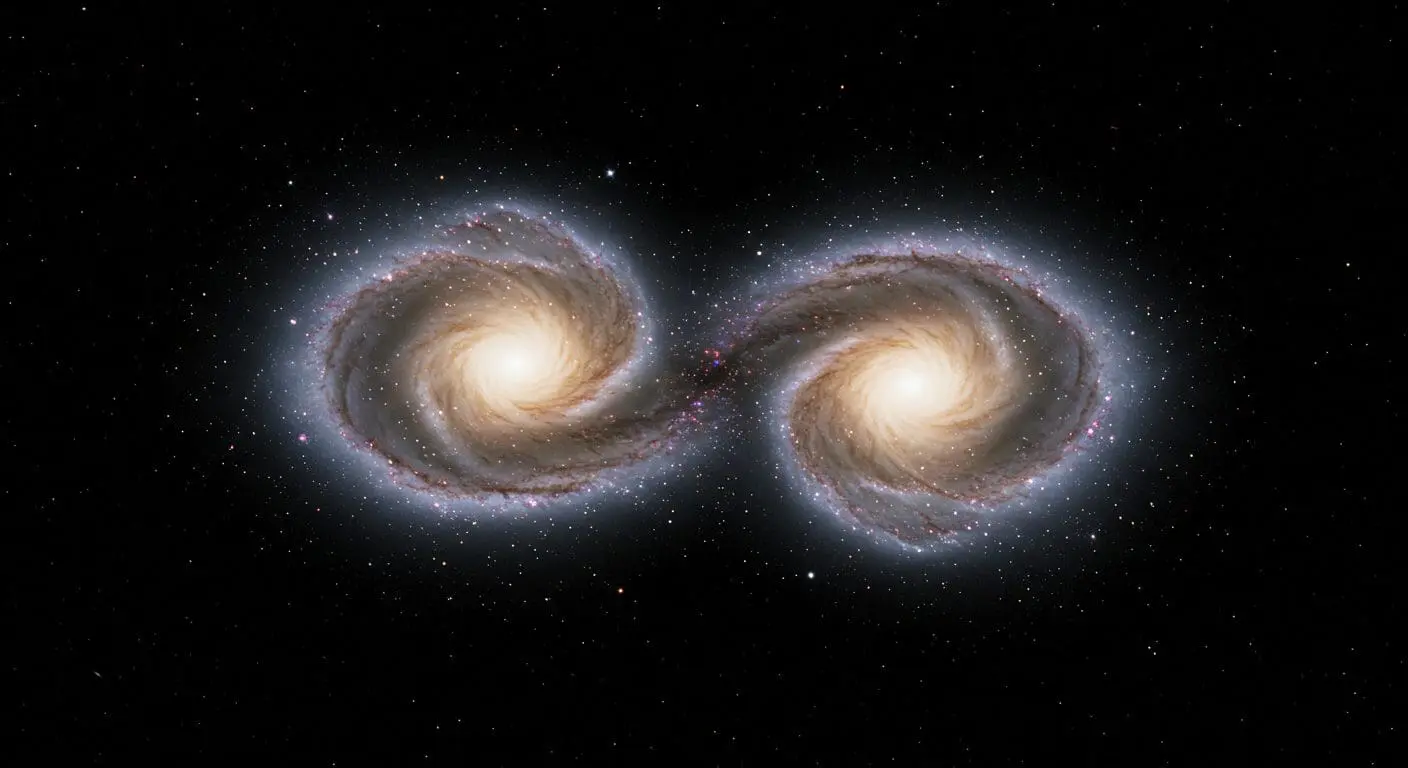
The Laser Interferometer Gravitational-Wave Observatory (LIGO) detected the merger of two black holes in November 2023, creating a final black hole approximately 50% more massive than previously recorded events. Scientists analysing the signal, designated GW231123, calculate the original black holes weighed 100 and 140 times the mass of the Sun, respectively. This discovery challenges existing formation theories, as stars of this size are not expected to collapse directly into black holes, suggesting a different formation mechanism such as the merging of previously merged black holes.
Challenging Formation Theories
The detected event, designated GW231123, involved the merging of two black holes with masses approximately 100 and 140 times that of the Sun, resulting in a final black hole weighing 225 solar masses. This represents a significant increase in mass compared to previously detected events, exceeding the previous record holder by roughly 50%, according to Mark Hannam at Cardiff University. The substantial mass of the resulting black hole and its progenitors challenges existing models of black hole formation.
Most black hole mergers detected by LIGO involve stellar-mass black holes, typically ranging from a few to 100 times the mass of the Sun, and thought to originate from the collapse of massive stars in supernovae. However, the black holes involved in GW231123 fall within a mass range of 60-130 solar masses where formation via stellar collapse is not predicted, as stars of this size are theorised to be disrupted before they can collapse. This discrepancy suggests that the two black holes likely formed through an alternative mechanism, potentially involving hierarchical mergers – the merging of black holes that themselves resulted from prior mergers – ultimately leading to the observed black hole merger.
The event occurred approximately 2.3 to 13.4 billion light years away, indicating that the merging black holes originated from a considerable distance. The unusual mass of the progenitor black holes, falling outside the expected range for stellar collapse, necessitates a re-evaluation of current understanding of how such massive objects form and evolve. This discovery provides evidence supporting alternative formation pathways, such as hierarchical mergers of massive bodies.
Implications for Astrophysical Models
The detection of GW231123, resulting in a 225 solar mass black hole, has implications for astrophysical models concerning the formation of massive black holes. Current models predict that stars within the 60-130 solar mass range are disrupted before collapsing, yet the progenitor black holes involved in this event fall within this mass range, suggesting an alternative formation mechanism. This challenges existing theories predicated on stellar collapse as the primary pathway for black hole formation and necessitates consideration of alternative scenarios.
The observed event supports the hypothesis of hierarchical mergers, where black holes themselves result from prior mergers of massive bodies, ultimately leading to these significant black hole mergers. The substantial distance of the event – occurring approximately 2.3 to 13.4 billion light years away – indicates that the merging black holes originated from a considerable distance and provides a data point for understanding the prevalence of such mergers across cosmic time. Further investigation of events like GW231123 will be crucial to refining models of black hole formation and galactic evolution.
More information
External Link: Click Here For More