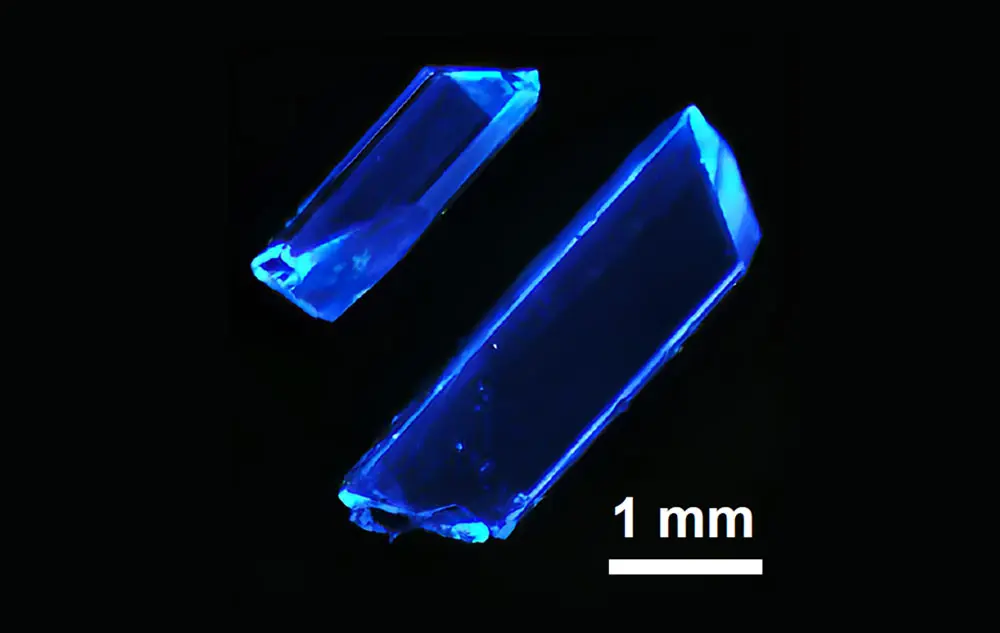
Researchers at Rutgers University, collaborating with the U.S. Department of Energy’s Brookhaven National Laboratory, have developed a new method for manufacturing light-emitting diodes (LEDs) that emit deep blue light with a wavelength of approximately 450 nanometers. Published in Nature, the findings detail LEDs constructed from non-toxic and robust materials, potentially addressing existing issues of stability, cost, and environmental impact within solid-state lighting and display technologies. This development builds upon the foundational work in blue LED technology, first achieved in the early 1990s and later recognised with the Nobel Prize in Physics.
A team of scientists led by Rutgers University, including researchers at the U.S. Department of Energy’s Brookhaven National Laboratory, has developed a method for manufacturing light-emitting diodes (LEDs) that emit deep blue light with a wavelength of approximately 450 nanometers, as detailed in a recent Nature publication. These LEDs are constructed from materials considered abundant and environmentally benign, potentially enhancing both solid-state lighting and display technologies. The research addresses a significant challenge in achieving deep blue hues despite the established brilliance of display screens.
LEDs are lighting devices that efficiently and durably convert electricity into light through the utilisation of semiconductor materials. Blue LEDs were first developed in the early 1990s, a discovery later recognised with the Nobel Prize in Physics, and have become a cornerstone of modern lighting and display technologies. The development of efficient and stable deep-blue LEDs is particularly crucial for the creation of full-colour displays and for improving the colour rendering index of white LEDs.
Current deep-blue LED options frequently suffer from issues relating to stability, scalability, cost, efficiency, or environmental impact, often due to the inclusion of toxic components, as noted in the study. This new copper-iodide hybrid offers a potential solution, characterised by its non-toxicity, robustness, and high performance, as detailed in this article. The research suggests a viable alternative to existing technologies.
More information
External Link: Click Here For More




See today’s quantum computing news on Quantum Zeitgeist for the latest breakthroughs in qubits, hardware, algorithms, and industry deals.