Understanding the fundamental nature of spacetime at its smallest scales remains a central challenge in physics, and recent research explores whether fluctuations at the Planck scale might cause particles to behave in unexpected ways. Tanvi Krishnan from Harvard University, alongside the IceCube Collaboration, investigates this possibility by searching for signs of neutrino decoherence, a phenomenon that would indicate a loss of quantum coherence due to spacetime fluctuations. Neutrinos, owing to their weak interactions, preserve coherence over vast distances, making them ideal probes for these subtle effects, and the team utilises data from the IceCube Neutrino Observatory, the world’s largest neutrino telescope located at the South Pole. This analysis, which examines atmospheric neutrinos in the energy range of 0.5 to 100 TeV, demonstrates a significant improvement in sensitivity compared to previous IceCube studies, offering a powerful new approach to testing the boundaries of quantum mechanics and our understanding of spacetime itself.
Neutrino Oscillations Constrain Planck Scale Spacetime Fluctuations
Investigating the possible quantum nature of spacetime and gravity at extremely high energies presents a significant experimental challenge. Neutrino oscillations, relying on the weak interaction of neutrinos with matter and their ability to maintain quantum coherence over vast distances, offer a precise method for searching for fluctuations in spacetime at the Planck scale. These fluctuations would subtly disrupt the expected behaviour of neutrinos, violating the principle of unitarity. This analysis uses atmospheric muon neutrinos observed by the IceCube Neutrino Observatory, presenting updated results from a 10.7-year dataset with improved handling of systematic uncertainties, building on a previous search that already established the strongest experimental constraints on neutrino decoherence due to quantum gravity.
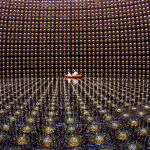
The IceCube Neutrino Observatory houses a cubic kilometer of glacial ice at the South Pole, containing 5,Digital Optical Modules (DOMs). Each DOM includes a photomultiplier (PMT) and is distributed among 86 strings spaced 125 meters apart. These DOMs detect Cherenkov light, the faint glow produced as relativistic charged particles travel through the ice, allowing researchers to reconstruct the properties of primary particles, such as their energy and direction. A densely-instrumented region of 8 strings, known as DeepCore, located at the detector’s center, is particularly useful for reconstructing low-energy events.
Neutrino oscillations are well understood, as neutrinos interact very weakly with matter, enabling their wavefunctions to propagate coherently over long distances. However, even subtle fluctuations in spacetime at the Planck scale could disrupt this coherence. This analysis focuses on how neutrino interactions with virtual black holes (VBHs), potentially created by these spacetime fluctuations, might affect observed neutrino behaviour, exploring two theoretical models: one based on a democratic selection of neutrino flavours, and another that considers a perturbation of neutrino mass states. The evolution of a neutrino interacting with its environment is described using the framework of open quantum systems and the Lindblad master equation.
This equation describes how the neutrino’s quantum state changes over time, accounting for interactions with its surroundings. The effect of decoherence, the loss of quantum coherence, is captured by a mathematical term that depends on the underlying physics causing it. For a three-neutrino system, this decoherence effect can be expressed using a matrix that describes how different neutrino states interact and lose coherence. The state selection model predicts that all neutrino flavours will appear equally likely, regardless of the initial conditions, as the distance travelled increases. The phase perturbation model, conversely, predicts that the observed neutrino flux will tend towards a simple sum of mass eigenstates.
These behaviours are mathematically encoded using diagonal matrices, each characterised by a single parameter, Γ, which represents the rate of decoherence. The parameter Γ is assumed to depend on the neutrino’s energy, following a power law. This model has two free parameters: one describing the energy dependence of decoherence, and another representing the strength of decoherence at a specific reference energy. This analysis constrains these parameters using 10.7 years of IceCube data, analysing 368,071 upward-going muon neutrino events with reconstructed energies ranging from 0.5 to TeV. The event selection process has been refined, improving the purity of the sample and incorporating a more thorough treatment of systematic uncertainties, including factors related to neutrino fluxes, ice properties, detector response, and neutrino attenuation. These uncertainties are treated as continuous parameters in a statistical analysis, allowing researchers to establish confidence intervals for the energy dependence exponent and the decoherence strength.
Muon Energy and Angle Sensitivity Analysis
The statistical test incorporates both data and Monte Carlo uncertainties to assess the significance of the results. Researchers constrain the decoherence strength, Γ0, for different values of the energy dependence exponent, n, using events categorised by whether their origin lies inside or outside the detector volume. These events are sorted into 24 bins based on reconstructed muon energy and 18 bins based on zenith angle, allowing for a detailed analysis of the data. The resulting sensitivity analysis demonstrates substantial improvements compared to previous analyses.
Quantum Decoherence Measured in Antarctic Ice
Results stemming from improved event reconstruction and a larger dataset demonstrate advancements in understanding quantum decoherence within the IceCube detector. Refined reconstruction techniques enhance the precision of event localisation and energy estimation, allowing for a more robust investigation of subtle effects related to quantum decoherence. These findings contribute to ongoing efforts to characterise the fundamental limits on quantum coherence in a macroscopic environment, specifically within the glacial ice of the Antarctic. Future research will focus on optimising reconstruction algorithms and expanding the event sample to further refine these measurements.
Quantum Limits Probed with Neutrino Data
This analysis presents updated results on quantum decoherence, employing improved systematic treatment and 10.7 years of upward-going muon neutrino events. This work achieves world-leading sensitivity to quantum decoherence, verifying the expected sensitivity through simulations and proceeding towards a measurement utilising unblinded data. This represents a significant step towards experimentally probing the limits of quantum mechanics at macroscopic scales and furthering our understanding of the interplay between quantum mechanics and gravity.
🗞 Search for Quantum Decoherence with 10.7 years of atmospheric events in IceCube
🧠 DOI: https://doi.org/10.48550/arXiv.2507.12316

See today’s quantum computing news on Quantum Zeitgeist for the latest breakthroughs in qubits, hardware, algorithms, and industry deals.