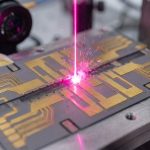
Dutch quantum computing firm QuiX Quantum secured $15 million in Series A funding, co-led by Invest-NL and EIC Fund, to deliver what it aims will be the world’s first single-photon-based universal quantum computer by 2026. The company, founded in 2019, already supplies quantum computers to institutions like the German Aerospace Center and began offering cloud access in 2024, and will use the funding to advance its silicon-nitride chip technology towards a scalable, room-temperature system capable of implementing a universal gate set – a critical step for fault-tolerant quantum computation. This investment reinforces Europe’s position in the burgeoning quantum photonic ecosystem and addresses growing demand for accessible quantum hardware.
Funding Secured for European Quantum Computing Pioneer
The Series A funding round, totalling €15 million, was co-led by Invest-NL and the European Innovation Council (EIC) Fund, with participation from existing investors PhotonVentures, Oost NL, and FORWARD.one. This investment follows QuiX Quantum’s success in securing funding through the EIC Accelerator program, a scheme designed to bolster the development of transformative technologies.
The capital will be directed towards the completion and delivery of QuiX Quantum’s inaugural universal photonic quantum computer, slated for release in 2026. This system is engineered to implement a universal gate set – a fundamental requirement for achieving large-scale, fault-tolerant quantum computation. The company’s focus addresses a growing demand for increased computational power and accessible quantum hardware, enabling algorithm testing across diverse applications.
QuiX Quantum differentiates itself through its utilisation of silicon-nitride chips, optimised for high-volume manufacturing, scalability, and energy efficiency. This approach not only strengthens the European quantum photonic ecosystem but also reinforces the regional supply chain. The company’s technology operates primarily at room temperature and is designed for compatibility with existing data-center infrastructure.
Beyond the 2026 system, QuiX Quantum is planning a next-generation quantum computer for 2027, with a primary focus on implementing error correction. This is a crucial step towards building fault-tolerant systems and unlocking the potential of quantum computing in fields such as chemical engineering, drug development, fraud detection, and advanced manufacturing. The current round of quantum computing investment is therefore intended to facilitate a sustained pipeline of technological advancement.
The company’s technology leverages the principles of superposition, entanglement, and interference to achieve computational capabilities exceeding those of classical computers. QuiX Quantum currently operates five offices across Europe and serves a growing international customer base.
QuiX Quantum’s Technological Approach
QuiX Quantum’s technological approach centres on photonic quantum computing, utilizing single photons – fundamental particles of light – as qubits, the quantum equivalent of classical bits. This contrasts with other quantum computing modalities, such as superconducting or trapped-ion systems, each possessing unique advantages and challenges. The company’s choice of silicon-nitride as a chip material is significant; it allows for the precise fabrication of complex photonic circuits and offers low optical loss, crucial for maintaining qubit coherence – the duration for which a qubit retains its quantum state.
The design prioritizes manufacturability and scalability, a critical consideration for transitioning from laboratory prototypes to commercially viable quantum processors. QuiX Quantum’s systems are engineered for compatibility with existing semiconductor manufacturing processes, potentially lowering production costs and facilitating higher-volume output. This emphasis on practical implementation distinguishes the company within a field often dominated by research-focused endeavours. The ability to operate primarily at room temperature, rather than requiring cryogenic cooling, further reduces operational complexity and energy consumption, addressing a key barrier to widespread adoption.
Beyond hardware development, QuiX Quantum is actively developing the necessary software stack and cloud infrastructure to provide access to its quantum computing resources. This full-stack approach – encompassing both hardware and software – is increasingly recognised as essential for driving innovation and fostering a vibrant quantum ecosystem. The company’s cloud access model allows researchers and developers to experiment with quantum algorithms and applications without requiring substantial upfront investment in hardware infrastructure, thereby accelerating the pace of discovery and innovation in areas reliant on substantial computational power.
Key Investors and Strategic Partnerships
The composition of the investment syndicate underscores confidence in QuiX Quantum’s trajectory. Invest-NL, as the Dutch National Promotional Institution, provides not only capital but also strategic guidance aligned with national priorities in deep tech innovation. The EIC Fund’s participation signifies validation from a pan-European body dedicated to supporting disruptive technologies with high growth potential. Continued support from existing venture capital firms – PhotonVentures, specializing in integrated photonics, and FORWARD.one, focused on European deeptech – demonstrates sustained belief in the company’s technological approach and market prospects. Oost NL’s involvement further highlights the regional commitment to fostering a thriving quantum ecosystem within the eastern Netherlands.
This round of quantum computing investment is particularly noteworthy given the competitive landscape of quantum hardware development. While significant investment is flowing into various quantum modalities, photonic approaches, such as that pursued by QuiX Quantum, are gaining traction due to their potential for scalability and room-temperature operation. The company’s focus on silicon-nitride photonics distinguishes it from competitors utilizing alternative materials or architectures. This strategic differentiation, coupled with a full-stack approach encompassing hardware, software, and cloud access, positions QuiX Quantum as a key player in the emerging quantum computing market. The syndicate’s collective expertise and resources are expected to accelerate the company’s progress towards delivering commercially viable quantum computing solutions.
System Specifications and Scalability
The system designs are optimized not merely for functionality but for high-volume manufacturability, a critical factor often overlooked in early-stage quantum hardware development. QuiX Quantum’s commitment to leveraging existing semiconductor fabrication processes, rather than requiring entirely novel manufacturing techniques, represents a pragmatic approach to scaling production and reducing costs. This strategy mitigates the substantial logistical and financial hurdles typically associated with transitioning from prototype to commercial-scale quantum processors. The silicon-nitride platform, specifically, allows for dense integration of photonic circuits, maximizing qubit connectivity and minimizing signal loss – both essential for achieving high-fidelity quantum computations.
The system’s operational characteristics further enhance scalability. Operation at room temperature, in contrast to the cryogenic requirements of many competing quantum modalities, significantly reduces the complexity and cost of infrastructure. Compatibility with standard data-center environments facilitates seamless integration into existing computing infrastructure, lowering barriers to adoption for potential customers. This is particularly advantageous for organizations seeking to explore hybrid quantum-classical computing architectures, where quantum processors are integrated with conventional high-performance computing resources.
Beyond the hardware itself, QuiX Quantum’s cloud-based access model is integral to its scalability strategy. By providing remote access to its quantum computing resources, the company democratizes access to this nascent technology, enabling a wider range of researchers and developers to experiment with quantum algorithms and applications. This approach minimizes the need for customers to invest in expensive and complex quantum infrastructure, fostering innovation and accelerating the development of quantum-enabled solutions. The cloud platform also facilitates data analysis and algorithm optimization, leveraging the collective intelligence of a growing user base.
The company’s roadmap extends beyond the initial 2026 system, with a planned next-generation processor focused on implementing error correction. This is a crucial step towards achieving fault-tolerant quantum computation, where quantum algorithms can be executed reliably despite the inherent fragility of qubits. Implementing robust error correction schemes will require significant advancements in both hardware and software, and QuiX Quantum’s commitment to this area underscores its long-term vision for quantum computing. The successful implementation of error correction will unlock the full potential of quantum algorithms, enabling solutions to complex problems currently intractable for classical computers.
Future Development and Potential Applications
Beyond technological refinement, QuiX Quantum’s strategic focus on manufacturability and scalability positions it to capitalize on growing demand within the quantum computing market. The company’s approach anticipates a future where access to quantum resources is not limited by hardware scarcity but by software innovation and algorithmic development. This necessitates a transition from bespoke, laboratory-confined systems to commercially viable processors capable of supporting a diverse range of applications. The current round of quantum computing investment is therefore directed not merely towards achieving technological milestones but towards establishing a sustainable and scalable business model.
The long-term implications of QuiX Quantum’s technology extend beyond immediate applications in fields such as materials science and drug discovery. A scalable, room-temperature photonic quantum computer could fundamentally alter the landscape of high-performance computing, enabling solutions to problems currently beyond the reach of even the most powerful supercomputers. This could unlock breakthroughs in areas such as climate modelling, financial risk analysis, and artificial intelligence, with far-reaching societal and economic consequences. However, realizing this potential requires sustained investment in both hardware and software, as well as the development of a skilled workforce capable of harnessing the power of quantum computing.
Furthermore, the development of a robust European quantum ecosystem is increasingly recognized as a matter of strategic importance. The concentration of quantum computing expertise and manufacturing capacity in a limited number of countries raises concerns about technological dependence and national security. QuiX Quantum’s commitment to strengthening the European supply chain and fostering regional innovation contributes to a more diversified and resilient quantum landscape. This is particularly crucial in the context of geopolitical competition and the growing recognition of quantum computing as a critical enabling technology. The current level of quantum computing investment, while substantial, must be sustained and expanded to ensure Europe remains at the forefront of this transformative field.
More information
External Link: Click Here For More
See today’s quantum computing news on Quantum Zeitgeist for the latest breakthroughs in qubits, hardware, algorithms, and industry deals.