Molecular dynamics simulations commonly decouple electron and nuclear motion due to the significant mass disparity between them. This simplification establishes the basis for both adiabatic and diabatic representations of molecular systems, and introduces a geometric phase shift in the electronic wave function known as the Berry phase. The Berry phase, a concept rooted in differential geometry, receives attention across diverse areas of physics due to its gauge invariance, meaning it is independent of arbitrary choices in the mathematical description.
Simulations modelling molecular behaviour frequently incorporate coupled electronic and nuclear dynamics, however, this approach often neglects the simultaneous interplay between these motions. Researchers have developed a novel computational method, multilayer multiconfigurational time-dependent Hartree-Fock (ML-MCTDH), to address this limitation and provide a more accurate depiction of non-adiabatic dynamics. Non-adiabatic dynamics occur when the standard approximation of instantaneously adjusting electrons to nuclear positions breaks down. The core innovation lies in a multi-layered approach that efficiently handles the coupling between electronic and nuclear motions, enabling simulations of larger and more complex molecular systems than previously possible.
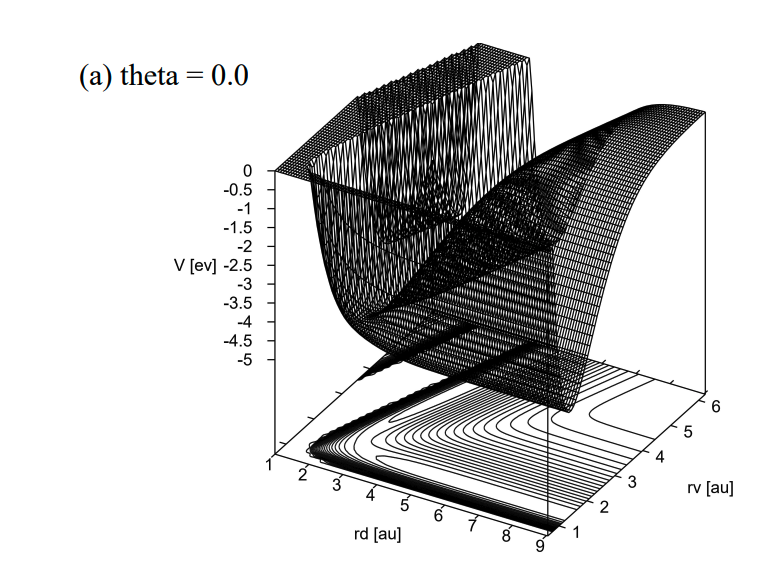
ML-MCTDH circumvents limitations of traditional methods by treating both electronic and nuclear degrees of freedom simultaneously and fully coupled, building upon the established MCTDH technique. MCTDH is a powerful tool for solving the time-dependent Schrödinger equation, the fundamental equation governing the behaviour of quantum systems, for molecular systems. To demonstrate its capabilities, researchers constructed simplified three-dimensional models of molecular reactions, focusing on the intricate mechanisms of energy transfer between molecules and performing extensive calculations to solve the time-dependent nuclear Schrödinger equation under various initial conditions. These simulations highlighted the importance of considering the Berry phase, a geometric effect arising from the evolution of the nuclear wavefunction, which can cause the wavefunction to change sign, leading to interference phenomena in the parameter space describing energy transfer and significantly altering the reaction dynamics.
Researchers utilise 98-dimensional ML-MCTDH calculations to further validate
Researchers utilise 98-dimensional ML-MCTDH calculations to further validate the significance of these Berry effects and establish a clear link between the Berry phase and the observed interference patterns in the parameter space, offering a novel perspective on molecular reactivity. The study highlights the importance of considering Berry phase effects, arising from the adiabatic evolution of the nuclear wave function, and their impact on molecular dynamics, drawing parallels between the Berry effects observed in molecular dynamics and those previously documented in electronic properties and mode-specific reactivity. This comparison highlights the broader implications of the Berry phase as a fundamental aspect of quantum mechanical systems and contributes to a more nuanced understanding of chemical reaction dynamics.
This work presents a novel theoretical framework for modelling non-adiabatic dynamics, focusing on the intricacies of nuclear wave function behaviour during chemical reactions and addressing limitations inherent in traditional approaches which often rely on initial conditions based on separated eigenstates of molecular fragments. Researchers investigate the fundamental mechanisms governing energy redistribution between intramolecular and intermolecular degrees of freedom, proposing a detailed understanding of reactive dynamics involving multiple rovibrational states. They developed two reduced three-dimensional models representing molecular reactions. Crucially, the 98-dimensional ML-MCTDH calculations demonstrate the potential for wave function sign changes, leading to interference phenomena within the parameter space representing energy transfer.
Future work will focus on extending this framework
Future work will focus on extending this framework to more complex molecular systems and exploring the implications of these findings for understanding chemical reaction control, investigating the influence of external fields on the observed interference patterns and applying this methodology to systems exhibiting strong coupling between electronic and nuclear degrees of freedom. This will provide valuable insights into the fundamental processes governing chemical reactivity and the development of efficient algorithms for performing ML-MCTDH calculations on even larger systems remains a key challenge for future investigations.
🗞 Berry Phase Effects of Nuclei in Chemical Reaction Dynamics
🧠 DOI: https://doi.org/10.48550/arXiv.2507.05672