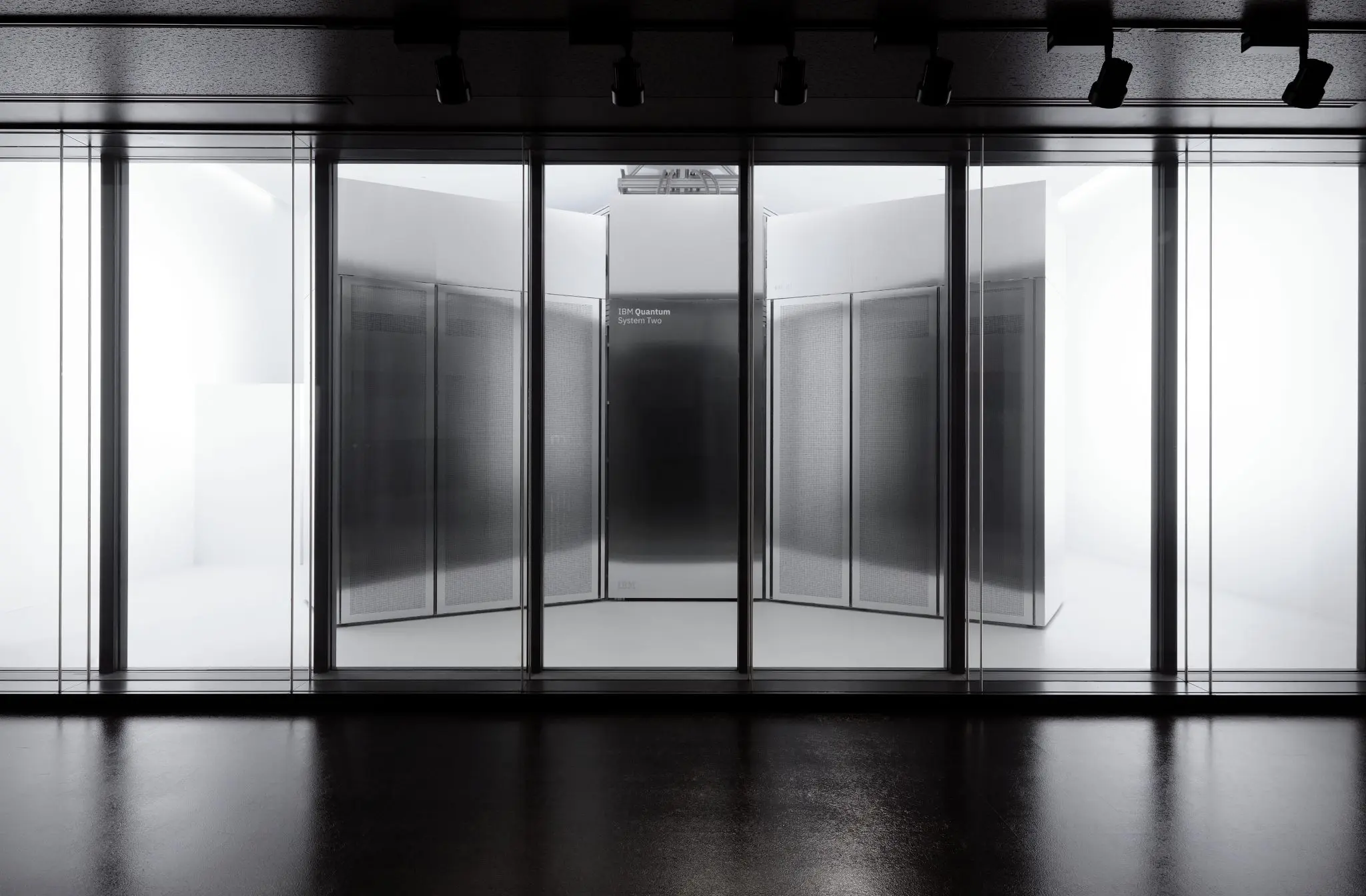
IBM and RIKEN have deployed the first IBM Quantum System Two outside of the United States, located at RIKEN’s Center for Computational Science in Kobe, Japan. The system, powered by a 156-qubit IBM Quantum Heron processor, is directly connected to the Fugaku supercomputer via a high-speed network, forming a platform for quantum-centric supercomputing. This integration aims to accelerate research into advanced algorithms, particularly in areas like chemistry, by leveraging the strengths of both quantum and classical computing paradigms. The Heron processor demonstrates improved performance over previous generations, achieving a two-qubit error rate of 3×10⁻³ and a circuit layer operations per second (CLOPS) metric of 250,000, and the project is supported by Japan’s New Energy and Industrial Technology Development Organization (NEDO).
IBM and RIKEN have established a collaboration, deploying IBM’s quantum processor alongside RIKEN’s Fugaku supercomputer to pioneer quantum-centric computing and accelerate scientific discovery. This positions the IBM Quantum System Two at RIKEN’s Center for Computational Science, creating an integrated environment for researchers to explore complex problems previously intractable for classical computers. The initiative aims to unlock new possibilities in materials science, drug discovery, and other fields.
The integrated infrastructure divides computational tasks effectively, assigning quantum mechanical calculations to the Heron processor while Fugaku handles classical data processing, analysis, and simulation support. This optimizes efficiency by leveraging the strengths of each system, allowing the quantum processor to address inherently quantum problems and the supercomputer to manage extensive classical computations required for pre- and post-processing, and larger-scale simulations. RIKEN’s Fugaku supercomputer provides the necessary classical computing power to support the quantum processor, handling tasks such as data pre-processing, post-processing, and large-scale simulations.
The IBM Quantum System Two boasts advancements in
The IBM Quantum System Two boasts advancements in quantum hardware, featuring a two-qubit error rate of 3 × 10⁻³ and a circuit layer operations per second (CLOPS) rate of 250,000, representing an improvement over prior generation hardware. These enhanced capabilities enable the execution of quantum circuits beyond the scope of classical simulation, opening new avenues for scientific exploration. The strategic deployment of the IBM Quantum System Two at RIKEN’s Center for Computational Science marks a step forward in the field of quantum computing.
Researchers are developing sample-based quantum diagonalization (SQD) techniques, demonstrating the potential of this hybrid methodology to achieve results previously requiring fault-tolerant quantum computers. This innovative approach allows scientists to tackle complex materials science problems, such as modelling the electronic structure of iron sulfides, with unprecedented accuracy and efficiency. The initiative focuses on materials science, specifically modelling the electronic structure of compounds like iron sulfides, and aims to demonstrate a path toward achieving quantum advantage in real-world applications.
The development of low-latency communication protocols between the quantum processor and Fugaku is crucial for efficient hybrid quantum-classical computation, ensuring seamless data transfer and synchronization between the two systems. The collaboration actively focuses on refining these hybrid algorithms and workflows, establishing a platform for demonstrating quantum advantage in practical applications. Systematic exploration of the interplay between quantum and classical resources aims to identify optimal strategies for partitioning problems and maximizing computational performance.
This includes the development of new techniques for
This includes the development of new techniques for data transfer, error mitigation, and algorithm design, pushing the boundaries of quantum-classical integration. This collaboration fosters innovation and accelerates scientific discovery by providing researchers with access to cutting-edge quantum and classical computing resources.
External Link: Click Here For More




See today’s quantum computing news on Quantum Zeitgeist for the latest breakthroughs in qubits, hardware, algorithms, and industry deals.