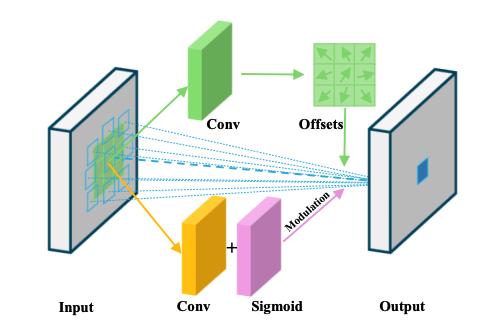
Researchers develop a deep learning method employing complex-valued deformable convolution to enhance computer-generated holography. This approach dynamically adjusts convolution kernels, improving feature extraction and reconstruction quality. Results demonstrate superior performance, exceeding existing models like CCNN-CGH, HoloNet, and Holo-encoder, with a significantly reduced parameter count.
The pursuit of realistic three-dimensional displays receives considerable attention from researchers developing technologies for virtual and augmented reality applications. A key challenge lies in accurately recreating the wavefront of light as it would emanate from a real object, a process central to holography. Recent advances utilise deep learning, specifically convolutional neural networks (CNNs), to computationally generate holograms, bypassing limitations of traditional optical methods. However, effectively modelling the complex interaction between each image pixel and the resulting holographic reconstruction demands a substantial ‘effective receptive field’ (ERF), the area of the input image that a neuron considers. Shuyang Xie, Jie Zhou, Bo Xu, Jun Wang (IEEE), and Renjing Xu present ‘MobileHolo: A Lightweight Complex-Valued Deformable CNN for High-Quality Computer-Generated Hologram’, detailing a novel network architecture that dynamically adjusts its convolutional kernels to expand this receptive field, achieving improved reconstruction quality with a significantly reduced computational burden compared to existing methods.
Holographic displays offer a compelling pathway to immersive virtual and augmented reality experiences by recreating complete depth cues. Recent advances utilise deep learning to generate computer-generated holograms (CGH), but accurately modelling the complex diffraction process remains a significant challenge. This work addresses limitations in existing methods stemming from insufficient effective receptive fields (ERF), which restrict a neural network’s ability to capture crucial information during hologram reconstruction. The ERF defines the area of the input data that a neuron considers when making a decision; a larger ERF allows the network to consider more contextual information.
Researchers designed a complex-valued deformable convolution and integrated
Researchers designed a complex-valued deformable convolution and integrated it into a neural network architecture, fundamentally improving how holographic images are generated. This innovation allows the convolution kernel – a mathematical function used to process images – to dynamically adjust its shape, effectively expanding the ERF and improving feature extraction from input data. By enabling this flexible adaptation, the network captures a more comprehensive representation of the light field, leading to enhanced hologram reconstruction quality and a more realistic visual experience.
The team demonstrates that this approach achieves state-of-the-art performance in both simulated and experimental reconstructions, surpassing existing open-source models such as CCNN-CGH, HoloNet, and Holo-encoder. Specifically, the new method yields a peak signal-to-noise ratio (PSNR) that is 2.04 dB, 5.31 dB, and 9.71 dB higher than those achieved by CCNN-CGH, HoloNet, and Holo-encoder respectively, when operating at a resolution of 1920 x 1072 pixels. PSNR is a metric used to measure the quality of a reconstructed image compared to the original; a higher PSNR indicates a better reconstruction. This substantial improvement confirms the effectiveness of the proposed method in generating higher-fidelity holograms with greater clarity and detail.
Importantly, the model accomplishes this enhanced performance with a significantly reduced number of parameters – approximately one-eighth that of CCNN-CGH – suggesting increased computational efficiency and the potential for real-time applications. This reduction in model complexity, coupled with the improved PSNR, highlights a favourable trade-off between accuracy and computational cost, making it a promising solution for holographic display technologies.
Future work will likely focus on extending this approach to more complex scenes and dynamic holographic reconstruction, pushing the boundaries of what is possible with holographic displays. Investigating the application of this method to near-eye displays, as explored by Choi et al. (2022), presents a promising avenue for advancing holographic augmented and virtual reality technologies. Further optimisation of the network architecture and exploration of alternative loss functions, such as those incorporating perceptual metrics as detailed by Wei et al. (2024), could yield further improvements in reconstruction quality and visual realism.
Expanding the training dataset to include a wider
Expanding the training dataset to include a wider variety of 3D objects and scenes is also crucial for improving the generalizability of the model and its performance in real-world scenarios. This will enable the network to learn more robust features and handle a wider range of input data, leading to more accurate and realistic holographic reconstructions.
The development of efficient and accurate holographic reconstruction techniques is essential for realising the full potential of holographic displays, offering a truly immersive and realistic visual experience. This work represents a significant step forward in this field, demonstrating the effectiveness of complex-valued deformable convolutions in improving both the quality and efficiency of holographic reconstruction.
The ability to generate high-fidelity holograms with reduced computational cost is crucial for enabling a wide range of applications, including virtual and augmented reality, 3D displays, and holographic imaging. This research provides a promising solution to these challenges, offering a practical and efficient approach to holographic reconstruction.
The ongoing development of holographic display technologies promises to transform the way we interact with digital information, offering a more natural and intuitive way to visualise and manipulate 3D content. This research contributes to this exciting field by providing a powerful and efficient technique for holographic reconstruction, paving the way for the development of next-generation displays that will revolutionise the way we experience the digital world.
🗞 MobileHolo: A Lightweight Complex-Valued Deformable CNN for High-Quality Computer-Generated Hologram
🧠 DOI: https://doi.org/10.48550/arXiv.2506.14542




See today’s quantum computing news on Quantum Zeitgeist for the latest breakthroughs in qubits, hardware, algorithms, and industry deals.