A genetic algorithm, utilising chromosomes encoding patient and gantry data, efficiently schedules proton therapy. Numerical results demonstrate reduced population size compared to conventional methods for both medium and large problem instances. Computation time remains a limitation for large instances, necessitating hardware acceleration for practical implementation.
Effective scheduling is critical in radiation oncology, particularly with proton therapy where complex logistical constraints impact patient throughput and treatment quality. Researchers are now investigating the potential of quantum-inspired algorithms to optimise these processes, seeking improvements over conventional computational methods. A team comprising Akira Saitoh from Sojo University, and Arezoo Modiri, Amit Sawant, and Robabeh Rahimi from the University of Maryland School of Medicine, detail their work in ‘Quantum-Inspired Genetic Optimization for Patient Scheduling in Radiation Oncology’. Their study explores a novel approach utilising chromosome structures encoding both patient identification and gantry status, alongside refined selection and repair strategies, to achieve efficient and clinically viable treatment schedules. Numerical results demonstrate a reduction in required population size compared to classical genetic algorithms, although computational time remains a challenge for large-scale problems, highlighting the need for true quantum computation to fully realise the benefits of this methodology.
Optimising Proton Therapy with Quantum-Inspired Algorithms
Proton therapy represents a precise method of radiation delivery for cancer treatment, and effective treatment planning requires complex optimisation of beam parameters. This research investigates the application of a Quantum-Inspired Evolutionary Algorithm (QIEA) to enhance this process, maximising tumour dose while minimising radiation exposure to surrounding healthy tissue. Advances in technology, such as MRI-Linac systems – which combine magnetic resonance imaging with linear accelerators – and shuttle treatment tables, are increasing the complexity of treatment scenarios and demanding more sophisticated optimisation techniques.
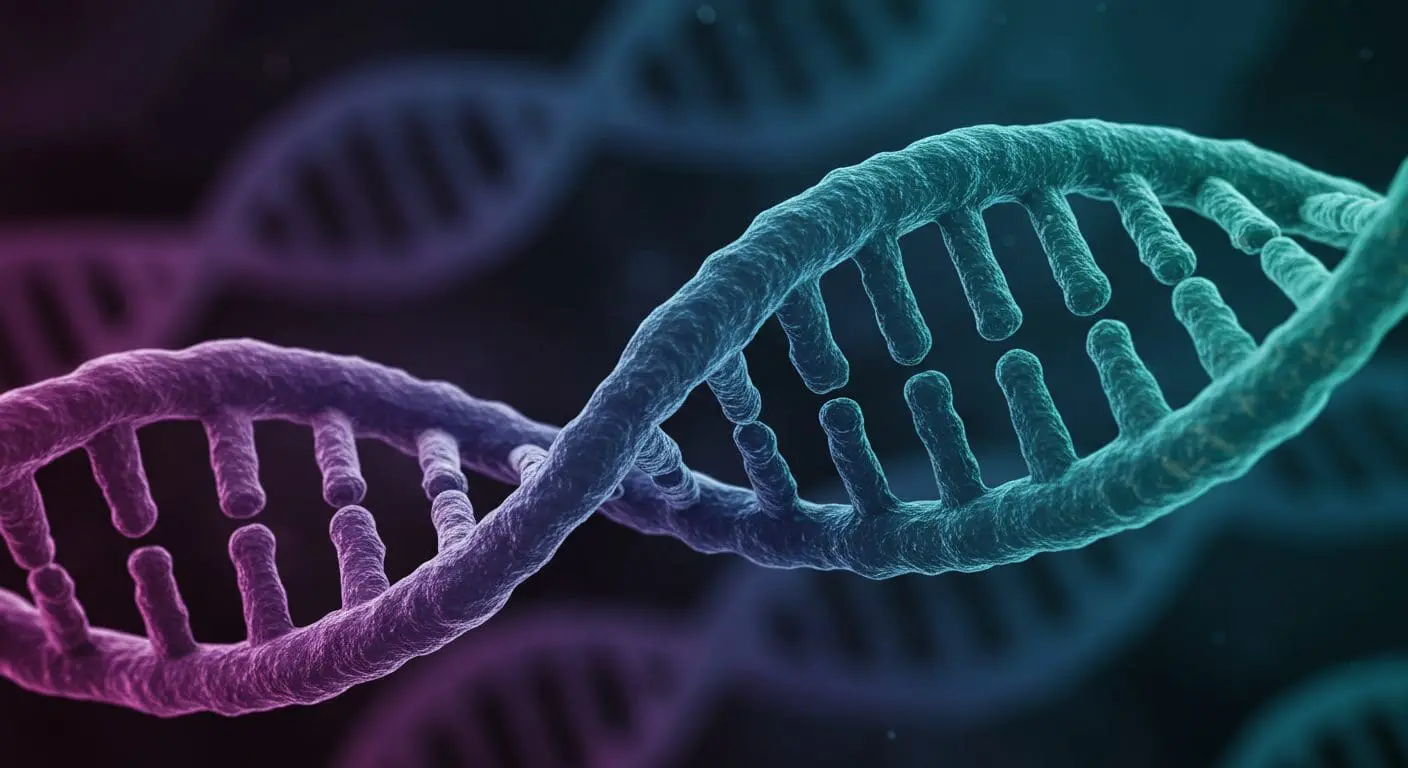
The researchers formulated the treatment planning problem as an optimisation challenge. The QIEA represents potential treatment plans – defined by parameters such as beam angles, intensities, and energies – as ‘chromosomes’ within the algorithm. A key innovation lies in the incorporation of principles from quantum computing, specifically superposition, into the chromosome structure. Superposition allows each chromosome to represent multiple possibilities simultaneously, encoding both patient identifiers and gantry (the rotating arm holding the accelerator) statuses concurrently. This contrasts with classical algorithms which evaluate each possibility sequentially. Sophisticated selection and repair strategies guide the algorithm towards clinically acceptable treatment schedules.
Numerical results demonstrate a substantial reduction in the required computational effort – measured by population size – compared to conventional Genetic Algorithms (GAs) for both medium-sized test cases and a large, clinically relevant problem. The QIEA achieves this efficiency by leveraging quantum-inspired principles within a classical computational framework, offering a valuable resource saving for computationally intensive optimisation tasks.
The QIEA consistently outperforms a standard Genetic Algorithm in achieving superior conformality indices – a measure of how well the radiation dose conforms to the tumour’s shape – and reduced dosage to organs at risk. In several instances, the QIEA’s performance approached, and even surpassed, that of conventional treatment planning systems currently used in clinical practice. This suggests the potential for improved treatment outcomes through enhanced dose distribution and reduced potential side effects for patients undergoing proton therapy.
Future research will focus on harnessing the capabilities of near-term quantum computers (NISQ) to fully realise the potential of these quantum-inspired algorithms and address the computational demands of increasingly complex clinical scenarios. Larger clinical trials, encompassing a more diverse patient cohort, are also necessary to validate these findings and establish clinical efficacy.
👉 More information
🗞 Quantum-Inspired Genetic Optimization for Patient Scheduling in Radiation Oncology
🧠 DOI: https://doi.org/10.48550/arXiv.2506.04328



See today’s quantum computing news on Quantum Zeitgeist for the latest breakthroughs in qubits, hardware, algorithms, and industry deals.