Calculations demonstrate relativistic effects significantly influence Hong-Ou-Mandel interference. Frame-dragging and redshift amplify with increased light loops within interferometers. Gravitational acceleration’s Sagnac effect is comparable to other relativistic phenomena, and detectable via differences in interference patterns with varying effective time delays.
The subtle interplay between gravity and quantum phenomena continues to yield nuanced insights into the fundamental nature of reality. Recent work explores how Earth’s gravitational field impacts Hong-Ou-Mandel (HOM) interference – a quantum mechanical effect demonstrating that indistinguishable photons can exhibit interference even when arriving at a detector simultaneously. By modelling relativistic time delays and phase shifts using both particle (null geodesic equation) and wave (Klein-Gordon equation) perspectives, researchers have quantified the influence of frame-dragging, redshift, and the Sagnac effect on this interference pattern.
This analysis suggests potential avenues for detecting these relativistic influences within terrestrial laboratory settings. The study, entitled ‘Gravitational effects on Hong-Ou-Mandel interference in terrestrial laboratory’, is authored by Xuan Ye from the School of Science and Engineering, The Chinese University of Hong Kong, Shenzhen, and Bo Wang and Yang Zhang from the Department of Astronomy, Key Laboratory for Researches in Galaxies and Cosmology, University of Science and Technology of China.
Relativistic Effects on Photon Indistinguishability Reveal Subtle Spacetime Contributions
A recent theoretical study details the influence of relativistic effects on Hong-Ou-Mandel (HOM) interference, a quantum phenomenon demonstrating the indistinguishability of photons. The research calculates relativistic time delays to second order, utilising both particle and wave descriptions of photons to predict interference patterns.
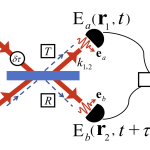
HOM interference occurs when two photons arrive at a beam splitter simultaneously. If the photons are indistinguishable, they will exit the beam splitter together or separately, resulting in a characteristic dip in the coincidence count rate – the probability of detecting both photons at the same time. Any factor altering the arrival time of the photons impacts this interference pattern.
Researchers employed two distinct approaches to calculate these time delays. The particle perspective uses the null geodesic equation – describing the path of massless particles like photons – to determine travel time. The wave perspective utilises the Klein-Gordon equation, a relativistic wave equation, to model photon propagation. Calculations reveal discrepancies between the predicted time delays and resulting coincidence probabilities when using each approach. Crucially, existing experimental data supports the predictions derived from the wave perspective.
The analysis extends to a rectangular interferometer – an optical instrument utilising interference of light waves – to explore the effects of frame-dragging (the distortion of spacetime caused by rotating massive objects) and gravitational redshift (the change in frequency of light due to gravity). The study demonstrates that increasing the number of times light traverses the interferometer – completing more ‘loops’ – amplifies these relativistic effects.
Notably, the researchers found that the next-order Sagnac effect – a phenomenon arising from gravitational acceleration that affects the phase of light – exhibits a magnitude comparable to other well-established relativistic effects such as Thomas precession (a relativistic correction to the precession of a gyroscope), the geodetic effect (the curvature of spacetime around a massive body), and the Lense-Thirring effect (frame-dragging caused by a rotating mass). This finding underscores the importance of accounting for a broader range of relativistic contributions when designing and interpreting high-precision experiments.
To maximise the detectability of these subtle effects, the researchers investigated the impact of increasing the number of loops photons complete within the interferometer. Their methodological framework provides a robust tool for detecting and quantifying relativistic effects in terrestrial laboratories. The study suggests utilising the difference between HOM interference patterns generated with varying effective time delays as a promising avenue for future experiments, potentially enabling the detection of even more subtle relativistic phenomena.
The researchers determined the minimum number of loops photons must traverse to detect the leading-order Sagnac effect and redshift caused by gravitational acceleration, given current experimental precision. This work highlights the significance of considering gravitational contributions to relativistic corrections in precision interferometry. Accurate modelling of these effects is crucial for applications including gravitational wave detection, satellite navigation systems, and fundamental tests of general relativity.
👉 More information
🗞 Gravitational effects on Hong-Ou-Mandel interference in terrestrial laboratory
🧠 DOI: https://doi.org/10.48550/arXiv.2506.04736

See today’s quantum computing news on Quantum Zeitgeist for the latest breakthroughs in qubits, hardware, algorithms, and industry deals.