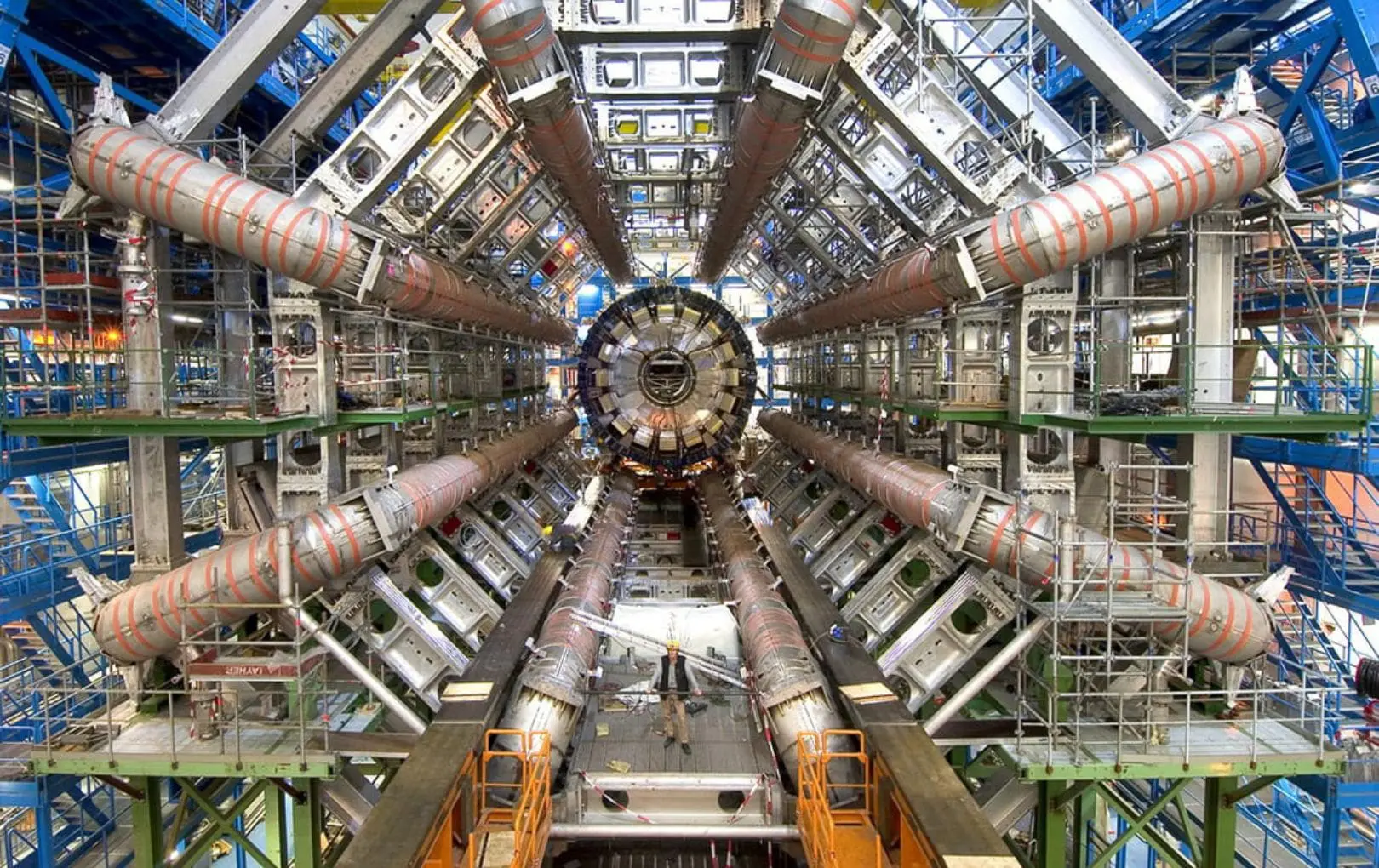
The University of Texas at Arlington’s ATLAS team has been awarded a $1 million share of the 2025 Breakthrough Prize in Fundamental Physics for their pivotal role in the ATLAS Experiment at CERN’s Large Hadron Collider. Over two decades, hundreds of UTA faculty and students contributed to discoveries, including the Higgs boson, with key personnel such as Kaushik De leading the project since 1995. The team constructed portions of the ATLAS detector in Arlington, shipped in pieces to Switzerland, and supports data analysis through a supercomputing facility and cloud computing software called PanDA.
The University of Texas at Arlington (UTA) has been deeply involved in the ATLAS experiment at CERN‘s Large Hadron Collider since 1995, contributing to particle physics research through both theoretical and practical advancements. Under the leadership of Kaushik De, UTA faculty and students have played a critical role in advancing scientific understanding, including key contributions to the discovery of the Higgs boson.
UTA’s work extends beyond theoretical research, with notable developments such as the PanDA cloud computing software. This tool has become essential for data analysis across multiple scientific domains, demonstrating UTA’s innovative approach to addressing complex computational challenges. Additionally, UTA students were instrumental in constructing ATLAS detector components, which were shipped to CERN and integrated into the experiment.
The university is also committed to fostering future talent through its training programs, which have produced numerous physicists with advanced degrees. By donating the Breakthrough Prize funds to the CERN Foundation, UTA underscores its dedication to nurturing the next generation of researchers while maintaining a focus on advancing scientific knowledge and collaboration in particle physics.
More information
External Link: Click Here For More